- BPM
- 95
- Key
- A♭ Major
- Camelot
- 4B
Francesca da Rimini, Op. 4, Act IV, Scene Tableau I: Perchè tanto sei strano? (Francesca, Malatestino, La Voce del Prigioniero) by Riccardo Zandonai, Wiener Symphoniker, Fabio Luisi, Elena Filipova, Kenneth Riegel, Alexander Kravets Song Details
Riccardo Zandonai, Wiener Symphoniker, Fabio Luisi, Elena Filipova, Kenneth Riegel, Alexander Kravets's 'Francesca da Rimini, Op. 4, Act IV, Scene Tableau I: Perchè tanto sei strano? (Francesca, Malatestino, La Voce del Prigioniero)' had a release date set for 1994. Since This song is still less than 10 minute long, it is still considered a pretty long duration song compared to the average song length. This song does not appear to be explicit due to the lack of the "E" tag. This song is part of Zandonai: Francesca da Rimini by Riccardo Zandonai, Elena Filipova, Fabio Luisi, Wiener Symphoniker. The song's track number on the album is #7 out of 47 tracks. Based on our data, Austria was the country where this track was produced or recorded. In terms of popularity, Francesca da Rimini, Op. 4, Act IV, Scene Tableau I: Perchè tanto sei strano? (Francesca, Malatestino, La Voce del Prigioniero) is currently unknown. In our opinion, the overall tone is not very danceable and projects negative sounds, such as being sad, depressed, or angry.
BPM and Tempo
Since Francesca da Rimini, Op. 4, Act IV, Scene Tableau I: Perchè tanto sei strano? (Francesca, Malatestino, La Voce del Prigioniero) by Riccardo Zandonai, Wiener Symphoniker, Fabio Luisi, Elena Filipova, Kenneth Riegel, Alexander Kravets has a tempo of 95 beats per a minute, the tempo markings of this song would be Andante (at a walking pace). With Francesca da Rimini, Op. 4, Act IV, Scene Tableau I: Perchè tanto sei strano? (Francesca, Malatestino, La Voce del Prigioniero) being at 95 BPM, the half-time would be 48 BPM with a double-time of 190 BPM.In addition, we consider the tempo speed to be pretty slow for this song. This makes this song perfect for activities such as, yoga or pilates. The time signature for this track is 1/4.
Music Key
This song has a musical key of A♭ Major. Or for those who are familiar with the camelot wheel, this song has a camelot key of 4B. So, the perfect camelot match for 4B would be either 4B or 5A. While, 5B can give you a low energy boost. For moderate energy boost, you would use 1B and a high energy boost can either be 6B or 11B. Though, if you want a low energy drop, you should looking for songs with either a camelot key of 4A or 3B will give you a low energy drop, 7B would be a moderate one, and 2B or 9B would be a high energy drop. Lastly, 1A allows you to change the mood.
Want to find the BPM and music key for other songs? Check out our BPM and Key Finder page!
- Popularity
- 0%
- Loudness
- -24.879 dB
- Acousticness
- 96%
- Danceability
- 26%
- Energy
- 18%
- Instrumentalness
- 2%
- Liveness
- 83%
- Loudness
- 59%
- Speechiness
- 8%
- Valence
- 22%
Recommendations
| Track | Artist | Key | Energy | Camelot | BPM | ||
|---|---|---|---|---|---|---|---|
 | Verdi: La forza del destino, Act 1: "Me pellegrina ed orfana" (Donna Leonora) | Giuseppe Verdi, Riccardo Muti, Mirella Freni, Orchestra Del Teatro Alla Scala, Milano | G Major | 1 | 9B | 78 BPM | |
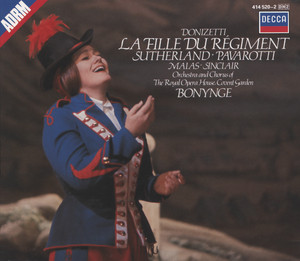 | La fille du régiment / Act 1: Sacré nom d'une pipe! | Gaetano Donizetti, Spiro Malas, Dame Joan Sutherland, Orchestra of the Royal Opera House, Covent Garden, Richard Bonynge | G Major | 2 | 9B | 62 BPM | |
 | Cavalleria rusticana: Pt. I: Dite, mamma Lucia (Santuzza, Lucia) | Pietro Mascagni, Maria Callas, Giuseppe Di Stefano, Rolando Panerai, Anna Maria Canali, Ebe Ticozzi, Vittore Veneziani, Milan La Scala Chorus, Orchestra Del Teatro Alla Scala, Milano, Tullio Serafin | E Minor | 1 | 9A | 81 BPM | |
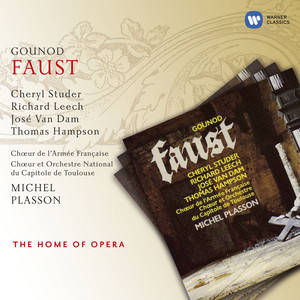 | Gounod: Faust, Act 1: Récitatif. "Mais ce Dieu, que peut-il pour moi?" (Faust) | Charles Gounod, Michel Plasson, Richard Leech, Orchestre Du Capitole De Toulouse | A Minor | 1 | 8A | 94 BPM | |
 | Bellini: I puritani: "Cavalier! – Se t’è d’uopo di consiglio" (Enrichetta, Arturo) | Vincenzo Bellini, Dresdner Philharmonie, Riccardo Frizza | D Major | 5 | 10B | 136 BPM | |
 | Aida, Act I: Quale insolita gioia | Giuseppe Verdi, Elena Obraztsova, Plácido Domingo, Orchestra Del Teatro Alla Scala, Milano, Claudio Abbado | A♭ Major | 0 | 4B | 81 BPM | |
| Bellini: I puritani: "Cinta di fiori e col ben crin disciolto" (Giorgio, Coro) | Vincenzo Bellini, Dresdner Philharmonie, Riccardo Frizza | D Major | 5 | 10B | 136 BPM | |
 | La traviata / Act 2: "Imponete" "Non amarlo ditegli" | Giuseppe Verdi, Cheryl Studer, Juan Pons, Metropolitan Opera Orchestra, James Levine | B♭ Major | 1 | 6B | 77 BPM | |
 | Simon Boccanegra / Prologue: Oh, de'Fieschi implacata, orrida razza (Simone, Fiesco, Paolo, Pietro, Coro) | Giuseppe Verdi, Piero Cappuccilli, Nicolai Ghiaurov, José van Dam, Giovanni Foiani, Orchestra Del Teatro Alla Scala, Milano, Claudio Abbado, Coro Del Teatro Alla Scala Di Milano, Romano Gandolfi | A Minor | 3 | 8A | 102 BPM | |
| Simon Boccanegra, Prologue: Suona ogni labbro il mio nome | Giuseppe Verdi, Piero Cappuccilli, Nicolai Ghiaurov, Orchestra Del Teatro Alla Scala, Milano, Claudio Abbado | D Major | 4 | 10B | 108 BPM | |
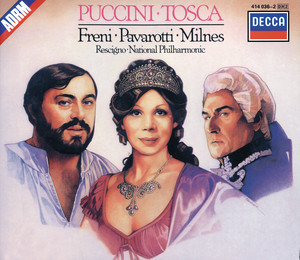 | Tosca, Act II: Tosca è un buon falco! | Giacomo Puccini, Sherrill Milnes, Paul Hudson, National Philharmonic Orchestra, Nicola Rescigno | E♭ Minor | 3 | 2A | 85 BPM | |
 | Donizetti: Don Pasquale, Act 2: "Ah! È rimasto là impietrato" (Malatesta, Pasquale, Norina, Ernesto) | Gaetano Donizetti, Riccardo Muti, Gösta Winbergh, Leo Nucci, Mirella Freni, Sesto Bruscantini, Philharmonia Orchestra | E Major | 2 | 12B | 75 BPM | |
 | Bro: la chiesetta triste | Riccardo Zandonai, Gianandrea Gavazzeni | D Major | 1 | 10B | 74 BPM | |
 | Andrea Chénier / Act 1: Passiamo la sera allegramente! ... O Pastorelle addio! | Umberto Giordano, Hugues Cuénod, Florindo Andreolli, Astrid Varnay, Luciano Pavarotti, Montserrat Caballé, Chorus of the Welsh National Opera, National Philharmonic Orchestra, Riccardo Chailly | A Major | 1 | 11B | 75 BPM | |
 | Les Contes d'Hoffmann / Act 1: "Drig, drig, drig, maître Luther" | Jacques Offenbach, Robin Leggate, Urban Malmberg, Kurt Rydl, Choeurs de Radio France, Jacques Jouineau, Orchestre National De France, Seiji Ozawa | C Major | 4 | 8B | 138 BPM | |
| Gounod: Faust, Act 5: "Doux nectar dans ton ivresse" (Chœur, Mephistophélès, Faust) | Charles Gounod, Michel Plasson, Chœur de l'Armée française, Choeur Du Capitole De Toulouse, José van Dam, Richard Leech, Orchestre Du Capitole De Toulouse | A Minor | 1 | 8A | 94 BPM | |
 | I cavalieri di Ekebu: Vi går tillsammans | Lars Cleveman, Malena Karlsson, Riccardo Zandonai, A. Rossato, M. Lindman | A Major | 1 | 11B | 100 BPM | |
 | Donizetti: Lucia di Lammermoor, Act III: Bridal Chorus. "D'immenso giubilo" | Gaetano Donizetti, Bernard Haitink, Chorus of the Royal Opera House, Covent Garden, Orchestra of the Royal Opera House, Covent Garden | E Major | 2 | 12B | 131 BPM | |
| Bellini: I puritani: "All’erta!" (Bruno, Coro) | Vincenzo Bellini, Dresdner Philharmonie, Riccardo Frizza | D Major | 5 | 10B | 136 BPM | |
 | Francesca da Rimini, Op. 4, Act III: Nemica ebbi la luce | Riccardo Zandonai, Martin Mühle, Christina Vasileva, Philharmonisches Orchester Freiburg, Fabrice Bollon | D Minor | 2 | 7A | 88 BPM | |
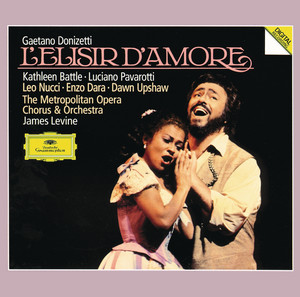 | L'elisir d'amore / Act II: Quanto amore! Ed io spietata! | Gaetano Donizetti, Enzo Dara, Kathleen Battle, Metropolitan Opera Orchestra, James Levine | E Major | 2 | 12B | 107 BPM | |
 | Giménez: La tempranica: Canción. "Sierras de Granada" | Geronimo Gimenez, Victoria de los Ángeles, Coro de Cámara del Real, Rafael Frühbeck de Burgos, Orquesta Nacional De España | D Major | 1 | 10B | 75 BPM | |
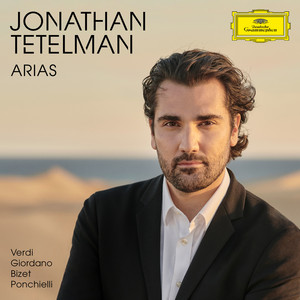 | Adriana Lecouvreur: La dolcissima effigie | Francesco Cilea, Jonathan Tetelman, Orquesta Filarmónica de Gran Canaria, Karel Mark Chichon | A Minor | 3 | 8A | 112 BPM | |
 | Penella: Don Gil de Alcalá: "Bendita cruz" | Lisette Oropesa, Óliver Díaz, Orquesta Sinfonica de Madrid | D Major | 1 | 10B | 81 BPM | |
 | Mozart: Così fan tutte, K. 588, Act 1: Terzetto. "É la fede delle femmine" (Ferrando, Don Alfonso, Guglielmo) | Wolfgang Amadeus Mozart, Nikolaus Harnoncourt, Royal Concertgebouw Orchestra, Deon Van Der Walt, Gilles Cachemaille, Thomas Hampson | D Major | 0 | 10B | 113 BPM |
- ISRC
- ATMA40502213
- Label
- L-M Records/RCA Records