- BPM
- 121
- Key
- C Major
- Camelot
- 8B
Simple Symphony, Op. 4: II. Playful Pizzicato by Benjamin Britten, English Chamber Orchestra Song Details
"Simple Symphony, Op. 4: II. Playful Pizzicato" by Benjamin Britten, English Chamber Orchestra had its release date on 1969. The duration of This song is about 3 minutes long, at 3:06. Based on our data, This song appears to be safe for all ages and is not considered explicit. This track is about the average length of a typical track. The song is number 3 out of 16 in Britten: The Young Person's Guide to the Orchestra; Simple Symphony, etc. by Benjamin Britten, London Symphony Orchestra, English Chamber Orchestra. Going off of the ISRC code of this track, we detected that the origin of this track is from United Kingdom. Based on our statistics, Simple Symphony, Op. 4: II. Playful Pizzicato's popularity is below average in popularity right now. Although the tone can be danceable to some, this track does projects more of a negative sound rather than a postive one.
BPM and Tempo
The tempo marking of Simple Symphony, Op. 4: II. Playful Pizzicato by Benjamin Britten, English Chamber Orchestra is Allegro (fast, quick, and bright), since this song has a tempo of 121 BPM. With that information, we can conclude that the song has a fast tempo. This song can go great with walking. The time signature for this track is 4/4.
Music Key
C Major is the music key of this track. This also means that this song has a camelot key of 8B. So, the perfect camelot match for 8B would be either 8B or 9A. While, 9B can give you a low energy boost. For moderate energy boost, you would use 5B and a high energy boost can either be 10B or 3B. Though, if you want a low energy drop, you should looking for songs with either a camelot key of 8A or 7B will give you a low energy drop, 11B would be a moderate one, and 6B or 1B would be a high energy drop. Lastly, 5A allows you to change the mood.
Want to find the BPM and music key for other songs? Check out our BPM and Key Finder page!
- Popularity
- 36%
- Loudness
- -24.234 dB
- Acousticness
- 94%
- Danceability
- 52%
- Energy
- 21%
- Instrumentalness
- 89%
- Liveness
- 11%
- Loudness
- 60%
- Speechiness
- 6%
- Valence
- 16%
Recommendations
| Track | Artist | Key | Energy | Camelot | BPM | ||
|---|---|---|---|---|---|---|---|
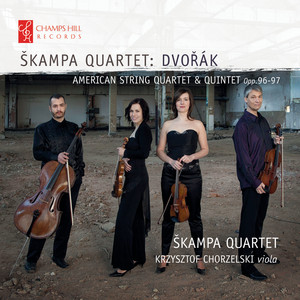 | String Quartet No. 12 in F Major, Op. 96 'The American': III. Molto vivace | Antonín Dvořák, Škampa Quartet | F Major | 1 | 7B | 70 BPM | |
 | Peer Gynt Suite No.1 op. 46 Anitra's Dance (Tempo di Mazurka) | Academy of St. Martin in the Fields | E Minor | 0 | 9A | 168 BPM | |
 | Walton: Henry V: Touch Her Soft Lips and Part | William Walton, Sir Neville Marriner, Academy of St. Martin in the Fields | B♭ Major | 4 | 6B | 113 BPM | |
 | On Hearing The First Cuckoo In Spring | Frederick Delius, Orchestra of the Welsh National Opera, Sir Charles Mackerras | G Major | 0 | 9B | 109 BPM | |
 | Havanaise in E Major, Op. 83 | Camille Saint-Saëns, Marat Bisengaliev, Polish National Radio Symphony Orchestra, Johannes Wildner | E Major | 1 | 12B | 95 BPM | |
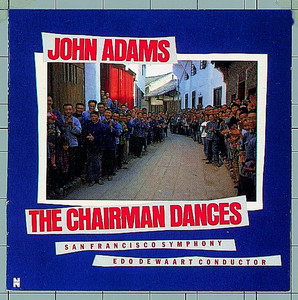 | Adams: The Chairman Dances (Foxtrot for Orchestra) | John Adams, Edo de Waart, San Francisco Symphony | G Major | 3 | 9B | 155 BPM | |
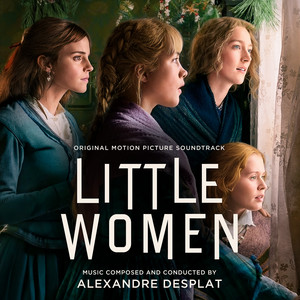 | Little Women - from "Little Women" Soundtrack | Alexandre Desplat | C Major | 3 | 8B | 156 BPM | |
 | Variations on a theme of Frank Bridge, Op.10: 7. Wiener Waltzer | Benjamin Britten, English Chamber Orchestra | C Major | 1 | 8B | 98 BPM | |
 | Adams: Hallelujah Junction: 1st Movement | John Adams, Nicolas Hodges, Rolf Hind | A♭ Major | 1 | 4B | 116 BPM | |
 | Berceuse, Op. 57 | Frédéric Chopin, Jon Nakamatsu | D♭ Major | 0 | 3B | 65 BPM | |
 | Symphony No. 1 in E Minor: III. Juba Dance | Florence Beatrice Price, Fort Smith Symphony, John Jeter | F Major | 2 | 7B | 111 BPM | |
 | Piano Trio, M. 67: III. Passacaille. Très large | Maurice Ravel, Beaux Arts Trio | F♯ Minor | 0 | 11A | 79 BPM | |
 | Rêverie, L. 68 | Claude Debussy, Alain Planès | F Major | 0 | 7B | 63 BPM | |
 | String Quartet No. 5: II. | Philip Glass, Kronos Quartet | C Major | 0 | 8B | 119 BPM | |
 | Briony | Dario Marianelli, Jean-Yves Thibaudet | A♭ Major | 3 | 4B | 105 BPM | |
 | Dance IV | Philip Glass | F Major | 2 | 7B | 176 BPM | |
| Variations on a theme of Frank Bridge, Op. 10: IV. Romance | Benjamin Britten, English Chamber Orchestra | B♭ Major | 1 | 6B | 81 BPM | |
 | Ancient Airs & Dances, Suite No. 3, P. 172: I. Italiana | Ottorino Respighi, Chamber Orchestra of New York, Salvatore Di Vittorio | B Major | 0 | 1B | 119 BPM | |
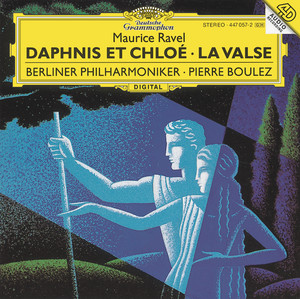 | Daphnis et Chloé, M. 57 / Troisième partie: Lever du jour | Maurice Ravel, Berliner Philharmoniker, Pierre Boulez, Rundfunkchor Berlin | E Minor | 0 | 9A | 79 BPM | |
 | Dance: II. Second Movement | Oliver Davis, Kerenza Peacock, Huw Watkins, Paul Bateman | F♯ Minor | 1 | 11A | 85 BPM | |
 | Florida Suite: IV. At Night | Frederick Delius, English Northern Philharmonia, David Lloyd-Jones | C Major | 1 | 8B | 74 BPM | |
 | Symphony No. 1, "Afro-american": I. Longing (Moderato assai) | William Grant Still, Fort Smith Symphony | A♭ Major | 0 | 4B | 81 BPM | |
 | Brook Green Suite: II. Air | Gustav Holst, English Sinfonia, Howard Griffiths | E♭ Major | 0 | 5B | 128 BPM | |
 | 3 Chorales, P. 167: No. 3, Andante (After J.S. Bach's BWV 645) | Ottorino Respighi, Seattle Symphony Orchestra, Gerard Schwarz | E♭ Major | 0 | 5B | 84 BPM | |
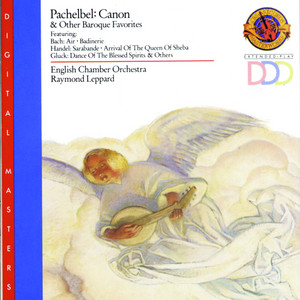 | I. Overture: II. Rondo | Henry Purcell, Raymond Leppard, English Chamber Orchestra | D Minor | 3 | 7A | 100 BPM |
- ISRC
- GBF076910102
- Label
- L-M Records/RCA Records