- BPM
- 122
- Key
- D♭ Major
- Camelot
- 3B
Dixit Dominus, RV 595: Virgam virtutis tuae: Allegro by Antonio Vivaldi, Jane Archibald, Michele de Boer, Anita Krause, Peter Mahon, Nils Brown, Giles Tomkins, Aradia Chorus, Aradia Ensemble, Kevin Mallon Song Details
Antonio Vivaldi, Jane Archibald, Michele de Boer, Anita Krause, Peter Mahon, Nils Brown, Giles Tomkins, Aradia Chorus, Aradia Ensemble, Kevin Mallon's 'Dixit Dominus, RV 595: Virgam virtutis tuae: Allegro' had a release date set for October 17, 2004. The duration of This song is about two minutes long, specifically at 2:13. This song does not appear to have any foul language. Dixit Dominus, RV 595: Virgam virtutis tuae: Allegro's duration is considered a little bit shorter than the average duration of a typical track. This song is part of Vivaldi, A.: Sacred Music, Vol. 1 by Antonio Vivaldi, Aradia Ensemble, Kevin Mallon. The song's track number on the album is #3 out of 28 tracks. Based on our data, Hong Kong was the country where this track was produced or recorded. Based on our statistics, Dixit Dominus, RV 595: Virgam virtutis tuae: Allegro's popularity is unknown right now. In our opinion, the overall tone is not very danceable and projects negative sounds, such as being sad, depressed, or angry.
BPM and Tempo
Since Dixit Dominus, RV 595: Virgam virtutis tuae: Allegro by Antonio Vivaldi, Jane Archibald, Michele de Boer, Anita Krause, Peter Mahon, Nils Brown, Giles Tomkins, Aradia Chorus, Aradia Ensemble, Kevin Mallon has a tempo of 122 beats per a minute, the tempo markings of this song would be Allegro (fast, quick, and bright). With Dixit Dominus, RV 595: Virgam virtutis tuae: Allegro being at 122 BPM, the half-time would be 61 BPM with a double-time of 244 BPM.In addition, we consider the tempo speed to be pretty fast for this song. This makes this song perfect for activities such as, walking. The time signature for this track is 4/4.
Music Key
D♭ Major is the music key of this track. Or for those who are familiar with the camelot wheel, this song has a camelot key of 3B. So, the perfect camelot match for 3B would be either 3B or 4A. While, 4B can give you a low energy boost. For moderate energy boost, you would use 12B and a high energy boost can either be 5B or 10B. Though, if you want a low energy drop, you should looking for songs with either a camelot key of 3A or 2B will give you a low energy drop, 6B would be a moderate one, and 1B or 8B would be a high energy drop. Lastly, 12A allows you to change the mood.
Want to find the BPM and music key for other songs? Check out our BPM and Key Finder page!
- Popularity
- 0%
- Loudness
- -21.114 dB
- Acousticness
- 98%
- Danceability
- 30%
- Energy
- 12%
- Instrumentalness
- 48%
- Liveness
- 5%
- Loudness
- 65%
- Speechiness
- 4%
- Valence
- 20%
Recommendations
| Track | Artist | Key | Energy | Camelot | BPM | ||
|---|---|---|---|---|---|---|---|
 | Albinoni: Adagio in G Minor | Tomaso Albinoni, Sir Neville Marriner, Academy of St. Martin in the Fields | C Minor | 1 | 5A | 90 BPM | |
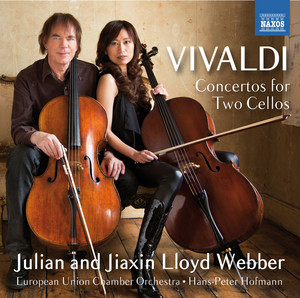 | Cello Concerto in E Minor, RV 409: I. Adagio - Allegro | Jiaxin Lloyd Webber, Julian Lloyd Webber, European Union Chamber Orchestra, Hanspeter Hofmann | G Minor | 1 | 6A | 108 BPM | |
 | Sonata concertata in A Major, Op. 61, MS 2: III. Rondeu - Allegretto con brio scherzando | Niccolò Paganini, Scott St. John, Simon Wynberg | E Major | 1 | 12B | 122 BPM | |
 | Carmen Suite No. 2: 2. Habanera | Georges Bizet, Orchestre de Paris, Semyon Bychkov | D Major | 0 | 10B | 134 BPM | |
 | Sicilienne, Op. 78 | Gabriel Fauré, Harriet Krijgh, Kamilla Isanbaeva | G Minor | 1 | 6A | 123 BPM | |
 | Masquerade Suite: Maskarad (Masquerade): I. Waltz | St. Petersburg State Symphony Orchestra, Aram Khachaturian | C Major | 3 | 8B | 94 BPM | |
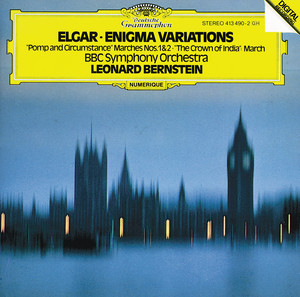 | Enigma Variations, Op. 36: Theme. Andante | Edward Elgar, BBC Symphony Orchestra, Leonard Bernstein | G Minor | 0 | 6A | 113 BPM | |
 | Hungarian Dance No. 5 in G Minor, WoO 1, No. 5 | Johannes Brahms, Budapest Festival Orchestra, Iván Fischer | F♯ Minor | 1 | 11A | 107 BPM | |
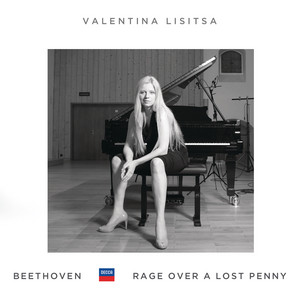 | Rage Over A Lost Penny, Op. 129 | Valentina Lisitsa | G Major | 2 | 9B | 80 BPM | |
 | Moses Fantasy | Niccolò Paganini, Nemanja Radulović | C Major | 1 | 8B | 100 BPM | |
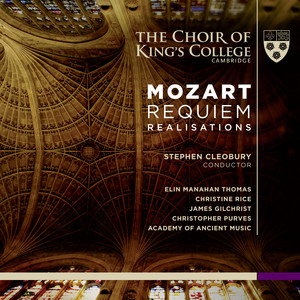 | Requiem, K. 626: Lacrimosa | Wolfgang Amadeus Mozart, Michael Finnissy, Academy of Ancient Music, Stephen Cleobury, Choir of King's College, Cambridge | D Minor | 1 | 7A | 132 BPM | |
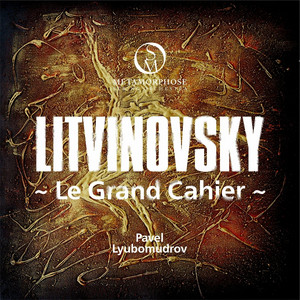 | Le grand cahier: V. La servante et l'ordonnance | Alexander Litvinovsky, Metamorphose String Orchestra, Pavel Lyubomudrov | A Major | 1 | 11B | 95 BPM | |
 | 4 Romantic Pieces, Op. 75, B. 150: I. Allegro moderato (Arr. Soltani For Solo Cello and Cello Ensemble) | Antonín Dvořák, Kian Soltani, Staatskapelle Berlin, Cellists | B♭ Major | 1 | 6B | 115 BPM | |
 | Concerto for 2 oboes, strings & continuo in C Major, RV 534: I. Allegro | Antonio Vivaldi, La Serenissima, Adrian Chandler, Rachel Chaplin, Mark Baigent | C Major | 4 | 8B | 114 BPM | |
 | Cassadó: Toccata (in the Style of Frescobaldi) | Mstislav Rostropovich, Herbert Tachezi | D Major | 1 | 10B | 91 BPM | |
 | Peer Gynt Suite No. 1, Op. 46: Morning Mood | London Philharmonic Orchestra | E Major | 1 | 12B | 132 BPM | |
| Concerto for 2 Cellos in G Minor, RV 531: III. Allegro | Julian Lloyd Webber, Jiaxin Lloyd Webber, European Union Chamber Orchestra, Hanspeter Hofmann | G Minor | 1 | 6A | 108 BPM | |
 | Violin Sonata in G Minor, "Devil's Trill": III. Allegro assai | Giuseppe Tartini, Ray Chen, Noreen Polera | G Minor | 1 | 6A | 75 BPM | |
 | Concerto grosso in D Major, Op. 3/1, RV. 549: I. Allegro | Antonio Vivaldi, Simon Standage, Elizabeth Wilcock, Michaela Comberti, Miles Golding, Jaap Ter Linden, The English Concert, Trevor Pinnock | B Minor | 3 | 10A | 125 BPM | |
 | Concerto in D Minor for Two Violins, BWV 1043: Vivace | Johann Sebastian Bach, Jascha Heifetz, Erick Friedman, Thornton Lofthouse, The New Symphony Orchestra Of London, Sir Malcolm Sargent | A Minor | 2 | 8A | 94 BPM | |
 | Haydn: Cello Concerto No. 2 in D Major, Hob. VIIb:2: III. Rondo. Allegro | Joseph Haydn, Mstislav Rostropovich, Academy of St. Martin in the Fields | A Major | 1 | 11B | 138 BPM | |
 | Concerto for Lute, 2 Violins and Continuo in D major, RV 93: 3. Allegro | Antonio Vivaldi, Tom Finucane, New London Consort, Philip Pickett | D♭ Major | 1 | 3B | 117 BPM | |
 | Vocalise, Op. 34, No. 14 | Sergei Rachmaninoff, Nikolaj Znaider | E Minor | 1 | 9A | 103 BPM | |
 | Concerto Grosso In D Major, Op. 6, No. 1 : III. Largo | Arcangelo Corelli, Daniela Ruso, Anna Holbling, Ludovit Kanta, Quido Holbling, Capella Istropolitana | D Major | 1 | 10B | 78 BPM | |
 | Ständchen in D Minor (After Schubert), S. 560 | Franz Liszt, Lise de la Salle | D Major | 0 | 10B | 76 BPM |
- ISRC
- HKI190344803
- Label
- L-M Records/RCA Records