- BPM
- 92
- Key
- E♭ Minor
- Camelot
- 2A
Simon Boccanegra, Act III: Piango, perché mi parla by Giuseppe Verdi, Piero Cappuccilli, Nicolai Ghiaurov, Orchestra Del Teatro Alla Scala, Milano, Claudio Abbado Song Details
"Simon Boccanegra, Act III: Piango, perché mi parla" by Giuseppe Verdi, Piero Cappuccilli, Nicolai Ghiaurov, Orchestra Del Teatro Alla Scala, Milano, Claudio Abbado had its release date on January 1, 1977. With this song being around four minutes long, at 3:48, the duration of this song is pretty average compared to other songs. This track is safe for children and doesn't appear to contain any foul language, since the "Explicit" tag was not present in this track. This song is part of Verdi: Simon Boccanegra by Giuseppe Verdi, Orchestra Del Teatro Alla Scala, Milano, Claudio Abbado. The song's track number on the album is #10 out of 29 tracks. Based on our data, Germany was the country where this track was produced or recorded. In terms of popularity, Simon Boccanegra, Act III: Piango, perché mi parla is currently not that popular. In our opinion, the overall tone is not very danceable and projects negative sounds, such as being sad, depressed, or angry.
BPM and Tempo
Since Simon Boccanegra, Act III: Piango, perché mi parla by Giuseppe Verdi, Piero Cappuccilli, Nicolai Ghiaurov, Orchestra Del Teatro Alla Scala, Milano, Claudio Abbado has a tempo of 92 beats per a minute, the tempo markings of this song would be Andante (at a walking pace). With Simon Boccanegra, Act III: Piango, perché mi parla being at 92 BPM, the half-time would be 46 BPM with a double-time of 184 BPM.In addition, we consider the tempo speed to be pretty slow for this song. This makes this song perfect for activities such as, yoga or pilates. The time signature for this track is 4/4.
Music Key
This song is in the music key of E♭ Minor. Which also means that the camelot key for this song is 2A. So, the perfect camelot match for 2A would be either 2A or 1B. While, a low energy boost can consist of either 2B or 3A. For moderate energy boost, you would use 11A and a high energy boost can either be 4A or 9A. However, if you are looking for a low energy drop, finding a song with a camelot key of 1A would be a great choice. Where 5A would give you a moderate drop, and 12A or 7A would be a high energy drop. Lastly, 5B allows you to change the mood.
Want to find the BPM and music key for other songs? Check out our BPM and Key Finder page!
- Popularity
- 7%
- Loudness
- -16.093 dB
- Acousticness
- 99%
- Danceability
- 18%
- Energy
- 21%
- Instrumentalness
- 77%
- Liveness
- 11%
- Loudness
- 73%
- Speechiness
- 4%
- Valence
- 6%
Recommendations
| Track | Artist | Key | Energy | Camelot | BPM | ||
|---|---|---|---|---|---|---|---|
 | 21 Hungarian Dances, WoO 1: Hungarian Dance No. 5 in G Minor. Allegro (Orch. Schmeling) | Johannes Brahms, Wiener Philharmoniker, Claudio Abbado | G Minor | 2 | 6A | 145 BPM | |
 | La Wally (1997 Digital Remaster): Ebben?...Ne andrò lontana | Maria Callas, Tullio Serafin, Philharmonia Orchestra | C Major | 2 | 8B | 71 BPM | |
 | Tannhäuser, WWV 70, Act II: Dich, teure Halle, grüß ich wieder | Richard Wagner, Lise Davidsen, Philharmonia Orchestra, Esa-Pekka Salonen | E Minor | 2 | 9A | 169 BPM | |
 | Tosca / Act 3: "E lucevan le stelle" | Giacomo Puccini, Luciano Pavarotti, Orchestra of the Royal Opera House, Covent Garden, Sir Edward Downes | B Minor | 1 | 10A | 90 BPM | |
 | Rigoletto, Act I: Questa o quella – Partite? Crudele – Ah, più di Ceprano | Giuseppe Verdi, Plácido Domingo, Olive Fredricks, Luigi De Corato, Dirk Sagemüller, Piero Cappuccilli, Walter Gullino, Wiener Philharmoniker, Carlo Maria Giulini, Wiener Staatsopernchor | B♭ Major | 3 | 6B | 134 BPM | |
 | La traviata / Act 3: "Prendi, quest'è l'immagine" | Giuseppe Verdi, Anna Netrebko, Rolando Villazón, Thomas Hampson, Diane Pilcher, Luigi Roni, Wiener Philharmoniker, Carlo Rizzi | D♭ Minor | 1 | 12A | 87 BPM | |
 | Mozart: Le nozze di Figaro, K. 492, Act 2: "Voi, che sapete che cosa è amor" (Cherubino) | Wolfgang Amadeus Mozart, Riccardo Muti, Ann Murray, Wiener Philharmoniker | B♭ Major | 1 | 6B | 111 BPM | |
 | Norma (1997 Digital Remaster): Casta Diva | Maria Callas, Tullio Serafin, Orchestra Del Teatro Alla Scala, Milano | F Major | 1 | 7B | 169 BPM | |
 | Il figlio di la zingarella (From "Il Trovatore") - Remasterizado | Luis Cobos | G Major | 3 | 9B | 129 BPM | |
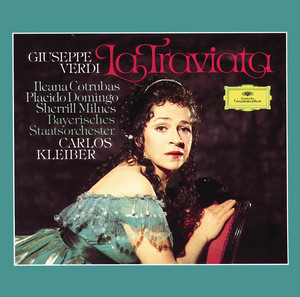 | La Traviata / Act 2: "Di Madride noi siam mattadori" | Giuseppe Verdi, Stefania Malagu, Walter Gullino, Giovanni Foiani, Alfredo Giacomotti, Chor der Bayerischen Staatsoper München, Bavarian State Orchestra, Carlos Kleiber | G Major | 4 | 9B | 138 BPM | |
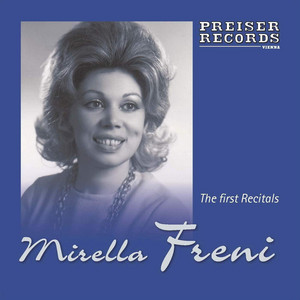 | Turandot: Tu, che di gel sei cinta | Mirella Freni, Vienna Volksoper Orchestra, Argeo Quadri | B Major | 2 | 1B | 87 BPM | |
 | Rigoletto | Tito Gobbi | F♯ Major | 4 | 2B | 0 BPM | |
 | Requiem: IIg. Recordare | Giuseppe Verdi, Mirella Freni, Christa Ludwig, Berliner Philharmoniker, Herbert von Karajan | F Major | 1 | 7B | 77 BPM | |
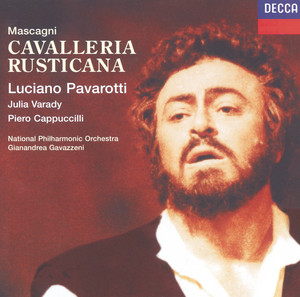 | Cavalleria rusticana: Preludio | Pietro Mascagni, National Philharmonic Orchestra, Gianandrea Gavazzeni | F Major | 2 | 7B | 88 BPM | |
 | Verdi : Rigoletto : Act 3 "Chi mai, chi è qui" [Rigoletto, Gilda] | Giuseppe Verdi, Carlo Rizzi, Orchestra of Welsh National Opera | E Major | 0 | 12B | 83 BPM | |
| La Sonnambula (1997 Digital Remaster): Compagne, temiri amici ....Come per me sereno | Maria Callas, Orchestra Del Teatro Alla Scala, Milano, Tullio Serafin | A♭ Major | 1 | 4B | 113 BPM | |
| Cavalleria rusticana: "Beato voi, compar Alfio...Inneggiamo, Il Signor" | Pietro Mascagni, Ida Bormida, Piero Cappuccilli, Julia Varady, The London Opera Chorus, National Philharmonic Orchestra, Gianandrea Gavazzeni | G Major | 2 | 9B | 68 BPM | |
 | Les Contes d'Hoffmann (1989 Digital Remaster), Act III: Entr'acte et Barcarolle: Belle nuit, ô nuit d'amour (Une voix/Giulietta/Choeurs) | Jacques Offenbach, Nicolai Gedda, Elisabeth Schwarzkopf, Victoria de los Ángeles, Gianna D'Angelo, Christiane Gayraud, Jacques Pruvost, Robert Geay, George London, Michel Sénéchal, Jean Christophe Benoit, Jean-Pierre Laffage, Nicola Ghiuselev, André Malla | D Major | 1 | 10B | 90 BPM | |
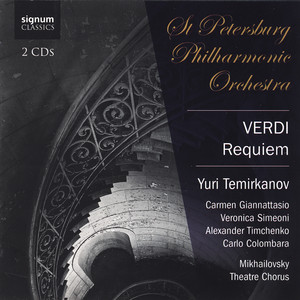 | Lacrymosa | Giuseppe Verdi, Carmen Giannattasio, Veronica Simeoni, Alxander Timchenko, Carlo Colombara, Yuri Temirkanov, St. Petersburg Philharmonic Orchestra | B♭ Minor | 2 | 3A | 79 BPM | |
 | "Libiamo, libiamo ne' lieti calici" from La Traviata | Giuseppe Verdi, José Carreras, Agnes Baltsa, Plácido Domingo, London Symphony Orchestra | F Major | 1 | 7B | 82 BPM | |
 | Turandot, SC 91 / Act 3: Nessun dorma | Giacomo Puccini, Freddie De Tommaso, Apollo Voices, Philharmonia Orchestra, Paolo Arrivabeni | D Major | 2 | 10B | 71 BPM | |
 | Carmina Burana: XI. Estuans interius | Carl Orff, Dietrich Fischer-Dieskau, Orchester der Deutschen Oper Berlin, Eugen Jochum | A Minor | 4 | 8A | 84 BPM | |
 | Siface: Come Nave in mezzo all'onde | Nicola Porpora, Cecilia Bartoli, Il Giardino Armonico, Giovanni Antonini | E Major | 4 | 12B | 140 BPM | |
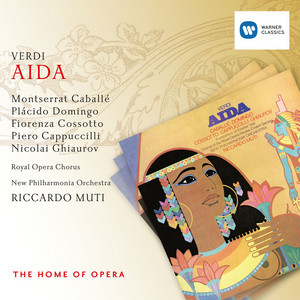 | Verdi: Aida, Act 2: Ballabile | Giuseppe Verdi, Riccardo Muti, New Philharmonia Orchestra | F Minor | 3 | 4A | 79 BPM | |
 | L'elisir d'amore / Act 2: "Una furtiva lagrima" | Gaetano Donizetti, Luciano Pavarotti, English Chamber Orchestra, Richard Bonynge | B♭ Major | 1 | 6B | 166 BPM |
- ISRC
- DEF057730231
- Label
- L-M Records/RCA Records