- BPM
- 84
- Key
- G Major
- Camelot
- 9B
Noviy Vavilon (New Babylon), Op. 18 [original manuscript version]: Reel 5, Versailles against Paris: Paris has stood for centuries by Basel Sinfonietta, Mark Fitz-Gerald Song Details
"Noviy Vavilon (New Babylon), Op. 18 [original manuscript version]: Reel 5, Versailles against Paris: Paris has stood for centuries" by Basel Sinfonietta, Mark Fitz-Gerald had its release date on November 1, 2011. This song appears to be safe for all ages as it is not explicit. There are a total of 9 in the song's album "Shostakovich: The New Babylon". In this album, this song's track order is #1. Furthermore, we believe that the track originated from Hong Kong. Noviy Vavilon (New Babylon), Op. 18 [original manuscript version]: Reel 5, Versailles against Paris: Paris has stood for centuries is unknown right now. In our opinion, the overall tone is not very danceable and projects negative sounds, such as being sad, depressed, or angry.
BPM and Tempo
With Noviy Vavilon (New Babylon), Op. 18 [original manuscript version]: Reel 5, Versailles against Paris: Paris has stood for centuries by Basel Sinfonietta, Mark Fitz-Gerald having a BPM of 84 with a half-time of 42 BPM and a double-time of 168 BPM, we would consider this track to have a Andante (at a walking pace) tempo marking. Because of this, we believe that the song has an overall slow tempo. The time signature for this track is 4/4.
Music Key
G Major is the music key of this track. Or for those who are familiar with the camelot wheel, this song has a camelot key of 9B. So, the perfect camelot match for 9B would be either 9B or 10A. While, 10B can give you a low energy boost. For moderate energy boost, you would use 6B and a high energy boost can either be 11B or 4B. Though, if you want a low energy drop, you should looking for songs with either a camelot key of 9A or 8B will give you a low energy drop, 12B would be a moderate one, and 7B or 2B would be a high energy drop. Lastly, 6A allows you to change the mood.
Want to find the BPM and music key for other songs? Check out our BPM and Key Finder page!
- Popularity
- 0%
- Loudness
- -23.22 dB
- Acousticness
- 79%
- Danceability
- 19%
- Energy
- 1%
- Instrumentalness
- 20%
- Liveness
- 7%
- Loudness
- 61%
- Speechiness
- 4%
- Valence
- 8%
Recommendations
| Track | Artist | Key | Energy | Camelot | BPM | ||
|---|---|---|---|---|---|---|---|
 | Symphony No. 1 in G Minor: III. Scherzo: Allegro non troppo - moderato assai | Vasily Kalinnikov, Ukraine National Symphony Orchestra, Theodore Kuchar | A Minor | 2 | 8A | 110 BPM | |
 | Pini di Roma, P. 141: II. Pini presso una catacomba | Ottorino Respighi, New York Philharmonic, Giuseppe Sinopoli | F Minor | 0 | 4A | 93 BPM | |
 | Eine Alpensinfonie: V. Auf dem Gletscher - Gefahrvolle Augenblicke | Richard Strauss, Bernard Haitink, London Symphony Orchestra | F♯ Minor | 0 | 11A | 83 BPM | |
 | Symphony No. 6: III. Scherzo. Wuchtig | Gustav Mahler, Berliner Philharmoniker, Kirill Petrenko | F Major | 1 | 7B | 140 BPM | |
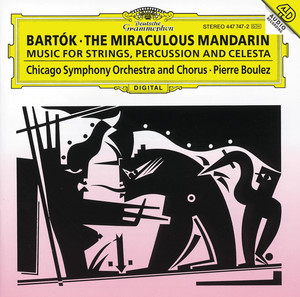 | The Miraculous Mandarin, Sz. 73: Introduction. Allegro | Béla Bartók, Chicago Symphony Orchestra, Pierre Boulez | D♭ Minor | 4 | 12A | 59 BPM | |
 | Piano Concerto No. 1 in C Minor, Op 33: I. Allegro | Nikolai Medtner, Geoffrey Tozer, Neeme Järvi, London Philharmonic Orchestra | G Major | 2 | 9B | 79 BPM | |
 | Shu Hai in an Orchestral Setting: II. Vocal Entrance I | Chaya Czernowin, Ute Wassermann, SWR Experimentalstudio, Basel Sinfonietta, Johannes Kalitzke | E Major | 1 | 12B | 93 BPM | |
 | Scheherazade: The Fight | Nikolai Rimsky-Korsakov, Joakim Svenheden | E Minor | 1 | 9A | 80 BPM | |
| Fontane di Roma, P. 106: IV. La fontana di Villa Medici al tramonto | Ottorino Respighi, New York Philharmonic, Giuseppe Sinopoli | F♯ Minor | 0 | 11A | 61 BPM | |
 | Piano Concerto No. 1 in C Minor, Op. 35: IV. Allegro con brio | Dmitri Shostakovich, André Previn, William Vacchiano, New York Philharmonic, Leonard Bernstein | D Minor | 4 | 7A | 89 BPM | |
 | String Quartet No. 2 in F Major, Op. 92: II. Adagio | Sergei Prokofiev, Pacifica Quartet | A Minor | 1 | 8A | 88 BPM | |
 | Simple Symphony, Op. 4: III. Sentimental Sarabande | Benjamin Britten, Camerata Nordica, Terje Tonnesen | G Minor | 0 | 6A | 85 BPM | |
 | Symphony No. 3 in C Major, Op. 52: II. Andantino con moto, quasi allegretto - Un pocchettino con moto - Tempo primo | Jean Sibelius, Berliner Philharmoniker, Sir Simon Rattle | A♭ Minor | 0 | 1A | 136 BPM | |
 | Poulenc: Concerto for Two Pianos in D Minor, FP 61: I. Allegro ma non troppo | Francis Poulenc, James Conlon, Rotterdam Philharmonic Orchestra | E♭ Major | 1 | 5B | 103 BPM | |
 | Symphonic Metamorphosis of Themes by Carl Maria von Weber: IV. Marsch | Paul Hindemith, WDR Sinfonieorchester Köln, Marek Janowski | B♭ Major | 3 | 6B | 89 BPM | |
| Scheherazade: Calm at Sea | Nikolai Rimsky-Korsakov, Lars Hjalmar Joakim | E Major | 2 | 12B | 84 BPM | |
 | Gayane Suite No. 3: V. Solo - Love Duet | Aram Khachaturian, St. Petersburg State Symphony Orchestra, Andre Anichanov | D Major | 3 | 10B | 175 BPM | |
| Scheherazade: Storm at Sea | Nikolai Rimsky-Korsakov, Lars Hjalmar Joakim | C Major | 4 | 8B | 91 BPM | |
 | Aleko: Introduction | Sergei Rachmaninoff, Gianandrea Noseda, BBC Philharmonic Orchestra | G Minor | 0 | 6A | 64 BPM | |
 | L'Oiseau de feu, K010: X. Khorovod (Ronde) des princesses | Igor Stravinsky, Chicago Symphony Orchestra, Pierre Boulez | B Major | 0 | 1B | 142 BPM | |
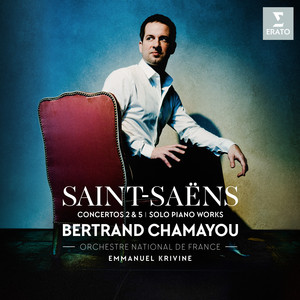 | Saint-Saëns: Piano Concerto No. 5 in F Major, Op. 103 "Egyptian": III. Molto allegro | Camille Saint-Saëns, Bertrand Chamayou, Emmanuel Krivine, Orchestre National De France | G Major | 0 | 9B | 130 BPM | |
 | Symphonie fantastique, Op. 14, H 48: 5d. Songe d'une nuit du Sabbat - Dies irae et Ronde du Sabbat ensemble | Hector Berlioz, Chicago Symphony Orchestra, Claudio Abbado | B♭ Major | 1 | 6B | 153 BPM | |
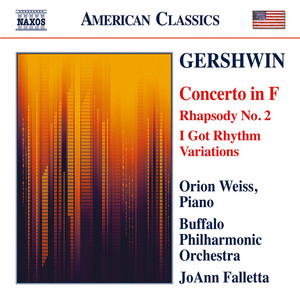 | Piano Concerto in F Major: III. Allegro agitato | George Gershwin, Orion Weiss, Buffalo Philharmonic Orchestra, Joann Falletta | A♭ Major | 2 | 4B | 87 BPM | |
 | Prince Igor (Knyaz Igor): Overture | Alexander Borodin, Ukraine National Radio Symphony Orchestra, Theodore Kuchar | G Minor | 1 | 6A | 73 BPM | |
 | Symphony in C Major, Op. 46: II. Sehr langsam - | Hans Pfitzner, Seattle Symphony Orchestra, Gerard Schwarz | F Major | 0 | 7B | 87 BPM |
- ISRC
- HKI191135701
- Label
- L-M Records/RCA Records