- BPM
- 172
- Key
- G Major
- Camelot
- 9B
Strike the viol by Henry Purcell, Carlos Mena, Philippe Pierlot, Ricercar Consort Song Details
"Strike the viol" by Henry Purcell, Carlos Mena, Philippe Pierlot, Ricercar Consort had its release date on September 21, 2010. The duration of This song is about two minutes long, specifically at 2:03. This song does not appear to have any foul language. Strike the viol's duration is considered a little bit shorter than the average duration of a typical track. The song is number 5 out of 12 in Blow & Purcell: Odes and Songs by Henry Purcell, Ricercar Consort, Philippe Pierlot. Going off of the ISRC code of this track, we detected that the origin of this track is from France. The popularity of Strike the viol is currently not that popular right now. In our opinion, the overall tone is not very danceable and projects negative sounds, such as being sad, depressed, or angry.
BPM and Tempo
The tempo marking of Strike the viol by Henry Purcell, Carlos Mena, Philippe Pierlot, Ricercar Consort is Vivace (lively and fast), since this song has a tempo of 172 BPM. With that information, we can conclude that the song has a fast tempo. The time signature for this track is 3/4.
Music Key
This song is in the music key of G Major. This also means that this song has a camelot key of 9B. So, the perfect camelot match for 9B would be either 9B or 10A. While, 10B can give you a low energy boost. For moderate energy boost, you would use 6B and a high energy boost can either be 11B or 4B. Though, if you want a low energy drop, you should looking for songs with either a camelot key of 9A or 8B will give you a low energy drop, 12B would be a moderate one, and 7B or 2B would be a high energy drop. Lastly, 6A allows you to change the mood.
Want to find the BPM and music key for other songs? Check out our BPM and Key Finder page!
- Popularity
- 14%
- Loudness
- -21.609 dB
- Acousticness
- 97%
- Danceability
- 26%
- Energy
- 7%
- Instrumentalness
- 0%
- Liveness
- 24%
- Loudness
- 64%
- Speechiness
- 6%
- Valence
- 16%
Recommendations
| Track | Artist | Key | Energy | Camelot | BPM | ||
|---|---|---|---|---|---|---|---|
 | Concerto No. 2 In G Minor RV 578: II. Allegro (Vivaldi) | Accademia Bizantina | F♯ Minor | 3 | 11A | 120 BPM | |
 | Suite From Abdelzar: I. Rondeau | Henry Purcell, Tafelmusik Baroque Orchestra, Jeanne Lamon | D♭ Minor | 1 | 12A | 101 BPM | |
 | Hasse: Orfeo: "Sempre a si vaghi rai" (Orfeo) | Johann Adolf Hasse, Jakub Józef Orliński, Maxim Emelyanychev, Il Pomo D'oro | E Major | 3 | 12B | 176 BPM | |
 | Introduttione II in F Major, Op. 4 No. 2: II. Andante | Pietro Locatelli, Fabio Biondi, Europa Galante | A♭ Major | 1 | 4B | 123 BPM | |
 | Tu mancavi a tormentarmi, crudelissima speranza (Arr. L. Stokowski) | Antonio Cesti, Brussels Philharmonic, Richard Egarr | E Major | 1 | 12B | 87 BPM | |
 | Organ Concerto No. 5 in F, Op. 4 No. 5 HWV 293: 3. Alla siciliana | George Frideric Handel, Accademia Bizantina, Ottavio Dantone | A♭ Major | 0 | 4B | 119 BPM | |
 | Lo frate 'nnamorato: II. Andante | Giovanni Battista Pergolesi, Orchestra da Camera di Napoli, Enzo Amato | E Minor | 5 | 9A | 165 BPM | |
 | Concerto for Flute and Oboe in B Minor, FaWV L:H1: I. Allegro | Johann Friedrich Fasch, Jan De Winne, Marcel Ponseele, Il Gardellino | D♭ Major | 2 | 3B | 93 BPM | |
 | Pièces de viole, Livre 2 - Suite No. 3 in D Major: No. 63. Les Voix Humaines (Lentement) | Marin Marais, Philippe Pierlot | D♭ Major | 0 | 3B | 77 BPM | |
 | Musiche sacre: No. 23, Canzon à 3 | Francesco Cavalli, London Baroque | A♭ Minor | 1 | 1A | 122 BPM | |
 | Symphony in C Major, J-C 4: II. Andante e affettuoso | Giovanni Battista Sammartini, Aradia Ensemble, Kevin Mallon | F♯ Major | 1 | 2B | 137 BPM | |
| Bononcini: La Nemica d'Amore fatta amante, Pt. 1: Sinfonia | Giovanni Bononcini, Maxim Emelyanychev, Il Pomo D'oro | F♯ Minor | 2 | 11A | 138 BPM | |
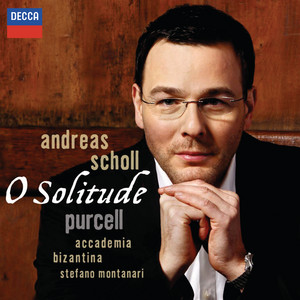 | The Fairy Queen / Act 2: One Charming Night | Henry Purcell, Andreas Scholl, Accademia Bizantina, Stefano Montanari | B Minor | 1 | 10A | 80 BPM | |
 | Purcell: Chacony in G Minor, Z. 730 | Henry Purcell, Sir Neville Marriner, Academy of St. Martin in the Fields | B♭ Major | 4 | 6B | 113 BPM | |
 | Concerto a cinque No. 2, Op. 9: III. Allegro | Tomaso Albinoni, Paul Dombrecht, Il Fondamento | D♭ Minor | 4 | 12A | 116 BPM | |
 | 27 Pieces for Viola da gamba: Prelude, WKO 205 | Carl Friedrich Abel, Petr Wagner | D♭ Minor | 1 | 12A | 98 BPM | |
 | Jesu, meine Freude in E Minor, BuxWV 60: I. Sonata | Dietrich Buxtehude, Ensemble Masques, Olivier Fortin | E Minor | 1 | 9A | 167 BPM | |
 | Nais, RCT 49: Ouverture | Jean-Philippe Rameau, Teodor Currentzis | F♯ Major | 4 | 2B | 128 BPM | |
 | Miserere, ZWV 57: I. Miserere I | Jan Dismas Zelenka, Accademia Barocca Lucernensis, Javier Ulises Illán | B Minor | 3 | 10A | 75 BPM | |
 | Il ritorno d'Ulisse in patria: Sinfonia | Claudio Monteverdi, René Jacobs, Concerto Vocale | A Minor | 1 | 8A | 116 BPM | |
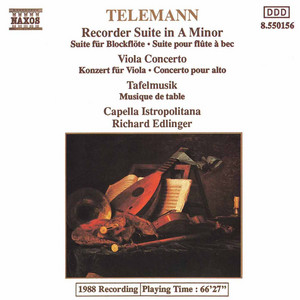 | Viola Concerto In G Major, TWV 51:g9: I. Largo | Ladislav Kyselák, Capella Istropolitana, Georg Philipp Telemann | G Major | 1 | 9B | 144 BPM | |
 | Gavotte - Arr. for Cello and Piano | Jean-Baptiste Lully, Mischa Maisky, Pavel Gililov | D Minor | 0 | 7A | 85 BPM | |
 | Telemann: Trumpet Concerto in D Major, TWV 51:D7: II. Allegro | Georg Philipp Telemann, Alison Balsom | D♭ Major | 4 | 3B | 112 BPM | |
 | Symphony No. 5 in D Major, Op. 2, "St. Cecilia's Day Ode": I. Allegro ma non troppo - Allegro assai | William Boyce, Aradia Ensemble, Kevin Mallon | D♭ Major | 2 | 3B | 126 BPM | |
 | Sonata in C Minor, Jung III.2.B: I. Largo | Johann Georg Pisendel, Concerto Köln, Mayumi Hirasaki | B Minor | 1 | 10A | 96 BPM |
- ISRC
- FRU621010905
- Label
- L-M Records/RCA Records