- BPM
- 143
- Key
- E Minor
- Camelot
- 9A
Suite in E Minor, HWV 429: I. Allegro by George Frideric Handel, Ragna Schirmer Song Details
George Frideric Handel, Ragna Schirmer's ' "Suite in E Minor, HWV 429: I. Allegro" was released on its scheduled release date, March 13, 2009. With this song being about 5 minutes long, at This song is fairly a long song compared to the average song length. This song does not have an "Explicit" tag, making it safe for all ages. The track order of this song in George Frideric Handel, Ragna Schirmer's "Handel: Keyboard Suites" album is number 9 out of 71. On top of that, Germany appears to be the country where this track was created. Based on our statistics, Suite in E Minor, HWV 429: I. Allegro's popularity is not that popular right now. Based on the vibe, this track doesn't seem to be that danceable, however its valence properties can make this some somewhat danceable.
BPM and Tempo
We consider the tempo marking of Suite in E Minor, HWV 429: I. Allegro by George Frideric Handel, Ragna Schirmer to be Allegro (fast, quick, and bright) because the track has a tempo of 143 BPM, a half-time of 72BPM, and a double-time of 286 BPM. Based on that, the speed of the song's tempo is fast. Activities such as, jogging or cycling, can go well with this song. The time signature for this track is 4/4.
Music Key
This song is in the music key of E Minor. Because this track belongs in the E Minor key, the camelot key is 9A. So, the perfect camelot match for 9A would be either 9A or 8B. While, a low energy boost can consist of either 9B or 10A. For moderate energy boost, you would use 6A and a high energy boost can either be 11A or 4A. However, if you are looking for a low energy drop, finding a song with a camelot key of 8A would be a great choice. Where 12A would give you a moderate drop, and 7A or 2A would be a high energy drop. Lastly, 12B allows you to change the mood.
Want to find the BPM and music key for other songs? Check out our BPM and Key Finder page!
- Popularity
- 4%
- Loudness
- -21.541 dB
- Acousticness
- 99%
- Danceability
- 28%
- Energy
- 30%
- Instrumentalness
- 91%
- Liveness
- 9%
- Loudness
- 64%
- Speechiness
- 4%
- Valence
- 42%
Recommendations
| Track | Artist | Key | Energy | Camelot | BPM | ||
|---|---|---|---|---|---|---|---|
 | Concerto Grosso in E Minor, Op. 6 No. 3, HWV 321: IV. Polonaise | George Frideric Handel, Academy of Ancient Music, Andrew Manze | F♯ Major | 1 | 2B | 98 BPM | |
 | Keyboard Sonata in B Minor, Wq. 55/3, H. 245: Cantabile | Carl Philipp Emanuel Bach, Christopher Hinterhuber | E Minor | 1 | 9A | 106 BPM | |
 | L'Aria | Heinrich Ignaz Franz von Biber, Christina Pluhar | D Minor | 1 | 7A | 86 BPM | |
 | Water Music Suite No. 3 in G Major, HWV 350: Rigaudon I & II | George Frideric Handel, Academy of St. Martin in the Fields, Sir Neville Marriner | G Major | 1 | 9B | 98 BPM | |
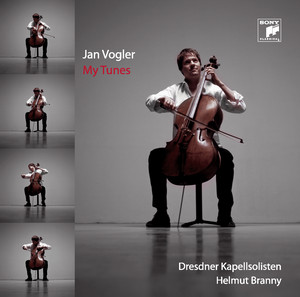 | Kol Nidrei, Op. 47 | Max Bruch, Jan Vogler, Helmut Branny | D Major | 1 | 10B | 136 BPM | |
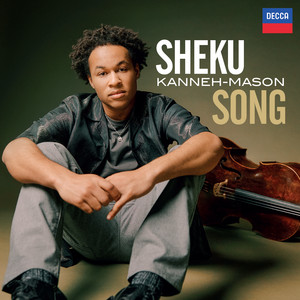 | Savior of the Nations, Come, BWV 659 (Arr. for 4 Cellos) | Johann Sebastian Bach, Sheku Kanneh-Mason, Hannah Roberts, Ben Davies, Max Ruisi | C Major | 0 | 8B | 122 BPM | |
 | Concerto a due cori No. 1 in B flat (1989 Digital Remaster): II. Allegro | George Frideric Handel, Yehudi Menuhin, Menuhin Festival Orchestra | B♭ Major | 2 | 6B | 101 BPM | |
 | Torelli: Trumpet Concerto in D Major, G. 28 "Estienne Roger": I. Allegro | Alison Balsom | D Major | 3 | 10B | 102 BPM | |
 | Nouvelles suites de pièces de clavecin, Suite in A Minor, RCT 5: V. Fanfarinette | Jean-Philippe Rameau, Mahan Esfahani | B♭ Minor | 3 | 3A | 94 BPM | |
 | Couperin: Les Baricades mistérieuses | François Couperin, Aurora Orchestra, Nicholas Collon | B♭ Major | 0 | 6B | 65 BPM | |
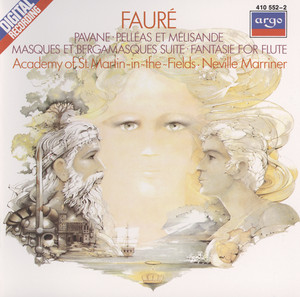 | Pelléas et Mélisande, Op.80: 3. Sicilienne | Gabriel Fauré, Academy of St. Martin in the Fields, Sir Neville Marriner | G Minor | 0 | 6A | 111 BPM | |
 | Overture (Suite) In G Minor, TWV 55: G4: III. Les Irresoluts | Cologne Chamber Orchestra, Georg Philipp Telemann | G Minor | 1 | 6A | 82 BPM | |
 | Oboe Concerto in D Minor, Op. 9 No. 2: II. Adagio | Tomaso Albinoni, David Reichenberg, The English Concert, Trevor Pinnock | A Major | 1 | 11B | 68 BPM | |
 | Sonata in D Major, No. 1: IV. Adagio | Arcangelo Corelli, Lucy van Dael, Bob van Asperen | B♭ Minor | 1 | 3A | 96 BPM | |
 | Concerto No. 2 In G Minor RV 578: II. Allegro (Vivaldi) | Accademia Bizantina | F♯ Minor | 3 | 11A | 120 BPM | |
 | Abdelazer, Z.570: Air - Jig - Hornpipe - Air | Henry Purcell, Academy of Ancient Music, Christopher Hogwood | F♯ Minor | 2 | 11A | 172 BPM | |
 | Ode for St. Cecilia's Day, HWV 76: Air: Orpheus could lead the savage race | George Frideric Handel, Dorothee Mields, Mark Wilde, Alsfelder Vocal Ensemble, Concerto Polacco, Wolfgang Helbich | A♭ Minor | 0 | 1A | 96 BPM | |
 | Concerto in C Minor: I. Introduzione - Larghetto | Domenico Cimarosa, John Anderson, Simon Wright, Philharmonia Orchestra | C Minor | 1 | 5A | 126 BPM | |
 | Les Indes galantes: Air des Sauvages | Jean-Philippe Rameau, La Chapelle Royale, Philippe Herreweghe | F♯ Minor | 2 | 11A | 85 BPM | |
 | Albinoni: Adagio in G Minor | Tomaso Albinoni, Sir Neville Marriner, Academy of St. Martin in the Fields | C Minor | 1 | 5A | 90 BPM | |
 | Céphale et Procris, Act III Scene 3: Passacaille | Élisabeth Jacquet de La Guerre, Reinoud Van Mechelen, A Nocte Temporis | C Major | 2 | 8B | 78 BPM | |
 | Handel: Music for the Royal Fireworks, HWV 351: II. Allegro - Lentement - Allegro | George Frideric Handel, Alison Balsom, Balsom Ensemble, Simon Wright | D♭ Major | 4 | 3B | 135 BPM | |
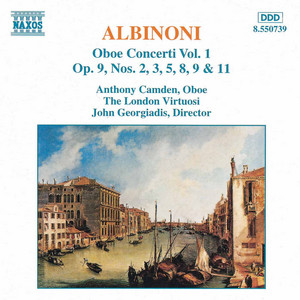 | Oboe Concerto in D Minor, Op. 9, No. 2: II. Adagio | Tomaso Albinoni, Anthony Camden, London Virtuosi, John Georgiadis | B♭ Major | 1 | 6B | 75 BPM | |
 | Symphony in C Major, Op. 1, No. 6 (Callen 6): I. Allegro | Franz Ignaz Beck, New Zealand Chamber Orchestra, Donald Armstrong | G Major | 2 | 9B | 143 BPM | |
 | Concerto in E minor for oboe, strings and basso continuo: I. Andante | Han De Vries, Bob van Asperen, Alma Musica Amsterdam | E♭ Minor | 1 | 2A | 106 BPM |
- ISRC
- DES380905309
- Label
- L-M Records/RCA Records