- BPM
- 101
- Key
- F♯ Minor
- Camelot
- 11A
Anonymous: Antiphon IV, "Benedicta filia tua Domino" (First Version): by George Frideric Handel, Taverner Choir/Taverner Players/Andrew Parrott, Andrew Parrott Song Details
"Anonymous: Antiphon IV, "Benedicta filia tua Domino" (First Version):" by George Frideric Handel, Taverner Choir/Taverner Players/Andrew Parrott, Andrew Parrott had its release date on January 1, 1989. With This song being less than a minute long, we are pretty confident that this song does not contain any foul language. That being said, this song is pretty short compared to other songs. The track order of this song in George Frideric Handel, Andrew Parrott's "Handel - Carmelite Vespers" album is number 1 out of 54. On top of that, United Kingdom appears to be the country where this track was created. In terms of popularity, Anonymous: Antiphon IV, "Benedicta filia tua Domino" (First Version): is currently not that popular. In our opinion, the overall tone is not very danceable and projects negative sounds, such as being sad, depressed, or angry.
BPM and Tempo
We consider the tempo marking of Anonymous: Antiphon IV, "Benedicta filia tua Domino" (First Version): by George Frideric Handel, Taverner Choir/Taverner Players/Andrew Parrott, Andrew Parrott to be Andante (at a walking pace) because the track has a tempo of 101 BPM, a half-time of 50BPM, and a double-time of 202 BPM. Based on that, the speed of the song's tempo is slow. The time signature for this track is 3/4.
Music Key
This song is in the music key of F♯ Minor. This also means that this song has a camelot key of 11A. So, the perfect camelot match for 11A would be either 11A or 10B. While, a low energy boost can consist of either 11B or 12A. For moderate energy boost, you would use 8A and a high energy boost can either be 1A or 6A. However, if you are looking for a low energy drop, finding a song with a camelot key of 10A would be a great choice. Where 2A would give you a moderate drop, and 9A or 4A would be a high energy drop. Lastly, 2B allows you to change the mood.
Want to find the BPM and music key for other songs? Check out our BPM and Key Finder page!
- Popularity
- 1%
- Loudness
- -26.855 dB
- Acousticness
- 81%
- Danceability
- 19%
- Energy
- 4%
- Instrumentalness
- 0%
- Liveness
- 15%
- Loudness
- 55%
- Speechiness
- 5%
- Valence
- 4%
Recommendations
| Track | Artist | Key | Energy | Camelot | BPM | ||
|---|---|---|---|---|---|---|---|
 | Armide: Passacaille | Jean-Baptiste Lully, Véronique Gens/Les Talens Lyriques/Christophe Rousset, Christophe Rousset, Les Talens Lyriques | F Minor | 1 | 4A | 122 BPM | |
 | Grande Messe des Morts: II. Introitus: Requiem aeternam - Grave | Francois-Joseph Gossec, Roberta Invernizzi, Maite Arruabarrena, Howard Crook, Claude Darbellay, Radio Svizzera Choir, Lugano, Radio Svizzera Italiana Orchestra, Diego Fasolis | C Minor | 1 | 5A | 74 BPM | |
 | Water Music, Suite No. 1, HWV 348: Water Music, Suite No. 1, HWV 348: VII. Minuet | George Frideric Handel, Akademie für Alte Musik Berlin | E Major | 1 | 12B | 185 BPM | |
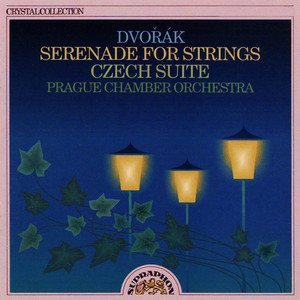 | Serenade for Strings in E Major, Op. 22, B. 52: II. Tempo di valse | Antonín Dvořák, Prague Chamber Orchestra, Petr Skvor | A Major | 1 | 11B | 0 BPM | |
 | Flute Concerto in G Major: I. Allegro non molto | Giuseppe Tartini, Per Oien, Norwegian Chamber Orchestra | G Major | 1 | 9B | 92 BPM | |
 | Symphony No. 3 in C Major, Op. 2, "the Chaplet": II. Vivace | William Boyce, Aradia Ensemble, Kevin Mallon | B Major | 0 | 1B | 82 BPM | |
 | Judas Maccabaeus: Act 3. Duet: O lovely peace | George Frideric Handel, Philharmonia Baroque Orchestra, Lisa Saffer, Nicholas McGegan, Patricia Spence | F♯ Major | 0 | 2B | 170 BPM | |
 | Cello Concerto No. 3 in A Major, Wq. 172: III. Allegro assai | Carl Philipp Emanuel Bach, Daniel Müller-Schott, L'Arte del mondo, Werner Ehrhardt | E Major | 2 | 12B | 142 BPM | |
 | Suite No. 3, P. 172: I. Italiana: Andantino | Ottorino Respighi, RTÉ National Symphony Orchestra | B♭ Major | 1 | 6B | 94 BPM | |
 | Mozart: Divertimento in B-Flat Major, K. 137 "Salzburg Symphony No. 2": II. Allegro di molto | Wolfgang Amadeus Mozart, Amsterdam Baroque Orchestra, Ton Koopman | C Major | 0 | 8B | 127 BPM | |
 | Lo frate 'nnamorato: II. Andante | Giovanni Battista Pergolesi, Orchestra da Camera di Napoli, Enzo Amato | E Minor | 5 | 9A | 165 BPM | |
 | Concerto grosso No. 3 in D Minor: IV. Allegro (After D. Scarlatti) | Charles Avison, Avison Ensemble, Pavlo Beznosiuk | F Major | 1 | 7B | 74 BPM | |
 | Symphony No. 8 in C Minor: III. Presto assai | William Herschel, Matthias Bamert, London Mozart Players | A♭ Major | 1 | 4B | 151 BPM | |
 | Pygmalion: Overture | Jean-Philippe Rameau, Les Talens Lyriques, Christophe Rousset | E♭ Minor | 1 | 2A | 136 BPM | |
 | Handel: Serse, HWV 40, Act 1: "Frondi tenere... Ombra mai fu" (Xerse) | Philippe Jaroussky | E Major | 1 | 12B | 75 BPM | |
 | Oboe Concerto in D Minor, Op. 9 No. 2: II. Adagio | Tomaso Albinoni, David Reichenberg, The English Concert, Trevor Pinnock | A Major | 1 | 11B | 68 BPM | |
 | Concerto grosso in D Minor, Op. 6 No. 10, HWV 328: V. Allegro moderato | George Frideric Handel, Simon Standage, Elizabeth Wilcock, Anthony Pleeth, Robert Woolley, Trevor Pinnock, The English Concert | A Major | 1 | 11B | 79 BPM | |
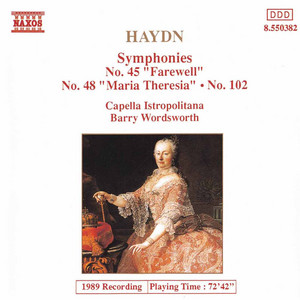 | Symphony No. 45 in F-Sharp Minor, Hob.I:45, "Farewell": I. Allegro assai | Joseph Haydn, Capella Istropolitana, Barry Wordsworth | F♯ Minor | 2 | 11A | 156 BPM | |
 | Ottone, re di Germania, HWV 15: Overture: I. Maestoso | George Frideric Handel, Anthony Camden, Julia Girdwood, City of London Sinfonia, Nicholas Ward | E♭ Major | 1 | 5B | 78 BPM | |
 | Panis Angelicus (Arr. Leopold Stokowski) | César Franck, Matthias Bamert, BBC Philharmonic | A Major | 1 | 11B | 65 BPM | |
 | Overture (Suite) In G Minor, TWV 55: G4: VI. Gasconnade | Cologne Chamber Orchestra, Georg Philipp Telemann | G Minor | 4 | 6A | 146 BPM | |
 | Cançoneta for Violin and Orchestra | Joaquín Rodrigo, Agustín León Ara, Academy of St. Martin in the Fields, Sir Neville Marriner | A Major | 0 | 11B | 70 BPM | |
 | Symphony in C Major, Op. 1, No. 6 (Callen 6): I. Allegro | Franz Ignaz Beck, New Zealand Chamber Orchestra, Donald Armstrong | G Major | 2 | 9B | 143 BPM | |
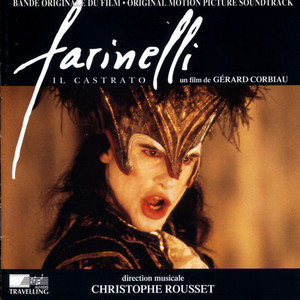 | Polifemo: Alto giove (Air d'Acio) - Instrumental Version | Christophe Rousset, Les Talens Lyriques, Ewa Mallas-godlewska, Derek Lee Ragin | E♭ Minor | 0 | 2A | 141 BPM | |
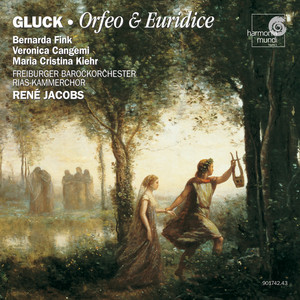 | Orfeo ed Euridice: Act I, Scene 1, Coro: Ah, se intorno a quest'urna funesta | Christoph Willibald Gluck, René Jacobs, RIAS Kammerchor, Freiburger Barockorchester | F Minor | 1 | 4A | 80 BPM |
- ISRC
- GBAYC8701588
- Label
- L-M Records/RCA Records