- BPM
- 86
- Key
- F Major
- Camelot
- 7B
Rigoletto, Act I, Scene 2: Ah! veglia, o donna (Rigoletto/Gilda) by Giuseppe Verdi, Maria Callas, Tito Gobbi, Orchestra Del Teatro Alla Scala, Milano, Tullio Serafin Song Details
Giuseppe Verdi, Maria Callas, Tito Gobbi, Orchestra Del Teatro Alla Scala, Milano, Tullio Serafin's 'Rigoletto, Act I, Scene 2: Ah! veglia, o donna (Rigoletto/Gilda)' had a release date set for 1956. With this song being about 5 minutes long, at This song is fairly a long song compared to the average song length. This song does not have an "Explicit" tag, making it safe for all ages. This song is part of Verdi Rigoletto by Giuseppe Verdi, Maria Callas, Tito Gobbi, Orchestra Del Teatro Alla Scala, Milano, Tullio Serafin. The song's track number on the album is #12 out of 36 tracks. Based on our data, United Kingdom was the country where this track was produced or recorded. Rigoletto, Act I, Scene 2: Ah! veglia, o donna (Rigoletto/Gilda) is not that popular right now. In our opinion, the overall tone is not very danceable and projects negative sounds, such as being sad, depressed, or angry.
BPM and Tempo
Since Rigoletto, Act I, Scene 2: Ah! veglia, o donna (Rigoletto/Gilda) by Giuseppe Verdi, Maria Callas, Tito Gobbi, Orchestra Del Teatro Alla Scala, Milano, Tullio Serafin has a tempo of 86 beats per a minute, the tempo markings of this song would be Andante (at a walking pace). With Rigoletto, Act I, Scene 2: Ah! veglia, o donna (Rigoletto/Gilda) being at 86 BPM, the half-time would be 43 BPM with a double-time of 172 BPM.In addition, we consider the tempo speed to be pretty slow for this song. This makes this song perfect for activities such as, yoga or pilates. The time signature for this track is 3/4.
Music Key
This song is in the music key of F Major. Or for those who are familiar with the camelot wheel, this song has a camelot key of 7B. So, the perfect camelot match for 7B would be either 7B or 8A. While, 8B can give you a low energy boost. For moderate energy boost, you would use 4B and a high energy boost can either be 9B or 2B. Though, if you want a low energy drop, you should looking for songs with either a camelot key of 7A or 6B will give you a low energy drop, 10B would be a moderate one, and 5B or 12B would be a high energy drop. Lastly, 4A allows you to change the mood.
Want to find the BPM and music key for other songs? Check out our BPM and Key Finder page!
- Popularity
- 9%
- Loudness
- -13.31 dB
- Acousticness
- 97%
- Danceability
- 27%
- Energy
- 22%
- Instrumentalness
- 6%
- Liveness
- 47%
- Loudness
- 78%
- Speechiness
- 4%
- Valence
- 31%
Recommendations
| Track | Artist | Key | Energy | Camelot | BPM | ||
|---|---|---|---|---|---|---|---|
 | L'elisir d'Amor: Una furtiva lagrima | Carlo Bergonzi | F Minor | 3 | 4A | 63 BPM | |
 | Les Contes d'Hoffmann / Act 1: "Il était une fois à la cour d'Eisenach" (La légende de Kleinzach) | Jacques Offenbach, Plácido Domingo, Robin Leggate, Choeurs de Radio France, Orchestre National De France, Seiji Ozawa | A Minor | 2 | 8A | 94 BPM | |
 | Mozart: Così fan tutte, K. 588, Act 1: Terzettino. "Soave sia il vento" (Fiordiligi, Dorabella, Don Alfonso) | Wolfgang Amadeus Mozart, Karl Böhm, Christa Ludwig, Elisabeth Schwarzkopf, Heinrich Schmidt, Walter Berry, Philharmonia Orchestra | E Major | 1 | 12B | 124 BPM | |
 | Manon Lescaut / Act 1: Donna non vidi mai | Giacomo Puccini, Luciano Pavarotti, Metropolitan Opera Orchestra, James Levine | B♭ Major | 3 | 6B | 79 BPM | |
 | Cavalleria rusticana: "O lola ch'ai di latti la cammisa" (Siciliana) | Pietro Mascagni, Carlo Bergonzi, Orchestra Del Teatro Alla Scala, Milano, Herbert von Karajan | F Minor | 0 | 4A | 167 BPM | |
 | Verdi: La traviata, Act 1: "Libiamo ne' lieti calici" (Alfredo, Violetta, Flora, Marchese, Barone, Dottore, Gastone, Chorus) | Giuseppe Verdi, Riccardo Muti, Alfredo Kraus, Henry Newman, Renata Scotto, Richard van Allan, Roderick Kennedy, Sarah Walker, Suso Mariategui, Philharmonia Orchestra | B♭ Major | 2 | 6B | 71 BPM | |
 | Werther / Act 3: "Pourquoi me réveiller, ô souffle du printemps?" | Jules Massenet, Luciano Pavarotti, National Philharmonic Orchestra, Oliviero de Fabritiis | F♯ Minor | 2 | 11A | 80 BPM | |
 | Frühlingsstimmen, Op. 410 | Johann Strauss II, Slovak Philharmonic, Noriaki Kitamura | B♭ Major | 0 | 6B | 181 BPM | |
 | Lohengrin, WWV 75, Act III: Treulich geführt ziehet dahin "Bridal Chorus" | Richard Wagner, Renate Hasler, Gretchen Eder, Ulrike Erfurt, Marianne Sattmann, Wiener Staatsopernchor, Wiener Philharmoniker, Claudio Abbado | C Major | 1 | 8B | 75 BPM | |
 | Pagliacci, Act I: "Recitar! Vesti la giubba" (Canio) | Ruggero Leoncavallo, Orchestra dell'Accademia Nazionale di Santa Cecilia, Francesco Molinari-Prandelli, Mario del Monaco | E Major | 2 | 12B | 89 BPM | |
 | Don Giovanni, K.527 / Act 1: "Là ci darem la mano" | Wolfgang Amadeus Mozart, Cecilia Bartoli, Bryn Terfel, Orchestra dell'Accademia Nazionale di Santa Cecilia, Myung-Whun Chung | A Major | 1 | 11B | 104 BPM | |
 | Verdi: Nabucco, Act 3: "Donna, chi sei?" (Nabucco, Abigaille) / Chi è costei?... Oh, di qual'onta aggravisi" (Nabucco, Abigaille) | Giuseppe Verdi, Philharmonia Orchestra, Riccardo Muti | A♭ Major | 2 | 4B | 78 BPM | |
 | Rigoletto / Act 2: Scena ed Aria. "Povero Rigoletto!" "La rà, la rà" | Giuseppe Verdi, Josephte Clement, Christian Du Plessis, Sherrill Milnes, John Gibbs, Riccardo Cassinelli, Ambrosian Opera Chorus, London Symphony Orchestra, Richard Bonynge | E Minor | 2 | 9A | 110 BPM | |
 | Torna a Surriento | Ernesto de Curtis, Luciano Pavarotti, Emerson Buckley, Symphony Orchestra Of Emilia Romagna "Arturo Toscanini" | E Minor | 1 | 9A | 96 BPM | |
 | Carmen, Act I: No.5 Habanera : L'amour est un oiseau rebelle (Carmen/Cigarières/Jeunes gens/Dragons) | Georges Bizet, Angela Gheorghiu, Michel Plasson, Wolff, Orchestre National Du Capitole De Toulouse | D Major | 1 | 10B | 124 BPM | |
 | Les Contes d'Hoffmann / Act 2: "Belle nuit, ô nuit d'amour" | Jacques Offenbach, Dame Joan Sutherland, Huguette Tourangeau, Chorus Pro Arte Lausanne Du Brassus, Radio Suisse Romande Chorus, Orchestre de la Suisse Romande, Richard Bonynge | D Major | 1 | 10B | 82 BPM | |
 | Barcarolle | Jacques Offenbach, Anna Netrebko, Elina Garanca | D Major | 2 | 10B | 132 BPM | |
 | Recordare | Giuseppe Verdi, Carmen Giannattasio, Veronica Simeoni, Alxander Timchenko, Carlo Colombara, Yuri Temirkanov, St. Petersburg Philharmonic Orchestra | F Major | 1 | 7B | 76 BPM | |
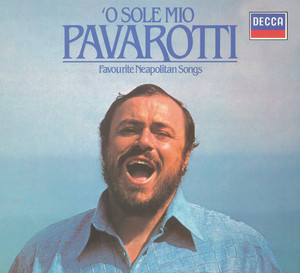 | 'A vucchella | Francesco Paolo Tosti, Luciano Pavarotti, Orchestra del Teatro Comunale di Bologna, Anton Guadagno | F Major | 1 | 7B | 81 BPM | |
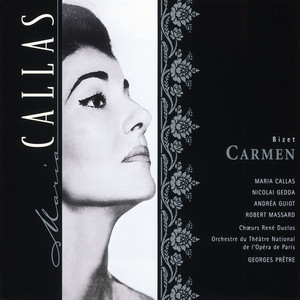 | Bizet: Carmen, WD 31, Act 1 Scene 4: No. 5, Havanaise, "L'amour est un oiseau rebelle" (Carmen, Chorus) | Georges Bizet, Maria Callas, Orchestre de l'Opéra National de Paris, Georges Prêtre, Orchestre du Théâtre National de l'Opéra Paris | D Major | 1 | 10B | 134 BPM | |
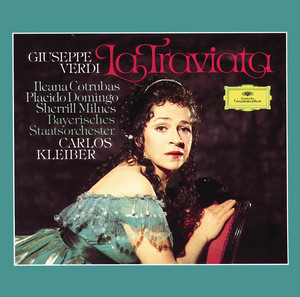 | La Traviata / Act 2: "Ogni suo aver tal femmina" | Giuseppe Verdi, Plácido Domingo, Walter Gullino, Bruno Grella, Giovanni Foiani, Alfredo Giacomotti, Chor der Bayerischen Staatsoper München, Bavarian State Orchestra, Carlos Kleiber | C Major | 3 | 8B | 125 BPM | |
 | Mozart: Don Giovanni, K. 527, Act 2 Scene 15: "Don Giovanni, a cenar teco … Da qual tremore insolito" (Il Commendatore, Don Giovanni, Chorus, Leporello) | Wolfgang Amadeus Mozart, Riccardo Muti, Wiener Philharmoniker | B♭ Major | 2 | 6B | 75 BPM | |
| L'Africaine / Act 4: "Mi batte il cor... O Paradiso!" | Giacomo Meyerbeer, Luciano Pavarotti, National Philharmonic Orchestra, Oliviero de Fabritiis | A Major | 1 | 11B | 104 BPM | |
 | Rigoletto | Tito Gobbi | F♯ Major | 4 | 2B | 0 BPM | |
| La traviata, Act III: Tenesta la promessa – Addio del passato "Letter Scene" | Giuseppe Verdi, Ileana Cotrubas, Bavarian State Orchestra, Carlos Kleiber | E Minor | 0 | 9A | 68 BPM |
- ISRC
- GBAYC9702284
- Label
- L-M Records/RCA Records