- BPM
- 75
- Key
- A♭ Major
- Camelot
- 4B
Schumann: Symphony No. 3 in E-Flat Major, Op. 97, Rhenish: III. Nicht schnell by Robert Schumann, San Francisco Symphony, Michael Tilson Thomas Song Details
"Schumann: Symphony No. 3 in E-Flat Major, Op. 97, Rhenish: III. Nicht schnell" by Robert Schumann, San Francisco Symphony, Michael Tilson Thomas had its release date on November 10, 2017. This song is about six minutes long, preciously at 6:18, making this song fairly long compared to other songs. There are a total of 17 in the song's album "Schumann: Symphonies Nos. 1-4". In this album, this song's track order is #11. Furthermore, we believe that the track originated from United States. Schumann: Symphony No. 3 in E-Flat Major, Op. 97, Rhenish: III. Nicht schnell is not that popular right now. In our opinion, the overall tone is not very danceable and projects negative sounds, such as being sad, depressed, or angry.
BPM and Tempo
With Schumann: Symphony No. 3 in E-Flat Major, Op. 97, Rhenish: III. Nicht schnell by Robert Schumann, San Francisco Symphony, Michael Tilson Thomas having a BPM of 75 with a half-time of 38 BPM and a double-time of 150 BPM, we would consider this track to have a Adagio (slowly with great expression) tempo marking. Because of this, we believe that the song has an overall slow tempo. The time signature for this track is 4/4.
Music Key
This song has a musical key of A♭ Major. Or for those who are familiar with the camelot wheel, this song has a camelot key of 4B. So, the perfect camelot match for 4B would be either 4B or 5A. While, 5B can give you a low energy boost. For moderate energy boost, you would use 1B and a high energy boost can either be 6B or 11B. Though, if you want a low energy drop, you should looking for songs with either a camelot key of 4A or 3B will give you a low energy drop, 7B would be a moderate one, and 2B or 9B would be a high energy drop. Lastly, 1A allows you to change the mood.
Want to find the BPM and music key for other songs? Check out our BPM and Key Finder page!
- Popularity
- 10%
- Loudness
- -28.128 dB
- Acousticness
- 96%
- Danceability
- 11%
- Energy
- 3%
- Instrumentalness
- 61%
- Liveness
- 12%
- Loudness
- 53%
- Speechiness
- 4%
- Valence
- 10%
Recommendations
| Track | Artist | Key | Energy | Camelot | BPM | ||
|---|---|---|---|---|---|---|---|
 | Liszt: Lieder aus Franz Schubert's "Schwanengesang", S. 560: No. 7 Ständchen | Franz Liszt, Mariam Batsashvili | A Minor | 1 | 8A | 120 BPM | |
 | Haydn: Cello Concerto No. 1 in C Major, Hob. VIIb, 1: II. Adagio (Cadenza by Britten) | Franz Joseph Haydn, Mstislav Rostropovich, Academy of St. Martin in the Fields | F Major | 1 | 7B | 124 BPM | |
 | Brahms - Op.118 No.2 Intermezzo A major | Elena Kuschnerova | A Major | 0 | 11B | 67 BPM | |
 | Bocherini / Arr. Grützmacher: Cello Concerto No. 9 in B-Flat Major, G. 482: II. Adagio non troppo | Luigi Boccherini, Jacqueline du Pré, Daniel Barenboim, English Chamber Orchestra | G Minor | 1 | 6A | 86 BPM | |
 | Dolly Suite, Op. 56: I. Berceuse | Gabriel Fauré, Katia Labèque, Marielle Labèque | E Major | 0 | 12B | 63 BPM | |
 | The Lark | Mikhail Glinka, Evgeny Kissin | B♭ Minor | 0 | 3A | 96 BPM | |
 | Berceuse, Op. 16 | Gabriel Fauré, Cocomi, Niu Niu | A Minor | 1 | 8A | 129 BPM | |
 | Piano Concerto No. 2 in F Major, Op. 102: II. Andante | Dmitri Shostakovich, Boris Giltburg, Royal Liverpool Philharmonic Orchestra, Vasily Petrenko | C Minor | 0 | 5A | 80 BPM | |
 | Adoration | Florence Beatrice Price, Philippe Quint, Andrew Litton | G Major | 1 | 9B | 111 BPM | |
 | Sonata In G Minor For Cello & Piano, Op. 19: 3. Andante | Sergei Rachmaninoff, Alisa Weilerstein, Inon Barnatan | F Major | 2 | 7B | 82 BPM | |
 | 7 Variations on the Air Vien qua, Dorina bella by Bianchi, Op. 7, J. 53: Andante | Carl Maria von Weber, Michael Endres | E Major | 1 | 12B | 87 BPM | |
 | Étude No. 3: Ballade | Marie Awadis | D♭ Major | 0 | 3B | 127 BPM | |
 | Lyric Pieces, Book 5, Op. 54: Nocturne | Edvard Grieg, Alessio Bax | C Major | 0 | 8B | 72 BPM | |
 | Capriccio brillant, Op. 22: Andante | Felix Mendelssohn, Matthias Kirschnereit, Michael Sanderling, Frankfurt Radio Symphony Orchestra | B Major | 0 | 1B | 91 BPM | |
 | Paderewski: 6 Humoresques de concert, Op. 14, Cahier I "À l'antique": No. 1, Menuet célèbre | Ignacy Jan Paderewski, Mariam Batsashvili | G Major | 1 | 9B | 106 BPM | |
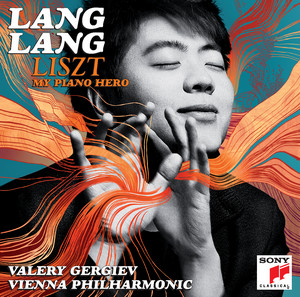 | Ave Maria, S. 558/12 | Franz Schubert, Lang Lang | B♭ Major | 0 | 6B | 64 BPM | |
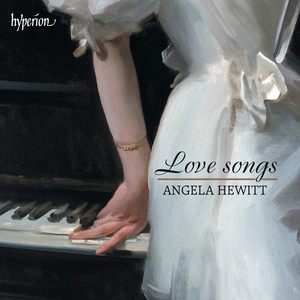 | Schwanengesang, S. 560: VII. Ständchen (2nd Version, After Schubert D. 957/4) | Franz Liszt, Angela Hewitt | A Major | 2 | 11B | 143 BPM | |
 | Sonata in D Minor, K. 9 | Domenico Scarlatti, Ivo Pogorelich | D Minor | 0 | 7A | 94 BPM | |
 | Sonata No. 2, Op. 36: II. Non Allegro | Hélène Grimaud | E Minor | 0 | 9A | 68 BPM | |
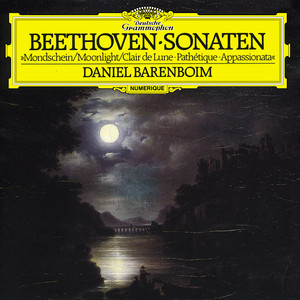 | Piano Sonata No. 23 in F Minor, Op. 57 "Appassionata": II. Andante con moto | Ludwig van Beethoven, Daniel Barenboim | D♭ Major | 0 | 3B | 78 BPM | |
 | 6 Moments musicaux, Op. 16: No. 5, Adagio sostenuto | Sergei Rachmaninoff, Boris Giltburg | E Minor | 2 | 9A | 126 BPM | |
 | Chants du Rhin, WD 52: Les rêves | Georges Bizet, Nathanaël Gouin | D♭ Major | 0 | 3B | 65 BPM | |
 | Le carnaval des animaux, R. 125: Le cygne | Camille Saint-Saëns, Mischa Maisky, Orpheus Chamber Orchestra | C Major | 0 | 8B | 83 BPM | |
 | 6 Studies in English Folksong (Version for Cello & Piano): No. 3, Larghetto "Van Dieman's Land" | Ralph Vaughan Williams, Gerald Peregrine, Antony Ingham | D Minor | 0 | 7A | 81 BPM | |
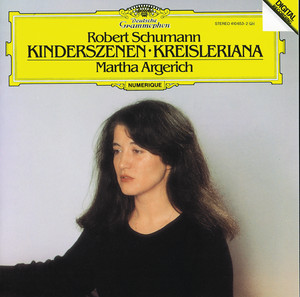 | Kinderszenen, Op.15: 2. Kuriose Geschichte | Robert Schumann, Martha Argerich | D Major | 0 | 10B | 66 BPM |
- ISRC
- USEXZ1701014
- Label
- L-M Records/RCA Records