- BPM
- 166
- Key
- G Major
- Camelot
- 9B
Manon: 'Pardonnez-moi' by Jules Massenet, Renée Fleming, Marcelo Álvarez, Jesús López-Cobos Song Details
"Manon: 'Pardonnez-moi'" by Jules Massenet, Renée Fleming, Marcelo Álvarez, Jesús López-Cobos had its release date on October 3, 2003. With This song being less than two minutes long, at 1:35, we are fairly confident that this song is not explicit and is safe for all ages. Based on the duration of this song, this song duration is much smaller than the average song duration. The track order of this song in Jules Massenet, Marcelo Álvarez, Renée Fleming, The Orchestra and Chorus of the Opéra National de Paris's "Manon" album is number 24 out of 72. On top of that, United States appears to be the country where this track was created. The popularity of Manon: 'Pardonnez-moi' is currently not that popular right now. In our opinion, the overall tone is not very danceable and projects negative sounds, such as being sad, depressed, or angry.
BPM and Tempo
We consider the tempo marking of Manon: 'Pardonnez-moi' by Jules Massenet, Renée Fleming, Marcelo Álvarez, Jesús López-Cobos to be Vivace (lively and fast) because the track has a tempo of 166 BPM, a half-time of 83BPM, and a double-time of 332 BPM. Based on that, the speed of the song's tempo is fast. The time signature for this track is 3/4.
Music Key
This song is in the music key of G Major. This also means that this song has a camelot key of 9B. So, the perfect camelot match for 9B would be either 9B or 10A. While, 10B can give you a low energy boost. For moderate energy boost, you would use 6B and a high energy boost can either be 11B or 4B. Though, if you want a low energy drop, you should looking for songs with either a camelot key of 9A or 8B will give you a low energy drop, 12B would be a moderate one, and 7B or 2B would be a high energy drop. Lastly, 6A allows you to change the mood.
Want to find the BPM and music key for other songs? Check out our BPM and Key Finder page!
- Popularity
- 2%
- Loudness
- -19.245 dB
- Acousticness
- 99%
- Danceability
- 24%
- Energy
- 11%
- Instrumentalness
- 1%
- Liveness
- 7%
- Loudness
- 68%
- Speechiness
- 5%
- Valence
- 6%
Recommendations
| Track | Artist | Key | Energy | Camelot | BPM | ||
|---|---|---|---|---|---|---|---|
 | Romeo and Juliette, Op. 64 (Arr. for Viola and Piano by Vadim Borisovsky, Orchestration for Viola and String Orchestra by François Vallières): Introduction | Sergei Prokofiev, Elvira Misbakhova, I Musici de Montréal, Jean-François Rivest | D Major | 1 | 10B | 99 BPM | |
 | The Seal Lullaby (Arr. Parkin) | Eric Whitacre, Isata Kanneh-Mason, Jeneba Kanneh-Mason, Braimah Kanneh-Mason, Konya Kanneh-Mason, Aminata Kanneh-Mason, Sheku Kanneh-Mason, Mariatu Kanneh-Mason | D♭ Major | 0 | 3B | 81 BPM | |
 | The Gadfly Suite, Op. 97a: Romance | Dmitri Shostakovich, Nemanja Radulović, Deutsches Symphonie-Orchester Berlin, Michail Jurowski | D♭ Major | 1 | 3B | 135 BPM | |
 | Nocturne No. 1 in E-Flat Major, H. 24 | John Field, Elizabeth Joy Roe | E♭ Major | 0 | 5B | 75 BPM | |
 | Wiegenlied, Op. 49, No. 4 | Johannes Brahms, Leonidas Kavakos, Yuja Wang | E♭ Major | 0 | 5B | 74 BPM | |
 | Violin Concerto No. 1 in G Minor, Op. 26: II. Adagio | Max Bruch, Itzhak Perlman, Bernard Haitink, Royal Concertgebouw Orchestra | E♭ Major | 1 | 5B | 87 BPM | |
 | Bruch : Violin Concerto No.1 in G minor Op.26 : III Finale - Allegro energico | Max Bruch, Maxim Vengerov, Kurt Masur, Gewandhausorchester Leipzig | G Major | 2 | 9B | 90 BPM | |
 | Autumn Leaves | Joseph Kosma, Gautier Capuçon, Jerome Ducros | A Minor | 3 | 8A | 104 BPM | |
 | Sospiri, Op. 70 | Sol Gabetta | F Major | 0 | 7B | 74 BPM | |
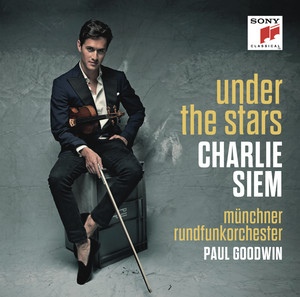 | Als die alte Mutter mich noch lehrte singen, Op. 55, No. 4 (Arr. for Violin and Orchestra) | Antonín Dvořák, Charlie Siem, Munich Radio Orchestra, Paul Goodwin | B♭ Major | 1 | 6B | 107 BPM | |
 | Bach: Adagio (After Violin Concerto No. 2, BWV 1042) | Johann Sebastian Bach, Gabriela Montero | F♯ Minor | 0 | 11A | 73 BPM | |
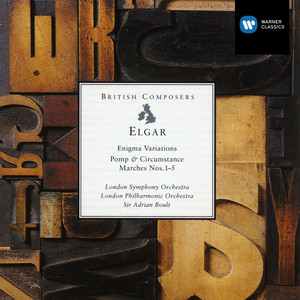 | Elgar: Variations on an Original Theme, Op. 36 "Enigma": Variation IX. Nimrod | Edward Elgar, London Symphony Orchestra, Sir Adrian Boult | E♭ Major | 1 | 5B | 70 BPM | |
 | Violin Concerto In D, Op.35, TH. 59: 2. Canzonetta (Andante) | Pyotr Ilyich Tchaikovsky, Janine Jansen, Mahler Chamber Orchestra, Daniel Harding | E♭ Major | 0 | 5B | 103 BPM | |
 | Massenet: Thaïs, Act 2: Méditation | Jules Massenet, Radio-Sinfonieorchester Stuttgart, Sir Neville Marriner, Hans Kalafusz | E Minor | 2 | 9A | 62 BPM | |
 | Adagio in D Minor, BWV 974: II. Adagio | Johann Sebastian Bach, Alexandre Tharaud | D Minor | 0 | 7A | 65 BPM | |
 | Massenet: Thaïs, Act 2: Méditation | Jules Massenet, Lorin Maazel, New Philharmonia Orchestra | D Major | 1 | 10B | 67 BPM | |
 | Albinoni: Adagio in G Minor | Tomaso Albinoni, Sir Neville Marriner, Academy of St. Martin in the Fields | C Minor | 1 | 5A | 90 BPM | |
 | Violin Concerto No. 1 in G Minor, Op. 26: II. Adagio | Max Bruch, Joshua Bell, Academy of St. Martin in the Fields, Sir Neville Marriner | E♭ Major | 1 | 5B | 85 BPM | |
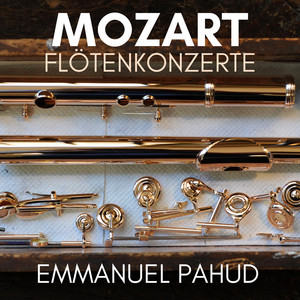 | Flute and Harp Concerto in C Major, K. 299: II. Andantino | Wolfgang Amadeus Mozart, François Leleux, Emmanuel Pahud, Anneleen Lenaerts, Orchestre de chambre de Paris | F Major | 1 | 7B | 99 BPM | |
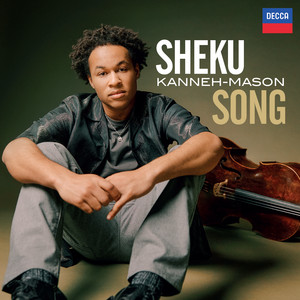 | Come, Sweet Death, BWV 478 (Arr. for 5 Cellos) | Sheku Kanneh-Mason, Hannah Roberts, Ben Davies, Desmond Neysmith, Max Ruisi | C Major | 0 | 8B | 122 BPM | |
 | Ständchen in D Minor (After Schubert), S. 560 | Franz Liszt, Lise de la Salle | D Major | 0 | 10B | 76 BPM | |
 | Bach, JS : Well-Tempered Clavier Book 1 : Prelude No.1 in C major BWV846 | Daniel Barenboim | C Major | 0 | 8B | 95 BPM | |
 | Werther: Toute mon âme est là – Pourquoi me réveiller | Jules Massenet, Jonathan Tetelman, Orquesta Filarmónica de Gran Canaria, Karel Mark Chichon | F♯ Minor | 2 | 11A | 67 BPM | |
 | Williams: Main Theme (From "Schindler's List") | John Williams, Tasmin Little, Iain Sutherland, The New World Philharmonic | D Minor | 1 | 7A | 89 BPM | |
 | Liszt: 12 Lieder von Franz Schubert, S. 558: No. 7, Frühlingsglaube | Franz Liszt, Aimi Kobayashi | A♭ Major | 0 | 4B | 68 BPM |
- ISRC
- USSM10310000
- Label
- L-M Records/RCA Records