- BPM
- 168
- Key
- A♭ Major
- Camelot
- 4B
String Quartet in E Flat Major, MWV R18: III. Minuetto - Trio - Minuetto by Felix Mendelssohn, Emerson String Quartet Song Details
"String Quartet in E Flat Major, MWV R18: III. Minuetto - Trio - Minuetto" by Felix Mendelssohn, Emerson String Quartet had its release date on January 1, 2005. This song is about six minutes long, preciously at 5:51, making this song fairly long compared to other songs. The track order of this song in Felix Mendelssohn, Emerson String Quartet's "Mendelssohn: The String Quartets & Octet In Two Parts" album is number 31 out of 38. On top of that, Germany appears to be the country where this track was created. The popularity of String Quartet in E Flat Major, MWV R18: III. Minuetto - Trio - Minuetto is currently not that popular right now. In our opinion, the overall tone is not very danceable and projects negative sounds, such as being sad, depressed, or angry.
BPM and Tempo
We consider the tempo marking of String Quartet in E Flat Major, MWV R18: III. Minuetto - Trio - Minuetto by Felix Mendelssohn, Emerson String Quartet to be Vivace (lively and fast) because the track has a tempo of 168 BPM, a half-time of 84BPM, and a double-time of 336 BPM. Based on that, the speed of the song's tempo is fast. The time signature for this track is 3/4.
Music Key
A♭ Major is the music key of this track. This also means that this song has a camelot key of 4B. So, the perfect camelot match for 4B would be either 4B or 5A. While, 5B can give you a low energy boost. For moderate energy boost, you would use 1B and a high energy boost can either be 6B or 11B. Though, if you want a low energy drop, you should looking for songs with either a camelot key of 4A or 3B will give you a low energy drop, 7B would be a moderate one, and 2B or 9B would be a high energy drop. Lastly, 1A allows you to change the mood.
Want to find the BPM and music key for other songs? Check out our BPM and Key Finder page!
- Popularity
- 8%
- Loudness
- -21.345 dB
- Acousticness
- 98%
- Danceability
- 9%
- Energy
- 5%
- Instrumentalness
- 93%
- Liveness
- 11%
- Loudness
- 64%
- Speechiness
- 4%
- Valence
- 3%
Recommendations
| Track | Artist | Key | Energy | Camelot | BPM | ||
|---|---|---|---|---|---|---|---|
 | Symphony No. 1 in D Major: 2. Kräftig bewegt - Live | Gustav Mahler, Berliner Philharmoniker, Claudio Abbado | A Major | 1 | 11B | 96 BPM | |
 | Polovetsian Dances from Prince Igor: Introduzione | Alexander Borodin, George Szell, The Cleveland Orchestra | A Major | 1 | 11B | 83 BPM | |
 | Lyric Pieces, Book 5, Op. 54: Nocturne | Edvard Grieg, Alessio Bax | C Major | 0 | 8B | 72 BPM | |
 | Rêverie, L. 68 | Claude Debussy, Menahem Pressler | F♯ Minor | 0 | 11A | 160 BPM | |
 | Piano Concerto in G Major, M. 83: II. Adagio assai | Maurice Ravel, Krystian Zimerman, Cleveland Orchestra, Pierre Boulez | E Major | 0 | 12B | 74 BPM | |
 | Violin Concerto in D Minor, Op. 47: III. Allegro, ma non tanto | Jean Sibelius, Anne-Sophie Mutter, Staatskapelle Dresden, André Previn | D Major | 2 | 10B | 112 BPM | |
![Organ Sonata No. 4, BWV 528: II. Andante [Adagio] (Transcr. by August Stradal) by Johann Sebastian Bach, Víkingur Ólafsson](https://i.scdn.co/image/ab67616d00001e02369f6761d1cccba9a34f05cf) | Organ Sonata No. 4, BWV 528: II. Andante [Adagio] (Transcr. by August Stradal) | Johann Sebastian Bach, Víkingur Ólafsson | B Minor | 0 | 10A | 71 BPM | |
 | Nocturne No. 14 in G Major, H. 58 | John Field, Alice Sara Ott | F Major | 0 | 7B | 67 BPM | |
 | Nocturne No. 16 In F Major, H. 62: Nocturne No. 16 In F Major | Benjamin Frith, John Field | F Major | 0 | 7B | 71 BPM | |
 | Romance, Op. 22: No. 1, Andante Molto | Clara Schumann, Carl Schwarz | D♭ Major | 0 | 3B | 136 BPM | |
 | Brahms: 6 Piano Pieces, Op. 118: No. 2, Intermezzo in A Major | Johannes Brahms, Martin James Bartlett | B♭ Major | 1 | 6B | 129 BPM | |
 | Bach, JS : Well-Tempered Clavier Book 1 : Prelude No.1 in C major BWV846 | Daniel Barenboim | C Major | 0 | 8B | 95 BPM | |
 | Suite No. 3, P. 172: I. Italiana: Andantino | Ottorino Respighi, RTÉ National Symphony Orchestra | B♭ Major | 1 | 6B | 94 BPM | |
 | Piano Concerto No. 2 in F Major, Op. 102: II. Andante | Dmitri Shostakovich, Boris Giltburg, Royal Liverpool Philharmonic Orchestra, Vasily Petrenko | C Minor | 0 | 5A | 80 BPM | |
 | Sonata in D Minor, K. 9 | Domenico Scarlatti, Ivo Pogorelich | D Minor | 0 | 7A | 94 BPM | |
 | Mendelssohn: Rondo capriccioso in E Major, Op. 14 | Felix Mendelssohn, Doomin Kim | E Minor | 1 | 9A | 163 BPM | |
 | 4 Pieces, Op. 51: No. 4, Danse languide | Alexander Scriabin, Evgeny Kissin | E♭ Major | 0 | 5B | 74 BPM | |
 | Piano Concerto No. 1 in D Major, Op. 17: 2. Andante sostenuto quasi adagio | Camille Saint-Saëns, Pascal Rogé, Philharmonia Orchestra, Charles Dutoit | G Minor | 0 | 6A | 99 BPM | |
 | Franck: Prélude, fugue et variation, Op. 18, FWV 30: Prélude | César Franck, Aldo Ciccolini | B Minor | 0 | 10A | 127 BPM | |
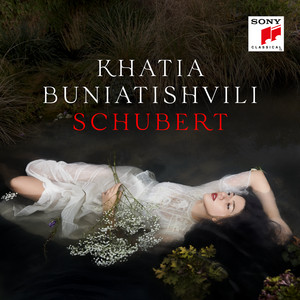 | Ständchen, S. 560 (Trans. from Schwanengesang No. 4, D. 957) | Franz Schubert, Franz Liszt, Khatia Buniatishvili | D Major | 0 | 10B | 67 BPM | |
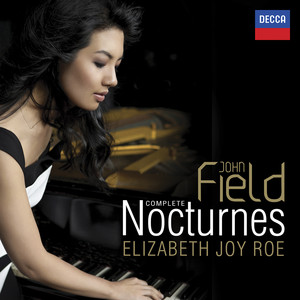 | Nocturne No. 1 in E-Flat Major, H. 24 | John Field, Elizabeth Joy Roe | E♭ Major | 0 | 5B | 75 BPM | |
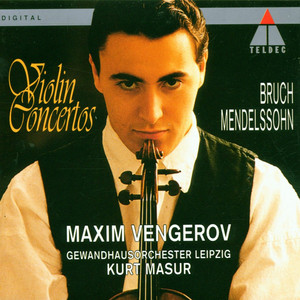 | Bruch : Violin Concerto No.1 in G minor Op.26 : III Finale - Allegro energico | Max Bruch, Maxim Vengerov, Kurt Masur, Gewandhausorchester Leipzig | G Major | 2 | 9B | 90 BPM | |
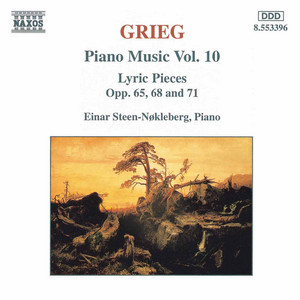 | Lyric Pieces, Book 9, Op. 68: Badnlat (Cradle Song) | Edvard Grieg, Einar Steen-Nøkleberg | B♭ Major | 0 | 6B | 72 BPM | |
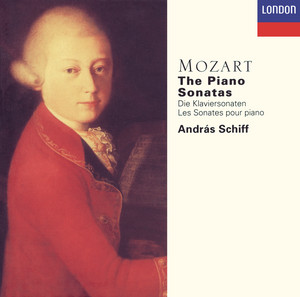 | Piano Sonata No. 16 in C Major, K. 545 "Sonata facile": II. Andante | Wolfgang Amadeus Mozart, András Schiff | G Major | 0 | 9B | 67 BPM | |
 | La separation, Nocturne in F Minor | Mikhail Glinka, Victor Ryabchikov | F Minor | 1 | 4A | 73 BPM |
- ISRC
- DEN960400863
- Label
- L-M Records/RCA Records