- BPM
- 83
- Key
- D♭ Major
- Camelot
- 3B
Verdi : Rigoletto : Act 3 "Venti scudi hai tu detto?" [Rigoletto, Sparafucile, Duca, Maddalena, Chorus] by Giuseppe Verdi, Carlo Rizzi, Orchestra of Welsh National Opera Song Details
"Verdi : Rigoletto : Act 3 "Venti scudi hai tu detto?" [Rigoletto, Sparafucile, Duca, Maddalena, Chorus]" by Giuseppe Verdi, Carlo Rizzi, Orchestra of Welsh National Opera had its release date on 1992. With this song being around four minutes long, at 3:57, the duration of this song is pretty average compared to other songs. This track is safe for children and doesn't appear to contain any foul language, since the "Explicit" tag was not present in this track. This song is part of Verdi : Rigoletto by Giuseppe Verdi, Leontina Vaduva, Jennifer Larmore, Richard Leech, Alexandru Agache, Samuel Ramey, Carlo Rizzi & Orchestra of Welsh National Opera, Carlo Rizzi, Orchestra of Welsh National Opera. The song's track number on the album is #32 out of 36 tracks. Based on our data, Germany was the country where this track was produced or recorded. Verdi : Rigoletto : Act 3 "Venti scudi hai tu detto?" [Rigoletto, Sparafucile, Duca, Maddalena, Chorus] is unknown right now. In our opinion, the overall tone is not very danceable and projects negative sounds, such as being sad, depressed, or angry.
BPM and Tempo
Since Verdi : Rigoletto : Act 3 "Venti scudi hai tu detto?" [Rigoletto, Sparafucile, Duca, Maddalena, Chorus] by Giuseppe Verdi, Carlo Rizzi, Orchestra of Welsh National Opera has a tempo of 83 beats per a minute, the tempo markings of this song would be Andante (at a walking pace). With Verdi : Rigoletto : Act 3 "Venti scudi hai tu detto?" [Rigoletto, Sparafucile, Duca, Maddalena, Chorus] being at 83 BPM, the half-time would be 42 BPM with a double-time of 166 BPM.In addition, we consider the tempo speed to be pretty slow for this song. The time signature for this track is 4/4.
Music Key
This song is in the music key of D♭ Major. Or for those who are familiar with the camelot wheel, this song has a camelot key of 3B. So, the perfect camelot match for 3B would be either 3B or 4A. While, 4B can give you a low energy boost. For moderate energy boost, you would use 12B and a high energy boost can either be 5B or 10B. Though, if you want a low energy drop, you should looking for songs with either a camelot key of 3A or 2B will give you a low energy drop, 6B would be a moderate one, and 1B or 8B would be a high energy drop. Lastly, 12A allows you to change the mood.
Want to find the BPM and music key for other songs? Check out our BPM and Key Finder page!
- Popularity
- 0%
- Loudness
- -25.821 dB
- Acousticness
- 97%
- Danceability
- 21%
- Energy
- 3%
- Instrumentalness
- 1%
- Liveness
- 7%
- Loudness
- 57%
- Speechiness
- 6%
- Valence
- 4%
Recommendations
| Track | Artist | Key | Energy | Camelot | BPM | ||
|---|---|---|---|---|---|---|---|
 | Dance of the Hours from Act III of "La Gioconda" | Amilcare Ponchielli, Philadelphia Orchestra, Eugene Ormandy | E Major | 1 | 12B | 130 BPM | |
 | La gazza ladra: "Overture" | Philharmonia Orchestra, Herbert von Karajan | E Major | 2 | 12B | 107 BPM | |
 | La Gioconda / Act 1: Feste! Pane! Feste! | Amilcare Ponchielli, Sherrill Milnes, The London Opera Chorus, National Philharmonic Orchestra, Bruno Bartoletti | B♭ Major | 4 | 6B | 67 BPM | |
 | Gounod: Roméo et Juliette: Ouverture | Charles Gounod, Michel Plasson, Orchestre Du Capitole De Toulouse | D Minor | 3 | 7A | 123 BPM | |
 | Le nozze di Figaro - Comic opera in four acts K492 (2000 Digital Remaster): Overture | Wolfgang Amadeus Mozart, Glyndebourne Festival Orchestra/Vittorio Gui, Vittorio Gui, Glyndebourne Festival Orchestra | D Major | 1 | 10B | 79 BPM | |
 | Le nozze di Figaro, K. 492, Act II: No. 12, Voi che sapete | Wolfgang Amadeus Mozart, Cecilia Bartoli, Vienna Chamber Orchestra, György Fischer | B♭ Major | 1 | 6B | 119 BPM | |
 | Roméo et Juliette, CG 9 / Act 1: "Ah, je veux vivre dans ce rève" | Charles Gounod, Aida Garifullina, Vienna Radio Symphony Orchestra, Cornelius Meister | C Major | 3 | 8B | 77 BPM | |
 | Les Contes d'Hoffmann / Act 2: "Belle nuit, ô nuit d'amour" | Jacques Offenbach, Dame Joan Sutherland, Huguette Tourangeau, Chorus Pro Arte Lausanne Du Brassus, Radio Suisse Romande Chorus, Orchestre de la Suisse Romande, Richard Bonynge | D Major | 1 | 10B | 82 BPM | |
 | Si, Mi Chiamano Mimì - La Boheme Atto I | Renata Tebaldi | D Major | 2 | 10B | 85 BPM | |
 | Bizet: Carmen, WD 31, Act 1: Air et Chœur. "L'amour est enfant de bohème" (Carmen, Chœur) | Georges Bizet, Michel Plasson, Angela Gheorghiu, Les Éléments, Orchestre National Du Capitole De Toulouse | A Minor | 1 | 8A | 101 BPM | |
 | Hungarian Dance No. 5 in G Minor, WoO 1, No. 5 | Johannes Brahms, Budapest Festival Orchestra, Iván Fischer | F♯ Minor | 1 | 11A | 107 BPM | |
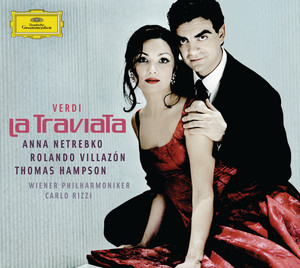 | La traviata / Act II: "Che fai?" "Nulla" | Giuseppe Verdi, Rolando Villazón, Anna Netrebko, Wiener Philharmoniker, Carlo Rizzi | F Major | 2 | 7B | 90 BPM | |
 | Carmen / Act 2: Toreador Song: "Votre toast, je peux vous le rendre" (from Carmen / Act 2) | Georges Bizet, Barry Wordsworth, Bryn Terfel, London Symphony Orchestra | B♭ Minor | 4 | 3A | 112 BPM | |
 | Die Fledermaus: Overture | Johann Strauss II, Bavarian State Orchestra, Carlos Kleiber | G Major | 1 | 9B | 100 BPM | |
| Bizet: Carmen, WD 31, Act 4: "Les voici ! Voici le quadrille !" (Chœur) | Georges Bizet, Michel Plasson, La Lauzeta, Les Éléments, Orchestre National Du Capitole De Toulouse | D♭ Minor | 2 | 12A | 93 BPM | |
 | Carmen, WD 31 / Act 1: "L'amour est un oiseau rebelle" | Georges Bizet, Marilyn Horne, Wiener Opernchor, Wiener Opernorchester, Henry Lewis | D Major | 2 | 10B | 129 BPM | |
 | Verdi: La battaglia di Legnano, Act 3: "Giuriam d'Italia" (Coro) | Giuseppe Verdi, Carlo Rizzi, Coro dell'Accademia Nazionale Di Santa Cecilia, Orchestra dell'Accademia Nazionale di Santa Cecilia | D Major | 2 | 10B | 114 BPM | |
| La traviata / Act 1: "Follie! Delirio vano è questo!" - "Sempre libera" - Live | Giuseppe Verdi, Anna Netrebko, Rolando Villazón, Wiener Philharmoniker, Carlo Rizzi | A♭ Major | 1 | 4B | 109 BPM | |
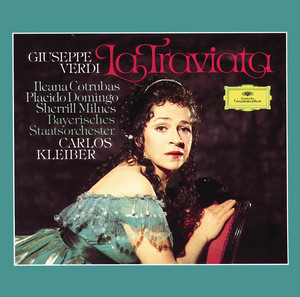 | La Traviata / Act 2: "Di Madride noi siam mattadori" | Giuseppe Verdi, Stefania Malagu, Walter Gullino, Giovanni Foiani, Alfredo Giacomotti, Chor der Bayerischen Staatsoper München, Bavarian State Orchestra, Carlos Kleiber | G Major | 4 | 9B | 138 BPM | |
 | Gianni Schicchi, Act I: "O mio babbino caro" | Giacomo Puccini, Tivolis Promenadeorkester, Bjørn Hyrup, Louise Fribo | A♭ Major | 3 | 4B | 108 BPM | |
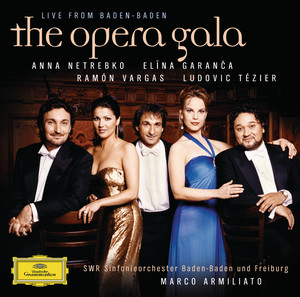 | Lakmé / Act 1: Viens, Mallika, ... Dôme épais (Flower Duet) | Léo Delibes, Anna Netrebko, Elina Garanca, SWR Symphony Orchestra, Marco Armiliato | B Major | 1 | 1B | 80 BPM | |
 | Turandot, SC 91 / Act 3: Nessun dorma | Giacomo Puccini, Freddie De Tommaso, Apollo Voices, Philharmonia Orchestra, Paolo Arrivabeni | D Major | 2 | 10B | 71 BPM | |
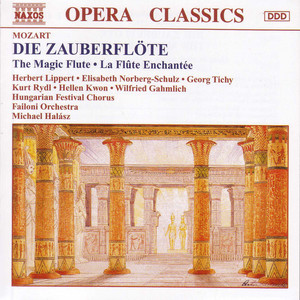 | The Magic Flute, K. 620: Overture | Wolfgang Amadeus Mozart, Wilfried Gahmlich, Anna Gonda, Hungarian Festival Chorus, Budapest Failoni Chamber Orchestra, Michael Halasz, Hellen Kwon, Lotte Leitner, Herbert Lippert, Elizabeth Norberg-Schulz, Kurt Rydl, Georg Tichy, Julia Faulkner, Waltraud Winsauer | E♭ Major | 1 | 5B | 90 BPM | |
 | Les Contes d'Hoffmann (1989 Digital Remaster), Act III: Entr'acte et Barcarolle: Belle nuit, ô nuit d'amour (Une voix/Giulietta/Choeurs) | Jacques Offenbach, Nicolai Gedda, Elisabeth Schwarzkopf, Victoria de los Ángeles, Gianna D'Angelo, Christiane Gayraud, Jacques Pruvost, Robert Geay, George London, Michel Sénéchal, Jean Christophe Benoit, Jean-Pierre Laffage, Nicola Ghiuselev, André Malla | D Major | 1 | 10B | 90 BPM | |
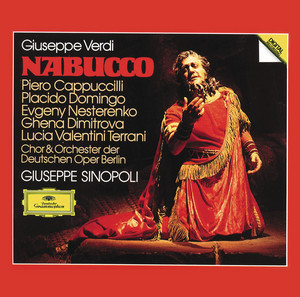 | Nabucco / Act IV: Cadran, cadranno i perfidi ...O prodi miei, seguitemi | Giuseppe Verdi, Volker Horn, Piero Cappuccilli, Orchester der Deutschen Oper Berlin, Giuseppe Sinopoli, Chor der Deutschen Oper Berlin | E♭ Major | 5 | 5B | 138 BPM |
- ISRC
- DEA809360031
- Label
- L-M Records/RCA Records