- BPM
- 137
- Key
- B♭ Major
- Camelot
- 6B
Pie Jesu by Gabriel Fauré, Richard Stoltzman Song Details
"Pie Jesu" by Gabriel Fauré, Richard Stoltzman had its release date on 1986. The duration of This song is about 3 minutes long, at 3:24. Based on our data, This song appears to be safe for all ages and is not considered explicit. This track is about the average length of a typical track. The song is number 8 out of 12 in Begin Sweet World by Richard Stoltzman. Based on our statistics, Pie Jesu's popularity is not that popular right now. In our opinion, the overall tone is not very danceable and projects negative sounds, such as being sad, depressed, or angry.
BPM and Tempo
The tempo marking of Pie Jesu by Gabriel Fauré, Richard Stoltzman is Allegro (fast, quick, and bright), since this song has a tempo of 137 BPM. With that information, we can conclude that the song has a fast tempo. This song can go great with walking. The time signature for this track is 3/4.
Music Key
This song is in the music key of B♭ Major. This also means that this song has a camelot key of 6B. So, the perfect camelot match for 6B would be either 6B or 7A. While, 7B can give you a low energy boost. For moderate energy boost, you would use 3B and a high energy boost can either be 8B or 1B. Though, if you want a low energy drop, you should looking for songs with either a camelot key of 6A or 5B will give you a low energy drop, 9B would be a moderate one, and 4B or 11B would be a high energy drop. Lastly, 3A allows you to change the mood.
Want to find the BPM and music key for other songs? Check out our BPM and Key Finder page!
- Popularity
- 3%
- Loudness
- -27.866 dB
- Acousticness
- 99%
- Danceability
- 15%
- Energy
- 1%
- Instrumentalness
- 94%
- Liveness
- 9%
- Loudness
- 54%
- Speechiness
- 4%
- Valence
- 5%
Recommendations
| Track | Artist | Key | Energy | Camelot | BPM | ||
|---|---|---|---|---|---|---|---|
 | 3 Old Viennese Dances: No. 2, Liebesleid (Transcr. for Violin and Orchestra) | Fritz Kreisler, María Dueñas, Wiener Symphoniker, Manfred Honeck | G Major | 0 | 9B | 103 BPM | |
 | Minuet in G Minor, HWV 434 No. 4 (Transc. W. Kempff) | George Frideric Handel, Roberto Cominati | G Minor | 0 | 6A | 66 BPM | |
 | 24 Preludes, Op. 11: No. 21 in B-Flat Major - Andante | Alexander Scriabin, Mao Fujita | F Major | 1 | 7B | 149 BPM | |
 | Sonata in D Minor, K. 32 | Domenico Scarlatti, Lucas Debargue | D Minor | 0 | 7A | 130 BPM | |
 | Fauré: Pleurs d'or, Op. 72 | Albert Samain, Gabriel Fauré, Elly Ameling, Dalton Baldwin, Gérard Souzay | E♭ Major | 1 | 5B | 111 BPM | |
 | Mahler: Blumine | Gustav Mahler, San Francisco Symphony, Michael Tilson Thomas | C Major | 1 | 8B | 100 BPM | |
 | Lalo: Cello Concerto in D Minor: II. Intermezzo - Allegro presto | Édouard Lalo, André Navarra, Charles Münch, Orchestre des Concerts Lamoureux | C Minor | 1 | 5A | 75 BPM | |
 | Après un rêve, Op. 7 No. 1 (Arr. P. Casals for Cello & Piano) | Gabriel Fauré, Ina-Esther Joost Ben-Sasson, Allan Sternfield | F Minor | 1 | 4A | 97 BPM | |
 | Piano Concerto in G Major, M. 83: II. Adagio assai | Maurice Ravel, Martha Argerich, Berliner Philharmoniker, Claudio Abbado | E Major | 0 | 12B | 75 BPM | |
 | Dido and Aeneas, Z. 626 / Act III: "When I Am Laid in Earth" Dido's Lamento (Arr. by Mathieu Herzog for Cello and Strings) | Henry Purcell, Camille Thomas, Brussels Philharmonic, Mathieu Herzog | G Minor | 1 | 6A | 77 BPM | |
 | Sonata in D Minor, K. 9 | Domenico Scarlatti, Ivo Pogorelich | D Minor | 0 | 7A | 94 BPM | |
 | Symphony No. 9 in E Minor, Op. 95, B. 178, "From the New World": IV. Largo. Goin' Home (Arr. Koncz For Solo Cello and Cello Ensemble) | Antonín Dvořák, Kian Soltani, Staatskapelle Berlin, Cellists | D♭ Major | 0 | 3B | 94 BPM | |
 | Schluss | Fanny Mendelssohn, Heather Schmidt | E Major | 1 | 12B | 87 BPM | |
![Spartacus, Act III: Adagio of Spartacus and Phrygia (arr. Y. Grigorovich) [1968 Bolshoi Version] by Aram Khachaturian, RIAS Kammerchor, Deutsches Symphonie-Orchester Berlin, Michail Jurowski](https://i.scdn.co/image/ab67616d00001e02c21d253eed4ccdd547b4b94d) | Spartacus, Act III: Adagio of Spartacus and Phrygia (arr. Y. Grigorovich) [1968 Bolshoi Version] | Aram Khachaturian, RIAS Kammerchor, Deutsches Symphonie-Orchester Berlin, Michail Jurowski | E Major | 2 | 12B | 123 BPM | |
 | 7 Peces de joventut (Youthful Pieces): Record | Manuel Blancafort, Miquel Villalba | F♯ Minor | 0 | 11A | 138 BPM | |
 | La Vierge / Scene 4: The Assumption: Le dernier sommeil de la Vièrge (The Last Sleep of the Virgin) | Jules Massenet, The New Symphony Orchestra Of London, Raymond Agoult | G Major | 1 | 9B | 168 BPM | |
 | 6 Melodies, Op. 4 - 6 melodies, Op. 5: Allegretto | Fanny Mendelssohn, Beatrice Rauchs | G Minor | 1 | 6A | 107 BPM | |
 | 6 Album Leaves, Op. 2, JB 1:51: No. 2 in A Minor, Chanson. Moderato | Bedřich Smetana, Jitka Čechová | A Minor | 0 | 8A | 66 BPM | |
 | Stille Musik: III. Augenblicke der Serenade | Valentin Silvestrov | C Major | 0 | 8B | 86 BPM | |
 | Lieder ohne Worte, Op. 19b: Lieder ohne Worte (Song without Words) No. 6 in G Minor, Op. 19, No. 6, "Venezianisches Gondellied" [Venetian Gondola Song] | Felix Mendelssohn, Péter Nagy | G Major | 0 | 9B | 101 BPM | |
 | Melody from « Orfeo » | Christoph Willibald Gluck, Roberto Giordano | G Minor | 2 | 6A | 115 BPM | |
 | Violin Concerto No. 1 in G Minor, Op. 26: I. Allegro moderato | Max Bruch, Itzhak Perlman, Bernard Haitink, Concertgebouworkest | E♭ Major | 2 | 5B | 99 BPM | |
 | Eccles: The Mad Lover: V. Aire. Ground (Arr. Diluka for Piano) | John Eccles, Shani Diluka | F Minor | 2 | 4A | 69 BPM | |
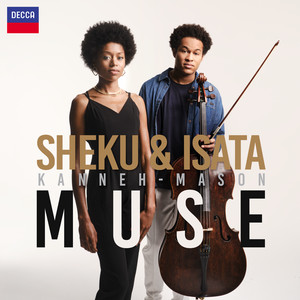 | 12 Romances, Op. 21: No. 7, How Fair This Spot (Arr. Sheku Kanneh-Mason for Cello and Piano) | Sergei Rachmaninoff, Sheku Kanneh-Mason, Isata Kanneh-Mason | A Major | 1 | 11B | 89 BPM | |
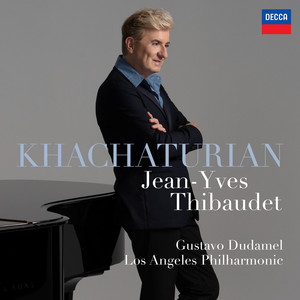 | Adagio of Spartacus and Phrygia (Transcr. E. Khachaturian for Solo Piano) - Excerpt | Aram Khachaturian, Jean-Yves Thibaudet | F Minor | 0 | 4A | 67 BPM |
- ISRC
- This song does not have an ISRC.
- Label
- L-M Records/RCA Records