- BPM
- 99
- Key
- A Major
- Camelot
- 11B
Deborah, HWV 51: Part I: Accompanied Recitative by George Frideric Handel, Natacha Ducret, Elisabeth Scholl, Ewa Wolak, Lawrence Zazzo, Junge Kantorei, Frankfurt Baroque Orchestra, Joachim Carlos Martini Song Details
"Deborah, HWV 51: Part I: Accompanied Recitative" by George Frideric Handel, Natacha Ducret, Elisabeth Scholl, Ewa Wolak, Lawrence Zazzo, Junge Kantorei, Frankfurt Baroque Orchestra, Joachim Carlos Martini had its release date on March 1, 2002. With This song being less than a minute long, we are pretty confident that this song does not contain any foul language. That being said, this song is pretty short compared to other songs. The track order of this song in George Frideric Handel's "Handel: Deborah" album is number 8 out of 74. On top of that, Hong Kong appears to be the country where this track was created. In terms of popularity, Deborah, HWV 51: Part I: Accompanied Recitative is currently not that popular. In our opinion, the overall tone is not very danceable and projects negative sounds, such as being sad, depressed, or angry.
BPM and Tempo
We consider the tempo marking of Deborah, HWV 51: Part I: Accompanied Recitative by George Frideric Handel, Natacha Ducret, Elisabeth Scholl, Ewa Wolak, Lawrence Zazzo, Junge Kantorei, Frankfurt Baroque Orchestra, Joachim Carlos Martini to be Andante (at a walking pace) because the track has a tempo of 99 BPM, a half-time of 50BPM, and a double-time of 198 BPM. Based on that, the speed of the song's tempo is slow. The time signature for this track is 4/4.
Music Key
This song is in the music key of A Major. This also means that this song has a camelot key of 11B. So, the perfect camelot match for 11B would be either 11B or 12A. While, 12B can give you a low energy boost. For moderate energy boost, you would use 8B and a high energy boost can either be 1B or 6B. Though, if you want a low energy drop, you should looking for songs with either a camelot key of 11A or 10B will give you a low energy drop, 2B would be a moderate one, and 9B or 4B would be a high energy drop. Lastly, 8A allows you to change the mood.
Want to find the BPM and music key for other songs? Check out our BPM and Key Finder page!
- Popularity
- 3%
- Loudness
- -21.301 dB
- Acousticness
- 96%
- Danceability
- 39%
- Energy
- 9%
- Instrumentalness
- 0%
- Liveness
- 15%
- Loudness
- 64%
- Speechiness
- 6%
- Valence
- 7%
Recommendations
| Track | Artist | Key | Energy | Camelot | BPM | ||
|---|---|---|---|---|---|---|---|
 | String Quintet in E Major, G. 275: III. Minuetto - Trio | Luigi Boccherini, Cuarteto Casals, Eckart Runge | A Major | 0 | 11B | 127 BPM | |
 | Fantasia & Fugue in C Minor, Op. 86 (After J.S. Bach's BWV 537): Fantasia | Edward Elgar, Seattle Symphony Orchestra, Gerard Schwarz | F Minor | 1 | 4A | 143 BPM | |
 | Cello Concerto No. 2 in D Major, Hob. VIIb: II. Adagio | Joseph Haydn, Alisa Weilerstein, TrondheimSolistene | G Major | 0 | 9B | 70 BPM | |
 | Lo frate 'nnamorato: II. Andante | Giovanni Battista Pergolesi, Orchestra da Camera di Napoli, Enzo Amato | E Minor | 5 | 9A | 165 BPM | |
 | Idyl for Strings - Adagio | Leoš Janáček, Hanspeter Gmür, Camerata Romana | G Major | 1 | 9B | 105 BPM | |
 | Nais, RCT 49, Prologue, Scène V: Premier rigaudon - Deuxième rigaudon | Jean-Philippe Rameau, Teodor Currentzis | A♭ Major | 3 | 4B | 64 BPM | |
 | Mahler: Symphony No. 5 in C-Sharp Minor: IV. Adagietto. Sehr langsam | Gustav Mahler, Daniel Barenboim, Chicago Symphony Orchestra | F Major | 1 | 7B | 82 BPM | |
 | Stabat Mater: 3. O quam tristis | Giovanni Battista Pergolesi, Margaret Marshall, Lucia Valentini Terrani, London Symphony Orchestra, Claudio Abbado, Leslie Pearson | G Minor | 1 | 6A | 80 BPM | |
 | Lieder ohne Worte, Op. 62: No. 6 Allegretto grazioso "Frühlingslied" (Arr. Ottensamer for Clarinet and Strings) | Felix Mendelssohn, Andreas Ottensamer, Schumann Quartett, Gunars Upatnieks | A Major | 1 | 11B | 99 BPM | |
 | Concerto in D Minor, Op.7, No.4: I. Adagio | George Frideric Handel, Academy of Ancient Music, Richard Egarr | D♭ Minor | 0 | 12A | 75 BPM | |
 | Sonata in D Minor, K. 9 | Domenico Scarlatti, Ivo Pogorelich | D Minor | 0 | 7A | 94 BPM | |
 | Concerto for Oboe, Bassoon, Harpsichord and B.c. "Piagge serene": Adagio (from Organconcerto Op. 7,4, HWV 309) | George Frideric Handel, Albrecht Mayer, Sinfonia Varsovia, Guilhaume Santana, Jakub Haufa, Monika Razynska | A♭ Major | 4 | 4B | 114 BPM | |
 | Overture No. 6 in B-Flat Major: II. Largo | Francesco Maria Veracini, L'Arte dell' Arco, Federico Guglielmo | F♯ Major | 0 | 2B | 96 BPM | |
 | Adagio in F, H.XVII No. 9 | Joseph Haydn, Alfred Brendel | F Major | 0 | 7B | 71 BPM | |
 | Sinfonia In D Major, Wq. 183/1, H. 663 : II. Largo | Carl Philipp Emanuel Bach, Salzburg Chamber Philharmonic Orchestra | F Major | 0 | 7B | 133 BPM | |
 | Dido and Aeneas, Z. 626: Overture | Henry Purcell, Kym Amps, David van Asch, Anna Crookes, The Scholars Baroque Ensemble | B Minor | 2 | 10A | 91 BPM | |
 | Capriol Suite: 5. Pied-en- l'air | Peter Warlock, Academy of St. Martin in the Fields, Nicholas Kraemer, Sir Neville Marriner | G Major | 1 | 9B | 113 BPM | |
 | Ode for the Birthday of Queen Anne, HWV 74: Eternal Source of Light Divine | George Frideric Handel, Susanne Rydén, Niklas Eklund, London Baroque, Charles Medlam | E Major | 0 | 12B | 100 BPM | |
 | Purcell: Trumpet Sonata in D Major, Z. 850: II. Adagio | Henry Purcell, John Eliot Gardiner, English Baroque Soloists | D♭ Minor | 0 | 12A | 103 BPM | |
 | Bagatellen Op. 47: I. Allegretto scherzando | Antonín Dvořák, NOG Ensemble | G Minor | 1 | 6A | 96 BPM | |
 | Serenade in D Major, LMV VIII:9: VI. Adagio | Leopold Mozart, Fabrice Millischer, Bayerische Kammerphilharmonie, Reinhard Goebel | G Major | 1 | 9B | 100 BPM | |
 | Concerto a cinque No. 2, Op. 9: II. Adagio | Tomaso Albinoni, Paul Dombrecht, Il Fondamento | A Major | 1 | 11B | 45 BPM | |
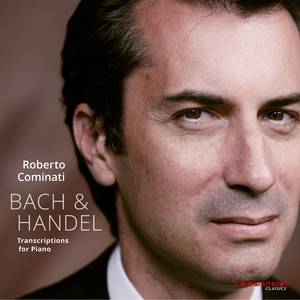 | Minuet in G Minor, HWV 434 No. 4 (Transc. W. Kempff) | George Frideric Handel, Roberto Cominati | G Minor | 0 | 6A | 66 BPM | |
 | Handel: Music for the Royal Fireworks, HWV 351: II. Allegro - Lentement - Allegro | George Frideric Handel, Alison Balsom, Balsom Ensemble, Simon Wright | D♭ Major | 4 | 3B | 135 BPM | |
| 3 Chorales, P. 167: No. 1, Lento assai (After J.S. Bach's BWV 659) | Ottorino Respighi, Seattle Symphony Orchestra, Gerard Schwarz | C Major | 0 | 8B | 65 BPM |
- ISRC
- HKI190139208
- Label
- L-M Records/RCA Records