- BPM
- 78
- Key
- G Major
- Camelot
- 9B
Pagliacci, Prologue: "Si può? Si può?" (Tonio) by Ruggero Leoncavallo, Orchestra dell'Accademia Nazionale di Santa Cecilia, Francesco Molinari-Prandelli, Cornell MacNeil Song Details
"Pagliacci, Prologue: "Si può? Si può?" (Tonio)" by Ruggero Leoncavallo, Orchestra dell'Accademia Nazionale di Santa Cecilia, Francesco Molinari-Prandelli, Cornell MacNeil had its release date on December 12, 2014. Since This song is still less than 10 minute long, it is still considered a pretty long duration song compared to the average song length. This song does not appear to be explicit due to the lack of the "E" tag. The track order of this song in Ruggero Leoncavallo, Orchestra dell'Accademia Nazionale di Santa Cecilia, Francesco Molinari-Prandelli, Mario del Monaco, Gabriella Tucci's "Leoncavallo: Pagliacci" album is number 1 out of 17. On top of that, Germany appears to be the country where this track was created. Pagliacci, Prologue: "Si può? Si può?" (Tonio) is not that popular right now. In our opinion, the overall tone is not very danceable and projects negative sounds, such as being sad, depressed, or angry.
BPM and Tempo
We consider the tempo marking of Pagliacci, Prologue: "Si può? Si può?" (Tonio) by Ruggero Leoncavallo, Orchestra dell'Accademia Nazionale di Santa Cecilia, Francesco Molinari-Prandelli, Cornell MacNeil to be Andante (at a walking pace) because the track has a tempo of 78 BPM, a half-time of 39BPM, and a double-time of 156 BPM. Based on that, the speed of the song's tempo is slow. The time signature for this track is 4/4.
Music Key
This song has a musical key of G Major. This also means that this song has a camelot key of 9B. So, the perfect camelot match for 9B would be either 9B or 10A. While, 10B can give you a low energy boost. For moderate energy boost, you would use 6B and a high energy boost can either be 11B or 4B. Though, if you want a low energy drop, you should looking for songs with either a camelot key of 9A or 8B will give you a low energy drop, 12B would be a moderate one, and 7B or 2B would be a high energy drop. Lastly, 6A allows you to change the mood.
Want to find the BPM and music key for other songs? Check out our BPM and Key Finder page!
- Popularity
- 1%
- Loudness
- -19.309 dB
- Acousticness
- 96%
- Danceability
- 26%
- Energy
- 17%
- Instrumentalness
- 3%
- Liveness
- 59%
- Loudness
- 68%
- Speechiness
- 5%
- Valence
- 6%
Recommendations
| Track | Artist | Key | Energy | Camelot | BPM | ||
|---|---|---|---|---|---|---|---|
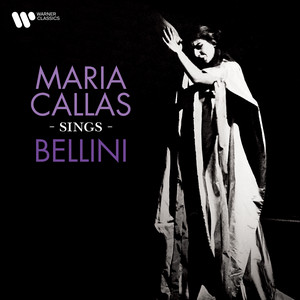 | Bellini: Norma, Act 1: "Casta diva" (Norma, Coro) | Vincenzo Bellini, Maria Callas, Coro Del Teatro Alla Scala Di Milano, Tullio Serafin, Orchestra Del Teatro Alla Scala, Milano | F Major | 2 | 7B | 88 BPM | |
 | Le nozze di Figaro, K. 492, Act I: No. 10, Non più andrai | Wolfgang Amadeus Mozart, Bryn Terfel, Scottish Chamber Orchestra, Sir Charles Mackerras | G Major | 2 | 9B | 134 BPM | |
 | Intermezzo From Cavalleria Rusticana | Pietro Mascagni, Royal Philharmonic Orchestra, Philip Ellis | F Major | 1 | 7B | 86 BPM | |
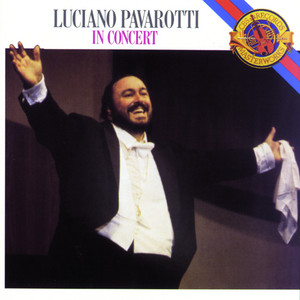 | Torna a Surriento | Ernesto de Curtis, Luciano Pavarotti, Emerson Buckley, Symphony Orchestra Of Emilia Romagna "Arturo Toscanini" | E Minor | 1 | 9A | 96 BPM | |
 | Serse / Act 1 HWV40: "Ombra mai fu" | George Frideric Handel, Bryn Terfel, Scottish Chamber Orchestra, Sir Charles Mackerras | E Major | 1 | 12B | 90 BPM | |
 | Martha: M´apparì, tutt´amor | Carlo Bergonzi, Orchestra Sinfonica e Coro di Torino della RAI, Massimo Pradella | F Major | 2 | 7B | 68 BPM | |
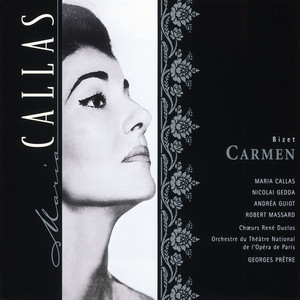 | Bizet: Carmen, WD 31, Act 2 Scene 2: No. 14, Couplets, "Votre toast, je peux vous le rendre" (Escamillo, Frasquita, Mercedes, Carmen, Chorus) | Georges Bizet, Robert Massard/Choeurs René Duclos/Orchestre de l'Opéra National de Paris/Georges Prêtre, Georges Prêtre, Orchestre du Théâtre National de l'Opéra Paris, Orchestre de l'Opéra National de Paris, Paris Opera Orchestra | F Major | 3 | 7B | 116 BPM | |
 | Core 'ngrato (1911 Recording) | Enrico Caruso | E♭ Major | 2 | 5B | 70 BPM | |
 | Tosca, Act I: Recondita armonia | Giacomo Puccini, Luciano Pavarotti, National Philharmonic Orchestra, Nicola Rescigno | F Major | 2 | 7B | 83 BPM | |
 | Tosti / Arr Schifrin: Around the World Part 7: Marechiare | Francesco Paolo Tosti, The Three Tenors, Zubin Mehta, Los Angeles Philharmonic | A♭ Minor | 2 | 1A | 139 BPM | |
 | Gianni Schicchi: "O mio babbino caro" | Giacomo Puccini, Mirella Freni, Orchestra del Maggio Musicale Fiorentino, Bruno Bartoletti | A♭ Major | 1 | 4B | 171 BPM | |
 | Pagliaci - Vesti La Giubba | Plácido Domingo | B♭ Major | 2 | 6B | 96 BPM | |
 | Leoncavallo : Pagliacci : Act 1 "Recitar!" [Canio] | Ruggero Leoncavallo, José Cura, Philharmonia Orchestra | E Minor | 2 | 9A | 88 BPM | |
 | Il barbiere di Siviglia (The Barber of Seville): Act I No. 1: Introduzione: Piano, pianissimo | Gioachino Rossini, Roberto Servile, Sonia Ganassi, Ramón Vargas, Angelo Romero, Franco de Grandis, Ingrid Kertesi, Kazmer Sarkany, Laszlo Orban, Ferenc Korpas, Hungarian Radio Chorus, Budapest Failoni Chamber Orchestra, Will Humburg | G Major | 0 | 9B | 104 BPM | |
 | Verdi: Rigoletto, Act 3: "La donna è mobile" (Duca) | Giuseppe Verdi, Carlo Rizzi, Orchestra of Welsh National Opera, Richard Leech | D Major | 1 | 10B | 131 BPM | |
 | Cavalleria rusticana: "Regina coeli laetare" | Pietro Mascagni, Julia Varady, The London Opera Chorus, National Philharmonic Orchestra, Gianandrea Gavazzeni | G Major | 3 | 9B | 87 BPM | |
 | Non t'amo più | Francesco Paolo Tosti, Luciano Pavarotti, Orchestra del Teatro Comunale di Bologna, Richard Bonynge | B♭ Minor | 1 | 3A | 80 BPM | |
 | Pagliacci / Act 2: "Pagliaccio, mio marito" | Ruggero Leoncavallo, Mirella Freni, Vincenzo Bello, National Philharmonic Orchestra, Giuseppe Patanè | C Major | 0 | 8B | 110 BPM | |
 | Polovtsian Dances From "Prince Igor" | Alexander Borodin, Torgny Sporsen, Gothenburg Symphony Orchestra, Neeme Järvi, Gothenburg Symphony Choir | D Major | 1 | 10B | 103 BPM | |
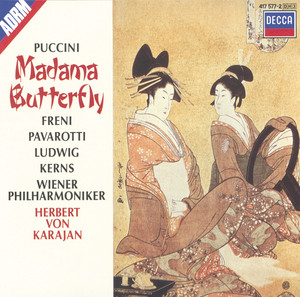 | Madama Butterfly / Act 2: "Un bel dì vedremo" | Giacomo Puccini, Mirella Freni, Wiener Philharmoniker, Herbert von Karajan | D♭ Major | 1 | 3B | 58 BPM | |
 | Carmen, Act II: Chanson bohème. Les tringles des sistres tintaient | Georges Bizet, Christine Barbaux, Agnes Baltsa, Jane Berbié, Berliner Philharmoniker, Herbert von Karajan | C Major | 1 | 8B | 106 BPM | |
 | Vocalise, Op. 34, No. 14 - Remastered | Sergei Rachmaninoff, Anna Moffo, American Symphony Orchestra, Leopold Stokowski | D Major | 1 | 10B | 100 BPM | |
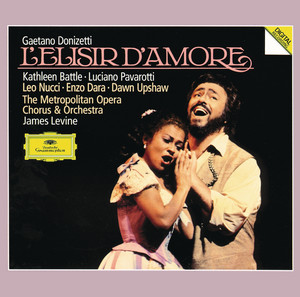 | L'elisir d'amore: Overture (Preludio) | Gaetano Donizetti, Metropolitan Opera Orchestra, James Levine | D Major | 0 | 10B | 139 BPM | |
 | Rachmaninov: 14 Romances, Op. 34: No. 14, Vocalise | Sergei Rachmaninoff, Natalie Dessay, Michael Schønwandt, Berliner Sinfonieorchester | F♯ Minor | 2 | 11A | 84 BPM | |
 | Parlami d'amore, Mariù | Cesare Andrea Bixio, Luciano Pavarotti, Andrea Griminelli, Henry Mancini | G Major | 3 | 9B | 83 BPM |
- ISRC
- DEHB51303033
- Label
- L-M Records/RCA Records