- BPM
- 123
- Key
- A Major
- Camelot
- 11B
The Swan Lake. Act 3. Female Variation by Pyotr Ilyich Tchaikovsky, MetodoVadim Song Details
On June 1, 2019, the song "The Swan Lake. Act 3. Female Variation" was released by Pyotr Ilyich Tchaikovsky, MetodoVadim. With This song being less than two minutes long, at 1:08, we are fairly confident that this song is not explicit and is safe for all ages. Based on the duration of this song, this song duration is much smaller than the average song duration. The track order of this song in MetodoVadim's "Greatest Classical Ballet Female Variations" album is number 8 out of 12. Based on our statistics, The Swan Lake. Act 3. Female Variation's popularity is not that popular right now. The overall tone is very danceable, especially with its high energy, which produces more of a euphoric, cheerful, or happy vibe.
BPM and Tempo
We consider the tempo marking of The Swan Lake. Act 3. Female Variation by Pyotr Ilyich Tchaikovsky, MetodoVadim to be Allegro (fast, quick, and bright) because the track has a tempo of 123 BPM, a half-time of 62BPM, and a double-time of 246 BPM. Based on that, the speed of the song's tempo is fast. Activities such as, walking, can go well with this song. The time signature for this track is 4/4.
Music Key
This song has a musical key of A Major. This also means that this song has a camelot key of 11B. So, the perfect camelot match for 11B would be either 11B or 12A. While, 12B can give you a low energy boost. For moderate energy boost, you would use 8B and a high energy boost can either be 1B or 6B. Though, if you want a low energy drop, you should looking for songs with either a camelot key of 11A or 10B will give you a low energy drop, 2B would be a moderate one, and 9B or 4B would be a high energy drop. Lastly, 8A allows you to change the mood.
Want to find the BPM and music key for other songs? Check out our BPM and Key Finder page!
- Popularity
- 6%
- Loudness
- -18.231 dB
- Acousticness
- 91%
- Danceability
- 65%
- Energy
- 20%
- Instrumentalness
- 79%
- Liveness
- 9%
- Loudness
- 70%
- Speechiness
- 42%
- Valence
- 81%
Recommendations
| Track | Artist | Key | Energy | Camelot | BPM | ||
|---|---|---|---|---|---|---|---|
 | Má vlast, JB 1:112: II. Vltava "The Moldau" | Bedřich Smetana, Wiener Philharmoniker, Herbert von Karajan | E Minor | 1 | 9A | 78 BPM | |
 | 12 Songs, Op. 21: V. Lilacs (Transcr. Rachmaninoff for Solo Piano) | Sergei Rachmaninoff, Sergei Babayan | A♭ Major | 0 | 4B | 78 BPM | |
 | Cello Sonata No. 1 in E Minor, Op. 38: II. Allegretto quasi menuetto | Johannes Brahms, Maria Kliegel, Kristin Merscher | A Minor | 0 | 8A | 104 BPM | |
 | Etude in F Minor | Felix Mendelssohn, Benjamin Frith | B♭ Major | 0 | 6B | 75 BPM | |
 | Carmen Suite No. 1: 1. Prélude | Georges Bizet, Orchestre de Paris, Semyon Bychkov | A Minor | 1 | 8A | 96 BPM | |
 | 3 Études de Concert, S. 144: No. 3 in D-Flat Major "Un sospiro" | Franz Liszt, Daniil Trifonov | D♭ Major | 1 | 3B | 76 BPM | |
 | Scheherazade: The voice of Scheherazade | Nikolai Rimsky-Korsakov, Lars Hjalmar Joakim | G Major | 1 | 9B | 132 BPM | |
 | Die Fledermaus: Overture | Johann Strauss II, Berliner Philharmoniker, Herbert von Karajan | B Minor | 1 | 10A | 97 BPM | |
 | Romeo and Juliet, Op. 64 / Act 1: Dance Of The Knights | Sergei Prokofiev, The Cleveland Orchestra, Lorin Maazel | B♭ Major | 6 | 6B | 124 BPM | |
 | Carnival of the Animals: Aquarium | Camille Saint-Saëns, Isata Kanneh-Mason, Konya Kanneh-Mason, Braimah Kanneh-Mason, Ayla Sahin, Timothy Ridout, Sheku Kanneh-Mason, Adam Walker, Alasdair Malloy | A Minor | 0 | 8A | 70 BPM | |
 | Le roi s'amuse: Passepied | Léo Delibes, Slovak Philharmonic, Ondrej Lenard | A Major | 1 | 11B | 88 BPM | |
 | Violin Concerto No. 1 in A minor, BWV 1041: I. (Allegro moderato) | Johann Sebastian Bach, Daniel Lozakovich, Chamber Orchestra of the Bavarian Radio, Radoslaw Szulc, Olga Watts | A Minor | 4 | 8A | 91 BPM | |
 | Zdes' khorosho ('How Fair This Spot'), Op. 21, No. 7 | Sergei Rachmaninoff, Pablo Ferrandez, Denis Kozhukhin | A Major | 0 | 11B | 87 BPM | |
 | Piano Concerto No. 2 in F Major, Op. 102: II. Andante | Dmitri Shostakovich, Boris Giltburg, Royal Liverpool Philharmonic Orchestra, Vasily Petrenko | C Minor | 0 | 5A | 80 BPM | |
 | Paquita: Variation 5: Allegro non troppo | Ludwig Minks, Alexander Tcherepnin, Czech Symphony Orchestra, Michaela Rózsa Růžičková | E Minor | 2 | 9A | 130 BPM | |
 | Giselle / Act 2: Grand pas de deux: Adage | Adolphe Adam, Orchestra of the Royal Opera House, Covent Garden, Richard Bonynge | E♭ Major | 0 | 5B | 73 BPM | |
 | Jazz Suite No. 2: IV. Waltz 1 | Dmitri Shostakovich, Russian State Symphony Orchestra, Dmitry Yablonsky | B♭ Major | 2 | 6B | 109 BPM | |
 | Rhapsody on a Theme of Paganini, Op. 43: Variation No. 18 Andante cantabile | Sergei Rachmaninoff, Daniil Trifonov, Philadelphia Orchestra, Yannick Nézet-Séguin | D♭ Major | 1 | 3B | 88 BPM | |
 | Italian Polka | Sergei Rachmaninoff, Brigitte Engerer, Oleg Maisenberg | E♭ Major | 1 | 5B | 103 BPM | |
 | La campanella in G-Sharp Minor (From "Grandes études de Paganini", S. 141/3) | Franz Liszt, Lang Lang | A♭ Minor | 3 | 1A | 88 BPM | |
 | Nocturne Op. 9, No. 2 in E-Flat Major | Joshua Bell | E♭ Major | 1 | 5B | 78 BPM | |
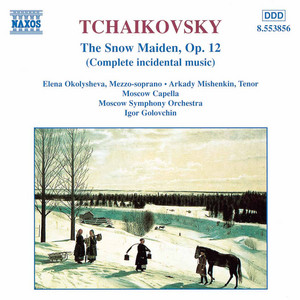 | The Snow Maiden, Op. 12: XIII. Dance Of The Tumblers | Moscow Symphony Orchestra, Elena Okolysheva, Arkady Mishenkin, Moscow Capella, Pyotr Ilyich Tchaikovsky | A Major | 3 | 11B | 176 BPM | |
 | The Thieving Magpie - From “A Clockwork Orange" | Gioachino Rossini, National Philharmonic Orchestra, Riccardo Chailly | E Major | 2 | 12B | 89 BPM | |
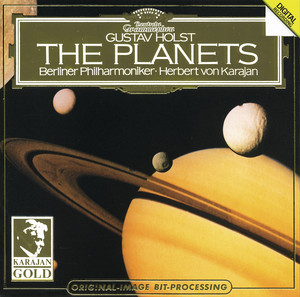 | The Planets, Op. 32: 5. Saturn, the Bringer of Old Age | Gustav Holst, Berliner Philharmoniker, Herbert von Karajan | C Major | 0 | 8B | 106 BPM | |
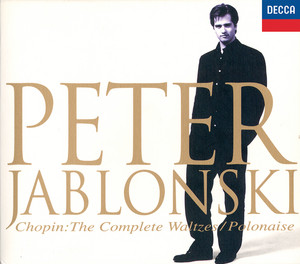 | Waltz No. 19 in A minor, Op. posth. | Frédéric Chopin, Peter Jablonski | A Minor | 0 | 8A | 69 BPM |
- ISRC
- This song does not have an ISRC.
- Label
- L-M Records/RCA Records