- BPM
- 120
- Key
- C Minor
- Camelot
- 5A
The Rite of Spring (1913 Version): The Sacrifice, Part II: Ritual of the Ancients by Igor Stravinsky, Leonard Bernstein, New York Philharmonic Song Details
"The Rite of Spring (1913 Version): The Sacrifice, Part II: Ritual of the Ancients" by Igor Stravinsky, Leonard Bernstein, New York Philharmonic had its release date on 1947. The duration of This song is about 3 minutes long, at 3:23. Based on our data, This song appears to be safe for all ages and is not considered explicit. This track is about the average length of a typical track. The song is number 13 out of 102 in Bernstein Conducts Stravinsky by Igor Stravinsky, Leonard Bernstein. Going off of the ISRC code of this track, we detected that the origin of this track is from United States. Based on our statistics, The Rite of Spring (1913 Version): The Sacrifice, Part II: Ritual of the Ancients's popularity is unknown right now. In our opinion, the overall tone is not very danceable and projects negative sounds, such as being sad, depressed, or angry.
BPM and Tempo
The tempo marking of The Rite of Spring (1913 Version): The Sacrifice, Part II: Ritual of the Ancients by Igor Stravinsky, Leonard Bernstein, New York Philharmonic is Moderato (at a moderate speed), since this song has a tempo of 120 BPM. With that information, we can conclude that the song has a fast tempo. This song can go great with walking. The time signature for this track is 4/4.
Music Key
This song is in the music key of C Minor. Because this track belongs in the C Minor key, the camelot key is 5A. So, the perfect camelot match for 5A would be either 5A or 4B. While, a low energy boost can consist of either 5B or 6A. For moderate energy boost, you would use 2A and a high energy boost can either be 7A or 12A. However, if you are looking for a low energy drop, finding a song with a camelot key of 4A would be a great choice. Where 8A would give you a moderate drop, and 3A or 10A would be a high energy drop. Lastly, 8B allows you to change the mood.
Want to find the BPM and music key for other songs? Check out our BPM and Key Finder page!
- Popularity
- 0%
- Loudness
- -20.784 dB
- Acousticness
- 79%
- Danceability
- 28%
- Energy
- 6%
- Instrumentalness
- 67%
- Liveness
- 28%
- Loudness
- 65%
- Speechiness
- 4%
- Valence
- 13%
Recommendations
| Track | Artist | Key | Energy | Camelot | BPM | ||
|---|---|---|---|---|---|---|---|
 | Death of Usurer: Adagio | Valery Gergiev, London Symphony Orchestra | C Minor | 0 | 5A | 108 BPM | |
 | Also sprach Zarathustra, Op. 30, TrV 176: Das Tanzlied - Das Nachtlied | Richard Strauss, Michel Schwalbé, Berliner Philharmoniker, Herbert von Karajan | C Major | 2 | 8B | 100 BPM | |
 | Nocturnes, L. 91: II. Fêtes (Arr. by Denis Herlin) | Claude Debussy, Denis Herlin, Hallé, Sir Mark Elder | A Major | 0 | 11B | 88 BPM | |
 | Symphony No. 2 in D Major, Op. 43: III. Vivacissimo | Jean Sibelius, Leonard Bernstein, New York Philharmonic | B♭ Major | 3 | 6B | 98 BPM | |
 | Shéhérazade, Op. 35: II. The Legend of the Kalendar Prince | Nikolai Rimsky-Korsakov, Sergej Galaktionov, Gianandrea Noseda, Filarmonica Teatro Regio Torino | E Minor | 1 | 9A | 74 BPM | |
 | The Firebird (L'oiseau De Feu) - Suite (1919): 3. Variation Of The Firebird | Igor Stravinsky, Orchestre de l'Opéra National de Paris, Myung-Whun Chung | A♭ Minor | 2 | 1A | 110 BPM | |
 | Sibelius: Symphony No. 1 in E Minor, Op. 39: III. Scherzo. Allegro | Jean Sibelius, Paavo Berglund, Helsinki Philharmonic Orchestra | C Major | 2 | 8B | 109 BPM | |
 | Piano Concerto No. 1 in C Minor, Op. 35: II. Lento | Dmitri Shostakovich, André Previn, William Vacchiano, New York Philharmonic, Leonard Bernstein | D Minor | 3 | 7A | 113 BPM | |
 | Symphony No. 1 in D Major "Titan": III. Feierlich und gemessen, ohne zu schleppen | Gustav Mahler, Leonard Bernstein, New York Philharmonic | A♭ Major | 0 | 4B | 72 BPM | |
 | Scheherazade: Sea Birds | Nikolai Rimsky-Korsakov, Joakim Svenheden | E Major | 1 | 12B | 46 BPM | |
 | Rachmaninov: Symphony No. 3 in A Minor, Op. 44: I. Lento - Allegro moderato - Allegro | Sergei Rachmaninoff, Mariss Jansons, St. Petersburg Philharmonic Orchestra | F Major | 1 | 7B | 72 BPM | |
 | Aladdin Suite, Op. 34, FS 89: VII. Negro Dance | Carl Nielsen, South Jutland Symphony Orchestra, Niklas Willen | B♭ Major | 3 | 6B | 157 BPM | |
 | Quatuor pour la fin du Temps: IV. Intermède | Olivier Messiaen, Martin Fröst | F♯ Major | 2 | 2B | 96 BPM | |
 | Petrouchka: Les déguisés | Ferenc Fricsay, Berliner Philharmoniker | B♭ Major | 7 | 6B | 164 BPM | |
 | Violin Concerto, Op. 36: I. Poco Allegro | Arnold Schoenberg, Hilary Hahn, Swedish Radio Symphony Orchestra, Esa-Pekka Salonen | A Minor | 2 | 8A | 82 BPM | |
 | Eine Alpensinfonie, Op. 64, TrV 233: I. Nacht | Richard Strauss, Berliner Philharmoniker, Seiji Ozawa | F Major | 0 | 7B | 83 BPM | |
 | Japanese Suite, Op. 33, H. 126: VI. Finale. Dance of the Wolves | Gustav Holst, Ulster Orchestra, Joann Falletta | C Minor | 3 | 5A | 103 BPM | |
| Symphony in F Major, Op. 8, H. 47 "The Cotswolds": I. Allegro con brio | Gustav Holst, Ulster Orchestra, Joann Falletta | C Minor | 3 | 5A | 103 BPM | |
 | Chamber Symphony No. 5 in A-Flat Major, Op. 118a: III. Adagio | Dmitri Shostakovich, Yuli Turovsky, I Musici de Montréal | A Minor | 0 | 8A | 86 BPM | |
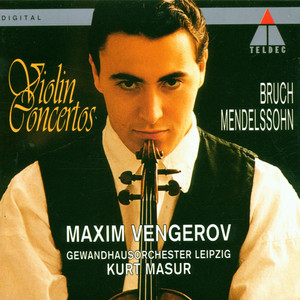 | Mendelssohn: Violin Concerto in E Minor, Op. 64, MWV O14: II. Andante | Felix Mendelssohn, Maxim Vengerov, Kurt Masur, Gewandhausorchester | C Major | 1 | 8B | 96 BPM | |
 | Copland: Symphony No. 3: I. Molto moderato, with simple expression | Aaron Copland, San Francisco Symphony, Michael Tilson Thomas | A Major | 1 | 11B | 82 BPM | |
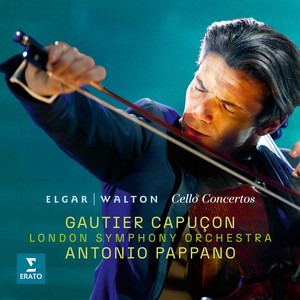 | Walton: Cello Concerto: II. Allegro appassionato | William Walton, Gautier Capuçon, Antonio Pappano, London Symphony Orchestra | D Major | 3 | 10B | 133 BPM | |
 | Overture to "A Midsummer Night's Dream", Op. 21: Allegro di molto | Felix Mendelssohn, London Symphony Orchestra, John Eliot Gardiner | E Major | 1 | 12B | 137 BPM | |
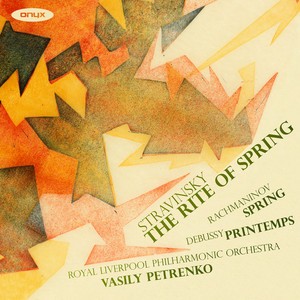 | Printemps, L. 61: I. Très modéré | Claude Debussy, Public Domain, Vasily Petrenko, Royal Liverpool Philharmonic Orchestra | B Major | 0 | 1B | 88 BPM | |
 | Quatuor pour la fin du Temps: I. Liturgie de cristal | Olivier Messiaen, Martin Fröst, Lucas Debargue, Torleif Thedéen, Janine Jansen | F Minor | 0 | 4A | 100 BPM |
- ISRC
- USSM10112066
- Label
- L-M Records/RCA Records