- BPM
- 107
- Key
- B♭ Major
- Camelot
- 6B
Variations on an Original Theme by Handel: Variation 18 by Johannes Brahms, David Wilde Song Details
On March 2, 2009, the song "Variations on an Original Theme by Handel: Variation 18" was released by Johannes Brahms, David Wilde. With This song being less than a minute long, we are pretty confident that this song does not contain any foul language. That being said, this song is pretty short compared to other songs. This song is part of Wilde Plays Brahms: Two Rhapsodies, Variations on an Original Theme, Three Intermezzi by Johannes Brahms, David Wilde. The song's track number on the album is #36 out of 44 tracks. Based on our data, United Kingdom was the country where this track was produced or recorded. In terms of popularity, Variations on an Original Theme by Handel: Variation 18 is currently unknown. The mood doesn't appear to be that danceable, but it still produces a high amount of positive energy.
BPM and Tempo
Since Variations on an Original Theme by Handel: Variation 18 by Johannes Brahms, David Wilde has a tempo of 107 beats per a minute, the tempo markings of this song would be Andante (at a walking pace). With Variations on an Original Theme by Handel: Variation 18 being at 107 BPM, the half-time would be 54 BPM with a double-time of 214 BPM.In addition, we consider the tempo speed to be pretty slow for this song. The time signature for this track is 3/4.
Music Key
This song is in the music key of B♭ Major. Or for those who are familiar with the camelot wheel, this song has a camelot key of 6B. So, the perfect camelot match for 6B would be either 6B or 7A. While, 7B can give you a low energy boost. For moderate energy boost, you would use 3B and a high energy boost can either be 8B or 1B. Though, if you want a low energy drop, you should looking for songs with either a camelot key of 6A or 5B will give you a low energy drop, 9B would be a moderate one, and 4B or 11B would be a high energy drop. Lastly, 3A allows you to change the mood.
Want to find the BPM and music key for other songs? Check out our BPM and Key Finder page!
- Popularity
- 0%
- Loudness
- -17.157 dB
- Acousticness
- 98%
- Danceability
- 37%
- Energy
- 30%
- Instrumentalness
- 85%
- Liveness
- 12%
- Loudness
- 71%
- Speechiness
- 4%
- Valence
- 90%
Recommendations
| Track | Artist | Key | Energy | Camelot | BPM | ||
|---|---|---|---|---|---|---|---|
 | Piano Concerto No. 21 in C Major, K. 467: II. Andante | Wolfgang Amadeus Mozart, London Mozart Players, Howard Shelley | F Major | 0 | 7B | 179 BPM | |
 | Le Carnaval des Animaux, R. 125: Le Cygne | Camille Saint-Saëns, Mischa Maisky, Martha Argerich, Nelson Freire | G Major | 0 | 9B | 88 BPM | |
 | 2 Pieces, Op. Posth., B. 188: No. 1, Lullaby in G Major | Antonín Dvořák, Stefan Veselka | G Major | 0 | 9B | 66 BPM | |
 | L'Arlésienne Suite No. 2 (Arr. Guiraud): III. Menuet | Georges Bizet, Orchestre Symphonique de Montréal, Charles Dutoit | E♭ Major | 0 | 5B | 128 BPM | |
 | The Seasons, Op. 37b: VI. June, "Barcarolle" | Pyotr Ilyich Tchaikovsky, Yefim Bronfman | G Minor | 0 | 6A | 87 BPM | |
 | Melody from « Orfeo » | Christoph Willibald Gluck, Roberto Giordano | G Minor | 2 | 6A | 115 BPM | |
 | Salut d'amour, Op. 12 (version for orchestra) | Edward Elgar, Slovak Radio Symphony Orchestra, Adrian Leaper | B♭ Major | 1 | 6B | 82 BPM | |
 | Kinderszenen, Op. 15: I. Von fremden Ländern und Menschen | Robert Schumann, Martha Argerich | G Major | 0 | 9B | 128 BPM | |
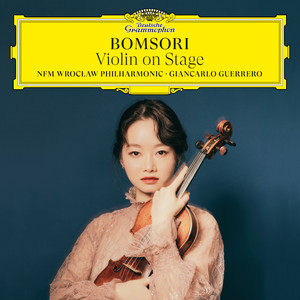 | Thaïs: Méditation | Jules Massenet, Bomsori, NFM Wrocław Philharmonic, Giancarlo Guerrero | D Major | 0 | 10B | 84 BPM | |
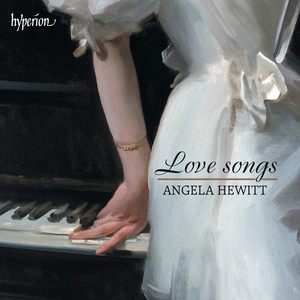 | Liebeslied "Widmung, von Robert Schumann", S. 566 (After Myrthen, Op. 25/1) | Franz Liszt, Angela Hewitt | G Major | 0 | 9B | 63 BPM | |
 | Violin Concerto No. 1 in A minor, BWV 1041: I. (Allegro moderato) | Johann Sebastian Bach, Daniel Lozakovich, Chamber Orchestra of the Bavarian Radio, Radoslaw Szulc, Olga Watts | A Minor | 4 | 8A | 91 BPM | |
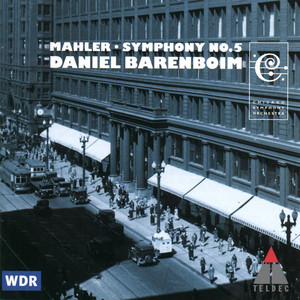 | Mahler: Symphony No. 5 in C-Sharp Minor: IV. Adagietto. Sehr langsam | Gustav Mahler, Daniel Barenboim, Chicago Symphony Orchestra | F Major | 1 | 7B | 82 BPM | |
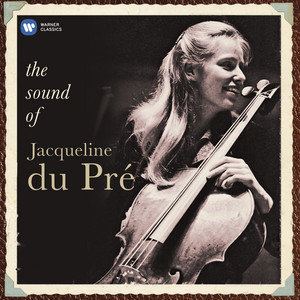 | Saint-Saëns: Cello Concerto No. 1 in A Minor, Op. 33: I. Allegro non troppo | Camille Saint-Saëns, New Philharmonia Orchestra/Jacqueline du Pré/Daniel Barenboim, Daniel Barenboim, New Philharmonia Orchestra | F Major | 2 | 7B | 95 BPM | |
 | Cello Sonata in G Minor, Op. 65: III. Largo | Frédéric Chopin, Emmanuelle Bertrand, Pascal Amoyel | B♭ Major | 0 | 6B | 89 BPM | |
 | Piano Sonata No.8 In C Minor, Op.13 -"Pathétique": 2. Adagio cantabile | Ludwig van Beethoven, Daniel Barenboim | A♭ Major | 0 | 4B | 179 BPM | |
 | Rachmaninov: 10 Preludes, Op. 23: No. 5 in G Minor | Sergei Rachmaninoff, Nikolai Lugansky | G Minor | 1 | 6A | 113 BPM | |
 | Scherzo-tarantelle in G Minor, Op.16 - 1987 Remastered Version | Henryk Wieniawski, Itzhak Perlman, Samuel Sanders | D Major | 3 | 10B | 114 BPM | |
 | Minuet in G Minor, HWV 434 No. 4 (Transc. W. Kempff) | George Frideric Handel, Roberto Cominati | G Minor | 0 | 6A | 66 BPM | |
 | 3 Romances sans paroles, Op. 17: No. 3 in A-Flat Major (Arr. P. Gouin for Cello & Piano) | Gabriel Fauré, Jesper Svedberg, Simon Crawford-Phillips | A Major | 0 | 11B | 79 BPM | |
 | Elegie | Jules Massenet, Christian-Pierre La Marca | E Minor | 0 | 9A | 73 BPM | |
 | Zapateado Op. 23 | Pablo de Sarasate, Sarah Chang, Charles Abramovic | A Major | 3 | 11B | 113 BPM | |
 | Violin Concerto No. 1 in G Minor, Op. 26: II. Adagio | Max Bruch, Itzhak Perlman, Bernard Haitink, Royal Concertgebouw Orchestra | E♭ Major | 1 | 5B | 87 BPM | |
 | Mélodie, Op. 20, No. 1 | Alexander Glazunov, Julian Lloyd Webber, Royal Philharmonic Orchestra, James Judd | D Major | 1 | 10B | 84 BPM | |
 | Le Festin D'Esope Op. 39 No. 12 | Charles-Valentin Alkan, Igor Roma | E Minor | 2 | 9A | 138 BPM | |
 | Cello Concerto No. 1 in A Minor, Op. 33: I. Allegro non troppo | Camille Saint-Saëns, Mischa Maisky, Orpheus Chamber Orchestra | F Major | 2 | 7B | 131 BPM |
- ISRC
- GBEBL0904036
- Label
- L-M Records/RCA Records