- BPM
- 79
- Key
- A Minor
- Camelot
- 8A
Bach, JS: Toccata, Adagio and Fugue in C Major, BWV 564: II. Adagio (Arr. Siloti for Cello and Organ) by Mstislav Rostropovich, Herbert Tachezi Song Details
"Bach, JS: Toccata, Adagio and Fugue in C Major, BWV 564: II. Adagio (Arr. Siloti for Cello and Organ)" by Mstislav Rostropovich, Herbert Tachezi had its release date on February 1, 2017. With this song being around four minutes long, at 4:02, the duration of this song is pretty average compared to other songs. This track is safe for children and doesn't appear to contain any foul language, since the "Explicit" tag was not present in this track. There are a total of 38 in the song's album "Rostropovich - Cellist of the Century". In this album, this song's track order is #27. Furthermore, we believe that the track originated from Germany. Bach, JS: Toccata, Adagio and Fugue in C Major, BWV 564: II. Adagio (Arr. Siloti for Cello and Organ) is not that popular right now. In our opinion, the overall tone is not very danceable and projects negative sounds, such as being sad, depressed, or angry.
BPM and Tempo
With Bach, JS: Toccata, Adagio and Fugue in C Major, BWV 564: II. Adagio (Arr. Siloti for Cello and Organ) by Mstislav Rostropovich, Herbert Tachezi having a BPM of 79 with a half-time of 40 BPM and a double-time of 158 BPM, we would consider this track to have a Andante (at a walking pace) tempo marking. Because of this, we believe that the song has an overall slow tempo. The time signature for this track is 1/4.
Music Key
This song is in the music key of A Minor. Which also means that the camelot key for this song is 8A. So, the perfect camelot match for 8A would be either 8A or 7B. While, a low energy boost can consist of either 8B or 9A. For moderate energy boost, you would use 5A and a high energy boost can either be 10A or 3A. However, if you are looking for a low energy drop, finding a song with a camelot key of 7A would be a great choice. Where 11A would give you a moderate drop, and 6A or 1A would be a high energy drop. Lastly, 11B allows you to change the mood.
Want to find the BPM and music key for other songs? Check out our BPM and Key Finder page!
- Popularity
- 10%
- Loudness
- -26.473 dB
- Acousticness
- 94%
- Danceability
- 8%
- Energy
- 7%
- Instrumentalness
- 92%
- Liveness
- 12%
- Loudness
- 56%
- Speechiness
- 5%
- Valence
- 4%
Recommendations
| Track | Artist | Key | Energy | Camelot | BPM | ||
|---|---|---|---|---|---|---|---|
 | Elegy No. 1 in D Major | Giovanni Bottesini, Andrew Burashko, Joel Quarrington | D Major | 0 | 10B | 89 BPM | |
 | Shostakovich: Lady Macbeth of the Mtsensk District, Op. 29, Act 1 Scene 2: Interlude | Dmitri Shostakovich, Mstislav Rostropovich, London Philharmonic Orchestra | B♭ Minor | 0 | 3A | 112 BPM | |
 | Liebestraum | Franz Liszt, Arthur Rubinstein | A♭ Major | 2 | 4B | 95 BPM | |
 | Holberg Suite, Op. 40: II. Sarabande (Andante) | Edvard Grieg, Gothenburg Symphony Orchestra, Neeme Järvi | A Major | 1 | 11B | 87 BPM | |
 | Sicilienne, Op. 78 | Gabriel Fauré, Harriet Krijgh, Kamilla Isanbaeva | G Minor | 1 | 6A | 123 BPM | |
 | String Quartet No. 4 in C Minor, Op. 18 No. 4: 1. Allegro ma non tanto | Ludwig van Beethoven, Emerson String Quartet | C Minor | 1 | 5A | 153 BPM | |
 | Symphony No. 4 In D Minor, Op. 120: 3. Scherzo | Robert Schumann, Wiener Philharmoniker, Herbert von Karajan | F♯ Major | 0 | 2B | 95 BPM | |
 | Masquerade Suite: I. Waltz | Aram Khachaturian, Kirill Kondrashin, RCA Victor Symphony Orchestra, Oscar Shumsky | C Major | 3 | 8B | 181 BPM | |
 | Piano Quintet In A, Op.81, B. 155: 2. Dumka (Andante con moto) | Antonín Dvořák, Menahem Pressler, Emerson String Quartet | D Major | 0 | 10B | 89 BPM | |
 | Ständchen (From Schwanengesang, D957) | Franz Liszt, Evgeny Kissin | D Major | 0 | 10B | 68 BPM | |
 | Tarantelle, Op. 23 | William Henry Squire, Oliver Gledhill, Tadashi Imai | D Major | 1 | 10B | 141 BPM | |
 | The Tale of Tsar Saltan: Flight of the Bumblebee | Nikolai Rimsky-Korsakov, Seattle Symphony Orchestra, Gerard Schwarz | G Major | 1 | 9B | 80 BPM | |
 | Bach, JS : Well-Tempered Clavier Book 1 : Prelude No.1 in C major BWV846 | Daniel Barenboim | C Major | 0 | 8B | 95 BPM | |
 | Mahler: Blumine | Gustav Mahler, San Francisco Symphony, Michael Tilson Thomas | C Major | 1 | 8B | 100 BPM | |
 | Cello Concerto in A Major: 3. Allegro assai (Cadenza by Mstislav Rostropovich) | Giuseppe Tartini, Mstislav Rostropovich, Orchestra of the Collegium Musicum, Paul Sacher | G Major | 0 | 9B | 66 BPM | |
 | Violin Concerto No. 9 in A Minor, Op. 104: I. Allegro maestoso | Charles-Auguste de Bériot, Takako Nishizaki, RTBF Symphony Orchestra, Alfred Walter | D Major | 0 | 10B | 78 BPM | |
 | Violin Concerto No. 2 in D minor Op. 22 (1985 Digital Remaster): III. Allegro con fuoco - Allegro moderato (à la Zingara) | Henryk Wieniawski, Itzhak Perlman, Seiji Ozawa, Boston Symphony Orchestra | D Major | 2 | 10B | 74 BPM | |
 | Piano Concerto in A Minor, Op. 16: I. Allegro molto moderato - Remastered | Edvard Grieg, Arthur Rubinstein, RCA Victor Symphony Orchestra, Alfred Wallenstein | A Minor | 1 | 8A | 82 BPM | |
 | Serenade for Strings in C major, Op. 48: II. Walzer: Moderato, tempo di valse | Pyotr Ilyich Tchaikovsky, Moscow Soloists, Yuri Bashmet | G Major | 1 | 9B | 66 BPM | |
 | Violin Concerto in D Minor, Op. 47: III. Allegro, ma non tanto | Jean Sibelius, Anne-Sophie Mutter, Staatskapelle Dresden, André Previn | D Major | 2 | 10B | 112 BPM | |
 | Haydn: Cello Concerto No. 2 in D Major, Hob. VIIb:2: III. Rondo. Allegro | Joseph Haydn, Mstislav Rostropovich, Academy of St. Martin in the Fields | A Major | 1 | 11B | 138 BPM | |
 | Má vlast, JB 1:112: II. Vltava "The Moldau" | Bedřich Smetana, Wiener Philharmoniker, Herbert von Karajan | E Minor | 1 | 9A | 78 BPM | |
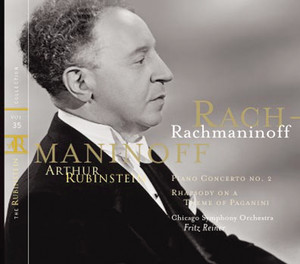 | Piano Concerto No. 2 in C Minor, Op. 18: II. Adagio sostenuto | Sergei Rachmaninoff, Arthur Rubinstein, Fritz Reiner, Chicago Symphony Orchestra | E Major | 0 | 12B | 64 BPM | |
 | Symphony No. 7 in A Major, Op. 92: II. Allegretto | Ludwig van Beethoven, Leonard Bernstein, New York Philharmonic | E Minor | 0 | 9A | 121 BPM | |
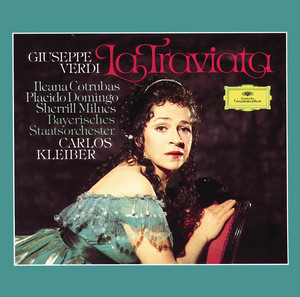 | La Traviata / Act 1: Prelude | Giuseppe Verdi, Bavarian State Orchestra, Carlos Kleiber | B Major | 0 | 1B | 131 BPM |
- ISRC
- DEA801600056
- Label
- L-M Records/RCA Records