- BPM
- 108
- Key
- G Minor
- Camelot
- 6A
Concerto for 2 Mandolins in G Major, RV 532: II. Andante by Julian Lloyd Webber, Jiaxin Lloyd Webber, European Union Chamber Orchestra, Hanspeter Hofmann Song Details
Julian Lloyd Webber, Jiaxin Lloyd Webber, European Union Chamber Orchestra, Hanspeter Hofmann's ' "Concerto for 2 Mandolins in G Major, RV 532: II. Andante" was released on its scheduled release date, October 7, 2014. With this song being around four minutes long, at 4:09, the duration of this song is pretty average compared to other songs. This track is safe for children and doesn't appear to contain any foul language, since the "Explicit" tag was not present in this track. This song is part of Vivaldi: Concertos for 2 Cellos by Julian Lloyd Webber, Jiaxin Lloyd Webber, European Union Chamber Orchestra, Hanspeter Hofmann. The song's track number on the album is #2 out of 19 tracks. Based on our data, Hong Kong was the country where this track was produced or recorded. In terms of popularity, Concerto for 2 Mandolins in G Major, RV 532: II. Andante is currently not that popular. Even with the track produces more of a neutral energy, it is pretty danceable compared to others.
BPM and Tempo
Since Concerto for 2 Mandolins in G Major, RV 532: II. Andante by Julian Lloyd Webber, Jiaxin Lloyd Webber, European Union Chamber Orchestra, Hanspeter Hofmann has a tempo of 108 beats per a minute, the tempo markings of this song would be Andante (at a walking pace). With Concerto for 2 Mandolins in G Major, RV 532: II. Andante being at 108 BPM, the half-time would be 54 BPM with a double-time of 216 BPM.In addition, we consider the tempo speed to be pretty moderate for this song. The time signature for this track is 1/4.
Music Key
This song is in the music key of G Minor. Which also means that the camelot key for this song is 6A. So, the perfect camelot match for 6A would be either 6A or 5B. While, a low energy boost can consist of either 6B or 7A. For moderate energy boost, you would use 3A and a high energy boost can either be 8A or 1A. However, if you are looking for a low energy drop, finding a song with a camelot key of 5A would be a great choice. Where 9A would give you a moderate drop, and 4A or 11A would be a high energy drop. Lastly, 9B allows you to change the mood.
Want to find the BPM and music key for other songs? Check out our BPM and Key Finder page!
- Popularity
- 2%
- Loudness
- -15.286 dB
- Acousticness
- 97%
- Danceability
- 63%
- Energy
- 12%
- Instrumentalness
- 4%
- Liveness
- 10%
- Loudness
- 75%
- Speechiness
- 4%
- Valence
- 50%
Recommendations
| Track | Artist | Key | Energy | Camelot | BPM | ||
|---|---|---|---|---|---|---|---|
 | Vocalise, Op. 34, No. 14 (Arr. for Cello and Piano) | Sergei Rachmaninoff, Lynn Harrell, Vladimir Ashkenazy | D♭ Minor | 0 | 12A | 93 BPM | |
 | La finta giardiniera, K. 196: Cavatina. Geme la tortorella (Arr. Isserlis for Cello and Orchestra) | Wolfgang Amadeus Mozart, Steven Isserlis, The Deutsche Kammerphilharmonie Bremen | A Major | 2 | 11B | 93 BPM | |
 | Dansa Roma | Pam Chowhan, Julian Lloyd Webber | A Minor | 3 | 8A | 89 BPM | |
 | Six Cello Sonatas, Book 4, Sonata No. 4 for Two Cellos in G Major: III. Allegro prestissimo | Jean Barrière, Guy Johnston, Sheku Kanneh-Mason | G Major | 2 | 9B | 148 BPM | |
 | Viola Concerto in D Major, Op. 1: II. Andante moderato | Carl Stamitz, Dimitri Demetriades, European Union Chamber Orchestra, Tabea Zimmermann | B♭ Major | 1 | 6B | 131 BPM | |
 | Trio Sonata in B Minor, H. 567: III. Presto | Carl Philipp Emanuel Bach, Lisa Batiashvili, Emmanuel Pahud, Sebastian Klinger, Peter Kofler | A Major | 2 | 11B | 110 BPM | |
 | Nie ma czego trzeba, Op. 74 No. 13 (Arr. Isserlis for Cello and Piano) | Frédéric Chopin, Dénes Várjon, Steven Isserlis | E Major | 1 | 12B | 116 BPM | |
 | Concerto No. 2 In G Minor RV 578: II. Allegro (Vivaldi) | Accademia Bizantina | F♯ Minor | 3 | 11A | 120 BPM | |
 | Solemn Melody | Henry Walford Davies, Julian Lloyd Webber, John Birch, Academy of St. Martin in the Fields, Sir Neville Marriner | G Major | 1 | 9B | 88 BPM | |
 | Tafelmusik - Banquet Music In 3 Parts / Production 1 - 3. Concert In A Major, TWV 53:A2: 2. Allegro | Georg Philipp Telemann, Musica Antiqua Köln, Reinhard Goebel | A♭ Major | 2 | 4B | 126 BPM | |
 | Music for a While (from Oedipus, Z. 583) | Henry Purcell, Martin Fröst | D Minor | 0 | 7A | 77 BPM | |
 | Tu mancavi a tormentarmi, crudelissima speranza (Arr. L. Stokowski) | Antonio Cesti, Brussels Philharmonic, Richard Egarr | E Major | 1 | 12B | 87 BPM | |
 | Cello Concerto in G Major: IV. Allegro – Presto | Nicola Porpora, Giovanni Sollima, European Union Chamber Orchestra, Eivind Aadland | B♭ Major | 1 | 6B | 131 BPM | |
 | Sonata (Sinfonia) a 5 in G Minor, Op. 2, No. 6: I. Adagio | Tomaso Albinoni, Capella Istropolitana, Jaroslav Krcek | F Major | 2 | 7B | 136 BPM | |
 | Sonata for Violin and Basso Continuo in G Major, TWV 41:G1: III. Adagio | Georg Philipp Telemann, Boris Begelman | E♭ Minor | 1 | 2A | 49 BPM | |
 | Fantasia & Fugue in C Minor, Op. 86 (After J.S. Bach's BWV 537): Fantasia | Edward Elgar, Seattle Symphony Orchestra, Gerard Schwarz | F Minor | 1 | 4A | 143 BPM | |
 | Les larmes de Jacqueline, Op. 76, No. 2 | Jacques Offenbach, Harriet Krijgh, Kamilla Isanbaeva | C Major | 1 | 8B | 129 BPM | |
 | Les chemins de l'amour, FP. 106 | Francis Poulenc, Mischa Maisky, Daria Hovora | E Major | 1 | 12B | 67 BPM | |
 | From Jewish Life: I. Prayer (Arr. for Cello & Orchestra) | Ernest Bloch, Harriet Krijgh, Gustavo Gimeno, Deutsche Staatsphilharmonie Rheinland-Pfalz | F Minor | 1 | 4A | 91 BPM | |
 | Passatempo al cembalo, Sonata No. 3 in C Minor: I. Allegro moderato | Baldassare Galuppi, Martin Stadtfeld | C Minor | 1 | 5A | 66 BPM | |
 | Viola Concerto in C Minor: III. Allegro molto energico | Johann Christian Bach, Henri Casadesus, Nemanja Radulović, Double Sens | G Minor | 3 | 6A | 79 BPM | |
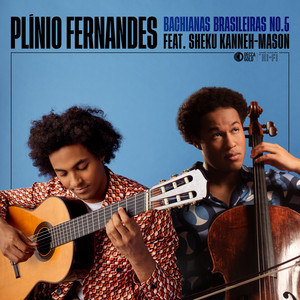 | Bachianas brasileiras No. 5: I. Aria (Cantilena): Adagio | Heitor Villa-Lobos, Plínio Fernandes, Sheku Kanneh-Mason | E Minor | 2 | 9A | 105 BPM | |
 | Cello Concerto in B-Flat Major, H. 436, Wq. 171: III. Allegro assai | Carl Philipp Emanuel Bach, Jean-Guihen Queyras, Ensemble Resonanz, Riccardo Minasi | B♭ Major | 3 | 6B | 144 BPM | |
 | Oboe Concerto in D Minor, S. Z799: III. Presto | Alessandro Marcello, Marcel Ponseele, Il Gardellino | D♭ Minor | 3 | 12A | 70 BPM | |
 | Keyboard Sonata in B Minor, Wq. 55/3, H. 245: Cantabile | Carl Philipp Emanuel Bach, Christopher Hinterhuber | E Minor | 1 | 9A | 106 BPM |
- ISRC
- HKI191411002
- Label
- L-M Records/RCA Records