- BPM
- 118
- Key
- A Major
- Camelot
- 11B
Lieder ohne Worte, Op.62: Spring Song In A Major by Felix Mendelssohn, Catrin Finch Song Details
"Lieder ohne Worte, Op.62: Spring Song In A Major" by Felix Mendelssohn, Catrin Finch had its release date on January 1, 2013. The duration of This song is about 3 minutes long, at 3:08. Based on our data, This song appears to be safe for all ages and is not considered explicit. This track is about the average length of a typical track. The track order of this song in Catrin Finch's "Lullabies" album is number 4 out of 21. In terms of popularity, Lieder ohne Worte, Op.62: Spring Song In A Major is currently not that popular. Although the tone can be danceable to some, this track does projects more of a negative sound rather than a postive one.
BPM and Tempo
We consider the tempo marking of Lieder ohne Worte, Op.62: Spring Song In A Major by Felix Mendelssohn, Catrin Finch to be Moderato (at a moderate speed) because the track has a tempo of 118 BPM, a half-time of 59BPM, and a double-time of 236 BPM. Based on that, the speed of the song's tempo is moderate. Activities such as, walking, can go well with this song. The time signature for this track is 4/4.
Music Key
A Major is the music key of this track. This also means that this song has a camelot key of 11B. So, the perfect camelot match for 11B would be either 11B or 12A. While, 12B can give you a low energy boost. For moderate energy boost, you would use 8B and a high energy boost can either be 1B or 6B. Though, if you want a low energy drop, you should looking for songs with either a camelot key of 11A or 10B will give you a low energy drop, 2B would be a moderate one, and 9B or 4B would be a high energy drop. Lastly, 8A allows you to change the mood.
Want to find the BPM and music key for other songs? Check out our BPM and Key Finder page!
- Popularity
- 6%
- Loudness
- -20.813 dB
- Acousticness
- 99%
- Danceability
- 50%
- Energy
- 6%
- Instrumentalness
- 91%
- Liveness
- 9%
- Loudness
- 65%
- Speechiness
- 4%
- Valence
- 17%
Recommendations
| Track | Artist | Key | Energy | Camelot | BPM | ||
|---|---|---|---|---|---|---|---|
 | Scheherazade: Calm at Sea | Nikolai Rimsky-Korsakov, Lars Hjalmar Joakim | E Major | 2 | 12B | 84 BPM | |
 | Scottish Fantasy for Violin and Orchestra, Op. 46: I. Introduction: Grave, Adagio cantabile | Max Bruch, Joshua Bell, Academy of St. Martin in the Fields | E♭ Major | 2 | 5B | 60 BPM | |
 | The Seasons, Op. 37b: VI. June, "Barcarolle" | Pyotr Ilyich Tchaikovsky, Yefim Bronfman | G Minor | 0 | 6A | 87 BPM | |
 | Pavane, Op. 50 (Version for Piano) | Gabriel Fauré, Jorge Federico Osorio | F♯ Minor | 0 | 11A | 75 BPM | |
 | Symphony No. 5 in E Minor, Op. 64: III. Valse. Allegro moderato | Pyotr Ilyich Tchaikovsky, Berliner Philharmoniker, Kirill Petrenko | A Major | 0 | 11B | 139 BPM | |
 | Má vlast, JB 1:112: II. Vltava "The Moldau" | Bedřich Smetana, Wiener Philharmoniker, Herbert von Karajan | E Minor | 1 | 9A | 78 BPM | |
 | Glinka / Arr Balakirev : The Lark | Mikhail Glinka, Izumi Tateno | B♭ Minor | 1 | 3A | 65 BPM | |
 | Saint-Saëns: Piano Concerto No. 2 in G Minor, Op. 22: I. Andante sostenuto | Camille Saint-Saëns, Bertrand Chamayou, Emmanuel Krivine, Orchestre National De France | G Minor | 2 | 6A | 94 BPM | |
 | Méditation from Thaïs | Jules Massenet, Nicola Benedetti, London Symphony Orchestra, Daniel Harding | E Minor | 1 | 9A | 89 BPM | |
 | The Lark | Mikhail Glinka, Evgeny Kissin | B♭ Minor | 0 | 3A | 96 BPM | |
 | Overture to "A Midsummer Night's Dream", Op. 21: Tempo primo | Felix Mendelssohn, John Eliot Gardiner, London Symphony Orchestra | E Major | 0 | 12B | 140 BPM | |
 | Fauré: 3 Romances sans paroles, Op. 17: No. 3 in A-Flat Major | Gabriel Fauré, Alexandre Tharaud | A♭ Major | 0 | 4B | 69 BPM | |
 | 6 Consolations, S. 172: No. 3 in D-Flat Major (Lento, placido) | Franz Liszt, Daniel Barenboim | D♭ Major | 0 | 3B | 69 BPM | |
 | Mendelssohn: Violin Concerto in E Minor, Op. 64, MWV O14: III. Allegretto non troppo - Allegro molto vivace | Felix Mendelssohn, Maxim Vengerov, Kurt Masur, Gewandhausorchester | E Major | 2 | 12B | 161 BPM | |
 | 6 Melodies, Op. 4 - 6 melodies, Op. 5: Allegro assai | Fanny Mendelssohn, Beatrice Rauchs | A♭ Major | 1 | 4B | 64 BPM | |
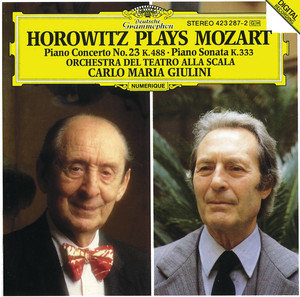 | Piano Sonata No. 13 in B-Flat Major, K. 333: II. Andante cantabile | Wolfgang Amadeus Mozart, Vladimir Horowitz | E♭ Major | 0 | 5B | 112 BPM | |
 | Pelléas et Mélisande Suite, Op. 80: III. Sicilienne. Allegretto molto moderato | Gabriel Fauré, Berliner Philharmoniker, Daniel Barenboim | E♭ Major | 0 | 5B | 56 BPM | |
 | Mazurka in C Minor | Mikhail Glinka, Inga Fiolia | C Minor | 0 | 5A | 111 BPM | |
 | Pièces Lyriques, Op. 47 No. 3: Mélodie | Edvard Grieg, Shani Diluka | F Major | 0 | 7B | 105 BPM | |
 | Violin Sonata, CFF 123: IV. Allegretto poco mosso | César Franck, Augustin Dumay, Maria João Pires | A Major | 2 | 11B | 73 BPM | |
 | String Quartet No. 62 in C Major, Op. 76 No. 3, Hob. III:77 "Emperor": II. Poco adagio, cantabile | Joseph Haydn, Kodály Quartet | G Major | 1 | 9B | 110 BPM | |
 | Paderewski: 6 Humoresques de concert, Op. 14, Cahier I "À l'antique": No. 1, Menuet célèbre | Ignacy Jan Paderewski, Mariam Batsashvili | G Major | 1 | 9B | 106 BPM | |
 | Etudes-Tableaux, Op. 33, No. 4 in D Minor | Hélène Grimaud | D Minor | 2 | 7A | 94 BPM | |
 | Cello Concerto No. 1 in A Minor, Op. 33: I. Allegro non troppo | Camille Saint-Saëns, Mischa Maisky, Orpheus Chamber Orchestra | F Major | 2 | 7B | 131 BPM | |
 | Lieder ohne Worte V, Op. 62: VI. Allegretto grazioso, MWV U161 "Spring Song" | Felix Mendelssohn, Daniel Barenboim | A Major | 0 | 11B | 95 BPM |
- ISRC
- This song does not have an ISRC.
- Label
- L-M Records/RCA Records