- BPM
- 87
- Key
- C Major
- Camelot
- 8B
Les larmes de Jacqueline, Élégie, Op. 76, No. 2 by Jacques Offenbach, Raphaela Gromes, Julian Riem Song Details
"Les larmes de Jacqueline, Élégie, Op. 76, No. 2" by Jacques Offenbach, Raphaela Gromes, Julian Riem had its release date on May 10, 2019. This song is about six minutes long, preciously at 5:46, making this song fairly long compared to other songs. There are a total of 10 in the song's album "Offenbach". In this album, this song's track order is #8. Furthermore, we believe that the track originated from Germany. Les larmes de Jacqueline, Élégie, Op. 76, No. 2 is not that popular right now. In our opinion, the overall tone is not very danceable and projects negative sounds, such as being sad, depressed, or angry.
BPM and Tempo
With Les larmes de Jacqueline, Élégie, Op. 76, No. 2 by Jacques Offenbach, Raphaela Gromes, Julian Riem having a BPM of 87 with a half-time of 44 BPM and a double-time of 174 BPM, we would consider this track to have a Andante (at a walking pace) tempo marking. Because of this, we believe that the song has an overall slow tempo. Looking at the BPM of this song, this song might go great with yoga or pilates. The time signature for this track is 3/4.
Music Key
This song is in the music key of C Major. Or for those who are familiar with the camelot wheel, this song has a camelot key of 8B. So, the perfect camelot match for 8B would be either 8B or 9A. While, 9B can give you a low energy boost. For moderate energy boost, you would use 5B and a high energy boost can either be 10B or 3B. Though, if you want a low energy drop, you should looking for songs with either a camelot key of 8A or 7B will give you a low energy drop, 11B would be a moderate one, and 6B or 1B would be a high energy drop. Lastly, 5A allows you to change the mood.
Want to find the BPM and music key for other songs? Check out our BPM and Key Finder page!
- Popularity
- 7%
- Loudness
- -22.431 dB
- Acousticness
- 99%
- Danceability
- 13%
- Energy
- 6%
- Instrumentalness
- 95%
- Liveness
- 10%
- Loudness
- 63%
- Speechiness
- 5%
- Valence
- 7%
Recommendations
| Track | Artist | Key | Energy | Camelot | BPM | ||
|---|---|---|---|---|---|---|---|
 | Danse hongroise n°1 en sol mineur: Allegro molto | Johannes Brahms, Orchestre Symphonique Mav de Budapest, Kurt Redel | B Minor | 3 | 10A | 131 BPM | |
 | Carmen Suite No. 1 (Arr. E. Guiraud): IV. Séguedille | Georges Bizet, Orquestra Simfònica de Barcelona i Nacional de Catalunya, Pablo González | G Minor | 0 | 6A | 66 BPM | |
 | Aida / Act 2: Grand March | Giuseppe Verdi, Orchestra Del Teatro Alla Scala, Milano, Claudio Abbado | E♭ Major | 0 | 5B | 110 BPM | |
 | Orpheus in the Underworld: Orphee aux enfers (Orpheus in the Underworld): Overture | Jacques Offenbach, Slovak Radio Symphony Orchestra, Martin Sieghart | D Major | 1 | 10B | 86 BPM | |
 | Beethoven: Symphony No. 9 in D Minor, Op. 125 "Choral": IV. Presto "O Freunde, nicht diese Töne!" (Excerpt) | Ludwig van Beethoven, Riccardo Muti, James Morris, Philadelphia Orchestra | B♭ Major | 0 | 6B | 77 BPM | |
 | Offenbach: Les Brigands: Overture | Jacques Offenbach, John Eliot Gardiner, Orchestre de l'Opéra de Lyon | E♭ Major | 2 | 5B | 89 BPM | |
 | Les Sylphides: 7. Valse | Frédéric Chopin, National Philharmonic Orchestra, Richard Bonynge | D♭ Minor | 1 | 12A | 120 BPM | |
 | Dvořák: Humoresque in G-Flat Major, Op. 101 No. 7, B. 187: No. 7 | Antonín Dvořák, Salonorchester Colln | G Major | 1 | 9B | 116 BPM | |
 | The Tale of Tsar Saltan: Flight of the Bumblebee | Nikolai Rimsky-Korsakov, Seattle Symphony Orchestra, Gerard Schwarz | G Major | 1 | 9B | 80 BPM | |
 | Les Contes d'Hoffmann / Act 2: "Non, aucun hôte vraiment" | Jacques Offenbach, Gérard Friedmann, Claudia Eder, Plácido Domingo, Paul Crook, Paul Mahé, Edita Gruberova, Choeur de Radio France, Jacques Jouineau, Orchestre National De France, Seiji Ozawa | A Major | 2 | 11B | 109 BPM | |
 | Fantasía Morisca: Serenata (Allegro Moderato) (Chapí) | Orquesta "Ciudad de Granada" & Juan de Udaeta | B Minor | 1 | 10A | 100 BPM | |
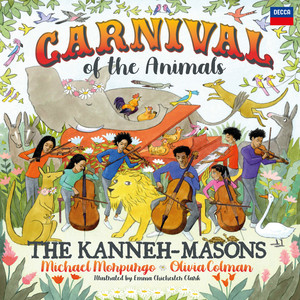 | Carnival of the Animals: The Swan | Camille Saint-Saëns, Isata Kanneh-Mason, Jeneba Kanneh-Mason, Sheku Kanneh-Mason | G Major | 1 | 9B | 65 BPM | |
 | The Firebird (L'oiseau De Feu) - Suite (1919): Finale | Igor Stravinsky, Orchestre de l'Opéra National de Paris, Myung-Whun Chung | E Major | 2 | 12B | 78 BPM | |
 | Il pipistrello - Ouverture | Metropolitan Symphony Orchestra, Leonard Mandell | D Major | 3 | 10B | 94 BPM | |
 | Blumenduett - Lakmé | Léo Delibes, Alain Lombard, Danielle Millet, Mady Mesplé, Orchestre Du Theatre National De L'Opera Comique | B Major | 1 | 1B | 130 BPM | |
 | La Gazza Ladra - La Urraca Ladrona Obertura | Gioachino Rossini, Inma Shara | E Major | 1 | 12B | 138 BPM | |
 | Bruch : Violin Concerto No.1 in G minor Op.26 : III Finale - Allegro energico | Max Bruch, Maxim Vengerov, Kurt Masur, Gewandhausorchester Leipzig | G Major | 2 | 9B | 90 BPM | |
| L’arlésienne Suite No. 2 (Arr. E. Guiraud): IV. Farandole | Georges Bizet, Orquestra Simfònica de Barcelona i Nacional de Catalunya, Pablo González | D Major | 3 | 10B | 91 BPM | |
 | La vie parisienne, Polka | Jacques Offenbach, Budapest Strauss Ensemble, Istvan Bogar | G Major | 4 | 9B | 105 BPM | |
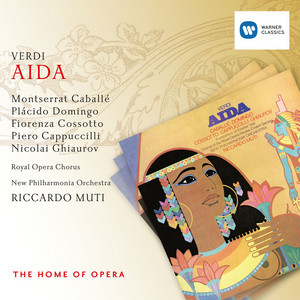 | Verdi: Aida, Act 2: Marcia trionfale | Giuseppe Verdi, Riccardo Muti, Trumpeters of the Royal Military School of Music, New Philharmonia Orchestra | A♭ Major | 1 | 4B | 120 BPM | |
 | Offenbach & Rosenthal: Gaîté parisienne: XX. Can-can, scène 4 | Jacques Offenbach, Manuel Rosenthal, Orchestre de l'Opéra de Monte-Carlo | C Minor | 1 | 5A | 75 BPM | |
 | Symphony No. 9 in D Minor, Op. 125 "Choral": IV. Finale (Excerpt: Ode to Joy) | Ludwig van Beethoven, Riccardo Muti, Philadelphia Orchestra | D Major | 5 | 10B | 78 BPM | |
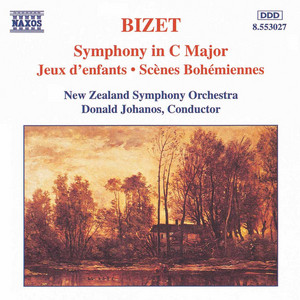 | Symphony In C Major: IV. Allegro Vivace | New Zealand Symphony Orchestra, Georges Bizet | G Major | 1 | 9B | 146 BPM | |
 | Tritsch-Tratsch-Polka, Op. 214 "Triqui Traqui" - Arr. by Paul Desenne | Johann Strauss II, Simón Bolívar Symphony Orchestra Of Venezuela, Gustavo Dudamel | A Major | 6 | 11B | 88 BPM | |
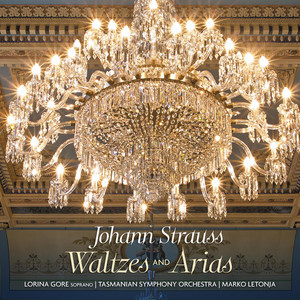 | The Blue Danube Waltz, Op. 314 | Johann Strauss II, Marko Letonja, Tasmanian Symphony Orchestra | D Major | 1 | 10B | 81 BPM |
- ISRC
- DEE861900949
- Label
- L-M Records/RCA Records