- BPM
- 86
- Key
- D Minor
- Camelot
- 7A
Quartet No. 2, Op. 26: V. Furioso by Alberto Ginastera, Miami String Quartet, Felicia Moye, Cathy Meng Robinson, Chauncey Patterson, Keith Robinson Song Details
"Quartet No. 2, Op. 26: V. Furioso" by Alberto Ginastera, Miami String Quartet, Felicia Moye, Cathy Meng Robinson, Chauncey Patterson, Keith Robinson had its release date on January 1, 1994. With this song being about 5 minutes long, at This song is fairly a long song compared to the average song length. This song does not have an "Explicit" tag, making it safe for all ages. The song is number 5 out of 9 in Alberto Ginastera, Miami String Quartet by Alberto Ginastera, Miami String Quartet, Felicia Moye, Cathy Meng Robinson. Going off of the ISRC code of this track, we detected that the origin of this track is from France. Quartet No. 2, Op. 26: V. Furioso is unknown right now. In our opinion, the overall tone is not very danceable and projects negative sounds, such as being sad, depressed, or angry.
BPM and Tempo
The tempo marking of Quartet No. 2, Op. 26: V. Furioso by Alberto Ginastera, Miami String Quartet, Felicia Moye, Cathy Meng Robinson, Chauncey Patterson, Keith Robinson is Andante (at a walking pace), since this song has a tempo of 86 BPM. With that information, we can conclude that the song has a slow tempo. This song can go great with yoga or pilates. The time signature for this track is 4/4.
Music Key
D Minor is the music key of this track. Because this track belongs in the D Minor key, the camelot key is 7A. So, the perfect camelot match for 7A would be either 7A or 6B. While, a low energy boost can consist of either 7B or 8A. For moderate energy boost, you would use 4A and a high energy boost can either be 9A or 2A. However, if you are looking for a low energy drop, finding a song with a camelot key of 6A would be a great choice. Where 10A would give you a moderate drop, and 5A or 12A would be a high energy drop. Lastly, 10B allows you to change the mood.
Want to find the BPM and music key for other songs? Check out our BPM and Key Finder page!
- Popularity
- 0%
- Loudness
- -26.523 dB
- Acousticness
- 89%
- Danceability
- 9%
- Energy
- 5%
- Instrumentalness
- 46%
- Liveness
- 13%
- Loudness
- 56%
- Speechiness
- 5%
- Valence
- 3%
Recommendations
| Track | Artist | Key | Energy | Camelot | BPM | ||
|---|---|---|---|---|---|---|---|
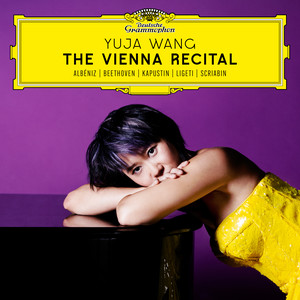 | 24 Jazz Preludes, Op. 53: No. 11 | Nikolai Kapustin, Yuja Wang | D♭ Minor | 0 | 12A | 131 BPM | |
 | Quatuor pour la fin du Temps: VIII. Louange à l'immortalité de Jésus | Olivier Messiaen, Lucas Debargue | E Major | 0 | 12B | 76 BPM | |
 | Improvisation No. 15 in C Minor, FP 176 | Francis Poulenc, Pascal Rogé | G Minor | 1 | 6A | 117 BPM | |
 | Panambi, Op. 1: Lamento de las doncellas (The girls' lament) | Alberto Ginastera, London Symphony Orchestra, Gisele Ben-Dor | E Minor | 0 | 9A | 108 BPM | |
 | 7 Preludes, Op. 17: No. 3 in D-Flat Major | Alexander Scriabin, Maria Lettberg | B Major | 0 | 1B | 72 BPM | |
 | Corelli: Concerto grosso in D Major, Op. 6 No. 4: II. Adagio (Arr. Diluka for Piano) | Arcangelo Corelli, Shani Diluka | D Minor | 0 | 7A | 134 BPM | |
| Estancia, Op. 8: Los peones de hacienda - Entrada de los caballitos (The cattlemen - Entry of the foals) | Alberto Ginastera, Luis Gaeta, London Symphony Orchestra, Gisele Ben-Dor | G Major | 5 | 9B | 150 BPM | |
 | String Quartet in G Minor, Op. 10: I. Animé et très décidé | Claude Debussy, Quatuor Ébène | F♯ Minor | 0 | 11A | 84 BPM | |
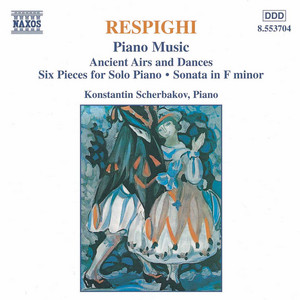 | Antiche Danze Ed Arie Per Liuto (Ancient Airs And Dances), P. 114: VI. Passacaglia | Ottorino Respighi, Konstantin Scherbakov | G Minor | 2 | 6A | 96 BPM | |
 | String Quartet No. 2 in D Major: I. Allegro moderato | Alexander Borodin, Budapest Haydn Quartet | D Major | 1 | 10B | 75 BPM | |
 | 4 piezas españolas: I. Aragonesa (Allegro) | Manuel de Falla, Javier Perianes | C Major | 1 | 8B | 100 BPM | |
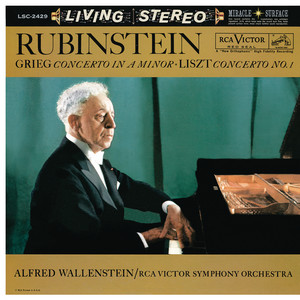 | Piano Concerto in A Minor, Op. 16: II. Adagio - Remastered | Edvard Grieg, Arthur Rubinstein, RCA Victor Symphony Orchestra, Alfred Wallenstein | D♭ Major | 0 | 3B | 86 BPM | |
 | Suk: Serenade for Strings in E-Flat Major, Op. 6: II. Allegro ma non troppo e grazioso | Josef Suk, London Chamber Orchestra, Christopher Warren-Green | F♯ Major | 1 | 2B | 107 BPM | |
 | Poulenc: Concerto for Two Pianos in D Minor, FP 61: I. Allegro ma non troppo | Francis Poulenc, James Conlon, Rotterdam Philharmonic Orchestra | E♭ Major | 1 | 5B | 103 BPM | |
 | Intermezzo In B Flat Minor, Op. 117 No. 2 | Johannes Brahms, Kun-Woo Paik | D♭ Major | 0 | 3B | 71 BPM | |
 | Piano Trio No. 2, Op. 67: 4. Allegretto - Adagio | Dmitri Shostakovich, Vladimir Ashkenazy, Zsolt-Tihamér Visontay, Mats Lidström | F♯ Minor | 0 | 11A | 84 BPM | |
 | Clarinet Concerto: I. Allegro | Jean Françaix, Orchestra della Svizzera Italiana, Alain Lombard, Paolo Beltramini | A Major | 2 | 11B | 128 BPM | |
 | Goyescas (Suite): 4. Quejas ó la maja y el ruiseñor | Enrique Granados, Alicia de Larrocha | F♯ Minor | 0 | 11A | 65 BPM | |
 | String Quartet No. 12 in F major, Op. 96 - "American" B.179: 2. Lento | Antonín Dvořák, Hagen Quartett | D Minor | 1 | 7A | 88 BPM | |
 | Erinnerung, WAB 117: Erinnerung in A-Flat Major, WAB 117 | Anton Bruckner, Fumiko Shiraga | F♯ Major | 0 | 2B | 71 BPM | |
 | Danzas Argentinas, Op. 2: No. 2, Danza de la moza donosa | Alberto Ginastera, Luca Sacher | E Minor | 0 | 9A | 140 BPM | |
 | The Lark | Mikhail Glinka, Evgeny Kissin | B♭ Minor | 0 | 3A | 96 BPM | |
| Piano Sonata No. 3 in F-Sharp Minor, Op. 23: III. Andante | Yuja Wang | D♭ Minor | 0 | 12A | 131 BPM | |
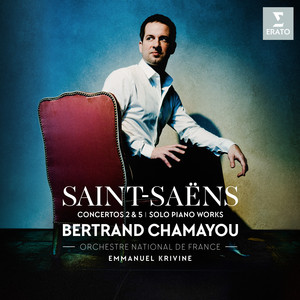 | Saint-Saëns: Piano Concerto No. 5 in F Major, Op. 103 "Egyptian": II. Andante | Camille Saint-Saëns, Bertrand Chamayou, Emmanuel Krivine, Orchestre National De France | D Major | 1 | 10B | 129 BPM | |
| Saint-Saëns: Piano Concerto No. 2 in G Minor, Op. 22: III. Presto | Camille Saint-Saëns, Bertrand Chamayou, Emmanuel Krivine, Orchestre National De France | C Minor | 4 | 5A | 110 BPM |
- ISRC
- FR6GO1003170
- Label
- L-M Records/RCA Records