- BPM
- 67
- Key
- D♭ Minor
- Camelot
- 12A
Verklärte Nacht, Op. 4 (Version for String Orchestra): V. Adagio (Bar 370) by Arnold Schoenberg, Berliner Philharmoniker, Herbert von Karajan Song Details
"Verklärte Nacht, Op. 4 (Version for String Orchestra): V. Adagio (Bar 370)" by Arnold Schoenberg, Berliner Philharmoniker, Herbert von Karajan had its release date on January 1, 1974. With this song being about 5 minutes long, at This song is fairly a long song compared to the average song length. This song does not have an "Explicit" tag, making it safe for all ages. There are a total of 16 in the song's album "Schoenberg: Verklärte Nacht; Pelleas und Melisande". In this album, this song's track order is #5. Furthermore, we believe that the track originated from Germany. Verklärte Nacht, Op. 4 (Version for String Orchestra): V. Adagio (Bar 370) is not that popular right now. In our opinion, the overall tone is not very danceable and projects negative sounds, such as being sad, depressed, or angry.
BPM and Tempo
With Verklärte Nacht, Op. 4 (Version for String Orchestra): V. Adagio (Bar 370) by Arnold Schoenberg, Berliner Philharmoniker, Herbert von Karajan having a BPM of 67 with a half-time of 34 BPM and a double-time of 134 BPM, we would consider this track to have a Adagio (slowly with great expression) tempo marking. Because of this, we believe that the song has an overall slow tempo. The time signature for this track is 3/4.
Music Key
D♭ Minor is the music key of this track. Or for those who are familiar with the camelot wheel, this song has a camelot key of 12A. So, the perfect camelot match for 12A would be either 12A or 11B. While, a low energy boost can consist of either 12B or 1A. For moderate energy boost, you would use 9A and a high energy boost can either be 2A or 7A. However, if you are looking for a low energy drop, finding a song with a camelot key of 11A would be a great choice. Where 3A would give you a moderate drop, and 10A or 5A would be a high energy drop. Lastly, 3B allows you to change the mood.
Want to find the BPM and music key for other songs? Check out our BPM and Key Finder page!
- Popularity
- 11%
- Loudness
- -32.95 dB
- Acousticness
- 98%
- Danceability
- 20%
- Energy
- 1%
- Instrumentalness
- 91%
- Liveness
- 10%
- Loudness
- 45%
- Speechiness
- 5%
- Valence
- 4%
Recommendations
| Track | Artist | Key | Energy | Camelot | BPM | ||
|---|---|---|---|---|---|---|---|
 | The Tempest: Suite No. 2, Op. 109: VI. Miranda | Jean Sibelius, Iceland Symphony Orchestra, Petri Sakari | C Major | 1 | 8B | 70 BPM | |
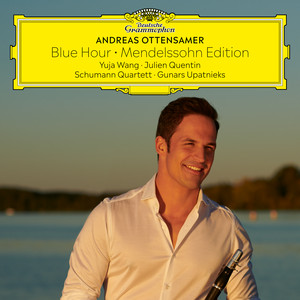 | Lieder ohne Worte, Op. 62: No. 6 Allegretto grazioso "Frühlingslied" (Arr. Ottensamer for Clarinet and Strings) | Felix Mendelssohn, Andreas Ottensamer, Schumann Quartett, Gunars Upatnieks | A Major | 1 | 11B | 99 BPM | |
 | Sibelius: Symphony No. 5 in E-Flat Major, Op. 82: III. Allegro molto | Jean Sibelius, Sakari Oramo, City Of Birmingham Symphony Orchestra | A♭ Major | 1 | 4B | 149 BPM | |
 | Fauré: Élégie in C Minor, Op. 24 | Gabriel Fauré, Jacqueline du Pré, Gerald Moore | A♭ Major | 0 | 4B | 56 BPM | |
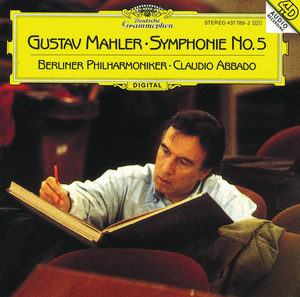 | Symphony No. 5: IV. Adagietto. Sehr langsam | Gustav Mahler, Berliner Philharmoniker, Claudio Abbado | F Major | 0 | 7B | 91 BPM | |
 | 4 Romantic Pieces, Op. 75, B. 150: I. Allegro moderato (Arr. Soltani For Solo Cello and Cello Ensemble) | Antonín Dvořák, Kian Soltani, Staatskapelle Berlin, Cellists | B♭ Major | 1 | 6B | 115 BPM | |
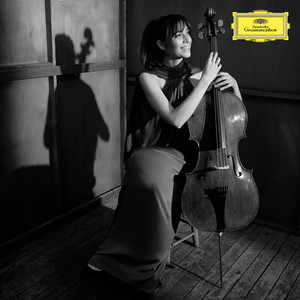 | Cello Sonata in G Minor, Op. 65: III. Largo | Frédéric Chopin, Camille Thomas, Julien Brocal | D Major | 1 | 10B | 72 BPM | |
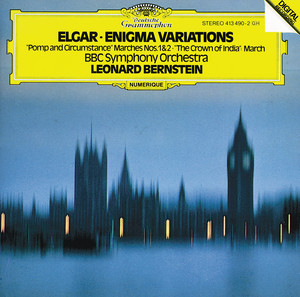 | Enigma Variations, Op. 36: Var. 9. Adagio "Nimrod" | Edward Elgar, BBC Symphony Orchestra, Leonard Bernstein | E♭ Major | 0 | 5B | 79 BPM | |
 | Spiegel im Spiegel - Version for Violin and Piano | Arvo Pärt, Vladimir Spivakov, Sergej Bezrodny | F Major | 0 | 7B | 71 BPM | |
 | Kujawiak | Mieczysław Weinberg, Gidon Kremer, Andrei Pushkarev, Kremerata Baltica | A Minor | 1 | 8A | 95 BPM | |
 | Dolly Suite, Op. 56: I. Berceuse | Gabriel Fauré, Katia Labèque, Marielle Labèque | E Major | 0 | 12B | 63 BPM | |
 | Savior of the Nations, Come, BWV 659 (Arr. for 4 Cellos) | Johann Sebastian Bach, Sheku Kanneh-Mason, Hannah Roberts, Ben Davies, Max Ruisi | C Major | 0 | 8B | 122 BPM | |
 | Glück: I. Andante | Siegfried Wagner, Rundfunk-Sinfonieorchester Frankfurt, Dimitrij Kitajenko | A Minor | 0 | 8A | 86 BPM | |
 | Ancient Airs & Dances, Suite III, P. 172: I. Italiana (Anonymous) | Ottorino Respighi, Filarmonica della Scala, Riccardo Chailly | B♭ Major | 1 | 6B | 172 BPM | |
 | Requiem, Op. 48: VI. Agnus Dei | Gabriel Fauré, Laurence Equilbey, Accentus, Orchestre National De France | D Minor | 1 | 7A | 69 BPM | |
 | II. Carol | Ralph Vaughan Williams, Helen Callus, New Zealand Symphony Orchestra, Marc Decio Taddei | C Minor | 0 | 5A | 128 BPM | |
 | Janáček: On an Overgrown Path, Book I: No. 7, Good Night! | Leoš Janáček, Bertrand Chamayou | E Minor | 0 | 9A | 73 BPM | |
 | Dvorák / Transc. Lenaerts: Rusalka, Op. 114, Act 1: Song to the Moon | Antonín Dvořák, Anneleen Lenaerts | F♯ Major | 0 | 2B | 168 BPM | |
 | Mendelssohn: Song Without Words in D Major, Op. 109, MWV Q34 | Felix Mendelssohn, Jacqueline du Pré, Gerald Moore | D Major | 0 | 10B | 93 BPM | |
 | 4 Lieder, Op. 27, TrV 170: IV. Morgen! (Arr. for Cello and Piano by Julian Riem) | Richard Strauss, Raphaela Gromes, Julian Riem | F Major | 0 | 7B | 174 BPM | |
 | Gurrelieder, Pt. 1: No. 2, Nun dämpft die Dämmerung (Waldemar) | Arnold Schoenberg, Siegfried Jerusalem, Wiener Philharmoniker, Claudio Abbado | D Major | 1 | 10B | 94 BPM | |
 | Trauermusik: IV. Choral (Arr. for Saxophone Quartet and Cello) | Paul Hindemith, Signum Saxophone Quartet, Hila Karni | B Minor | 0 | 10A | 70 BPM | |
 | Japanese Suite, Op. 33, H. 126: I. Prelude. Song of the Fisherman | Gustav Holst, Ulster Orchestra, Joann Falletta | C Minor | 3 | 5A | 103 BPM | |
 | Variations on a Rococo Theme, Op. 33, TH 57: Var: VI. Andante | Pyotr Ilyich Tchaikovsky, Jean-Guihen Queyras, BBC Symphony Orchestra, Jiří Bělohlávek | D Major | 0 | 10B | 114 BPM | |
 | Piano Concerto No. 1 in C Minor, Op. 35: III. Moderato | Dmitri Shostakovich, Boris Giltburg, Royal Liverpool Philharmonic Orchestra, Vasily Petrenko | A♭ Major | 1 | 4B | 48 BPM |
- ISRC
- DEF057301575
- Label
- L-M Records/RCA Records