- BPM
- 87
- Key
- B♭ Major
- Camelot
- 6B
Schön ist die Welt (Entréelied) by Franz Lehár, Rudolf Schock, Werner Schmidt-Boelcke Song Details
Franz Lehár, Rudolf Schock, Werner Schmidt-Boelcke's 'Schön ist die Welt (Entréelied)' had a release date set for January 21, 1985. With this song being around four minutes long, at 3:33, the duration of this song is pretty average compared to other songs. This track is safe for children and doesn't appear to contain any foul language, since the "Explicit" tag was not present in this track. There are a total of 18 in the song's album "Rudolf Schock -Stimme für Millionen". In this album, this song's track order is #14. Furthermore, we believe that the track originated from Germany. Schön ist die Welt (Entréelied) is not that popular right now. In our opinion, the overall tone is not very danceable and projects negative sounds, such as being sad, depressed, or angry.
BPM and Tempo
With Schön ist die Welt (Entréelied) by Franz Lehár, Rudolf Schock, Werner Schmidt-Boelcke having a BPM of 87 with a half-time of 44 BPM and a double-time of 174 BPM, we would consider this track to have a Andante (at a walking pace) tempo marking. Because of this, we believe that the song has an overall slow tempo. Looking at the BPM of this song, this song might go great with yoga or pilates. The time signature for this track is 4/4.
Music Key
B♭ Major is the music key of this track. Or for those who are familiar with the camelot wheel, this song has a camelot key of 6B. So, the perfect camelot match for 6B would be either 6B or 7A. While, 7B can give you a low energy boost. For moderate energy boost, you would use 3B and a high energy boost can either be 8B or 1B. Though, if you want a low energy drop, you should looking for songs with either a camelot key of 6A or 5B will give you a low energy drop, 9B would be a moderate one, and 4B or 11B would be a high energy drop. Lastly, 3A allows you to change the mood.
Want to find the BPM and music key for other songs? Check out our BPM and Key Finder page!
- Popularity
- 6%
- Loudness
- -14.978 dB
- Acousticness
- 90%
- Danceability
- 25%
- Energy
- 27%
- Instrumentalness
- 1%
- Liveness
- 23%
- Loudness
- 75%
- Speechiness
- 4%
- Valence
- 21%
Recommendations
| Track | Artist | Key | Energy | Camelot | BPM | ||
|---|---|---|---|---|---|---|---|
 | Webber/ Arr Schifrin: Around the World Part 2: Phantom of the Opera - All I Ask Of You | Andrew Lloyd Webber, The Three Tenors, Zubin Mehta, Los Angeles Philharmonic | E♭ Major | 2 | 5B | 76 BPM | |
 | Natasha's Waltz - From War and Peace (1956) | Audrey Hepburn, Nino Rota | C Major | 4 | 8B | 169 BPM | |
 | Kleiner Anzeiger | Joseph Hellmesberger, Jr., Göttingen Symphony Orchestra, Christian Simonis | E♭ Major | 4 | 5B | 146 BPM | |
 | Fantasias Solitarias | Sirenas Celestiales | B Minor | 2 | 10A | 92 BPM | |
 | Norma, Act 2 Scene 3: Deh! Non volerli vittime (Arr. for Countertenor & String Quartet by Eric Mouret) | Vincenzo Bellini, Théophile Alexandre, Quatuor Zaïde | B Minor | 1 | 10A | 128 BPM | |
 | You Are My Hearts Delight | Franz Lehár, André Rieu, Johann Strauss Orchestra | D Major | 2 | 10B | 129 BPM | |
![Die Csardasfurstin (the Gypsy Princess) [Sung in Hungarian], Act I: Elojatek by Emmerich Kálmán, Kamill Feleki, Hanna Honthy, Erzsebet Hazy, Laszlo Palocz, Robert Ratonyi, Anna Zentay, Gyorgy Korondy, Laszlo Csakanyi, Ferencz Laszlo, Hungarian Radio and Television Chorus, Hungarian Radio And Television Symphony Orchestra, Tamás Bródy](https://i.scdn.co/image/ab67616d00001e023306107cac7d88587c936a6b) | Die Csardasfurstin (the Gypsy Princess) [Sung in Hungarian], Act I: Elojatek | Emmerich Kálmán, Kamill Feleki, Hanna Honthy, Erzsebet Hazy, Laszlo Palocz, Robert Ratonyi, Anna Zentay, Gyorgy Korondy, Laszlo Csakanyi, Ferencz Laszlo, Hungarian Radio and Television Chorus, Hungarian Radio And Television Symphony Orchestra, Tamás Bródy | C Minor | 4 | 5A | 149 BPM | |
 | Spanish Dance No. 5 | The Mantovani Orchestra | G Major | 4 | 9B | 103 BPM | |
 | Bavarian Landler | Ion Ivanovici, Budapest Strauss Ensemble, Istvan Bogar | F Major | 3 | 7B | 150 BPM | |
 | La Traviata, Teil 3 | La Traviata | B♭ Major | 0 | 6B | 0 BPM | |
 | Lehár: The Merry Widow, Act 2: Polonaise - Vilja Song. "There Once Live a Vilja, a Fair Mountain Sprite" (Hanna, Chorus) | Franz Lehár, Alexander Gibson, Catherine Wilson, Scottish Opera Chorus, Scottish Philharmonia | G Major | 1 | 9B | 89 BPM | |
 | La belle Hélène / Act 1: "Au Mont Ida, trois déesses" | Jacques Offenbach, Juan Diego Flórez, Orchestra del Teatro Comunale di Bologna, Roberto Abbado | F Major | 2 | 7B | 88 BPM | |
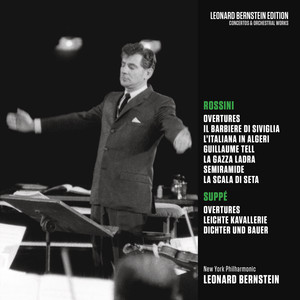 | Overture "Light Cavalry" Ouverture "Die leichte Kavallerie" - Instrumental | Franz von Suppé, New York Philharmonic, Leonard Bernstein | A Major | 4 | 11B | 123 BPM | |
 | Nabucco, Opera (Nabucodonosor): Coro di Schiavi Ebrei | Traditional, Bruckner Orchestra Linz, Czech Philharmonic Choir Of Brno, St. Florian Boys’ Choir, Bernhard Klee, Richard Wagner, Giuseppe Verdi | D♭ Major | 0 | 3B | 142 BPM | |
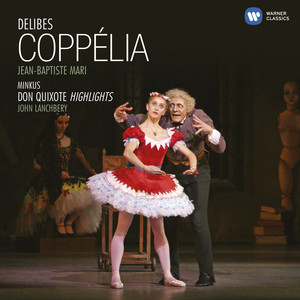 | Delibes: Coppélia, Act I: No. 1, Valse | Léo Delibes, Jean-Baptiste Mari, Orchestre de l'Opéra National de Paris | E♭ Major | 1 | 5B | 143 BPM | |
 | The Legend Of The Glass Mountain | Annunzio Paolo Mantovani | C Major | 2 | 8B | 93 BPM | |
 | Cavalleria rusticana: Intermezzo sinfonico | Pietro Mascagni, Staatskapelle Dresden, Silvio Varviso | F Major | 0 | 7B | 88 BPM | |
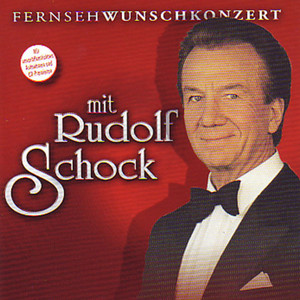 | O Mädchen, mein Mädchen | Rudolf Schock | G Major | 2 | 9B | 80 BPM | |
 | Angelica-Polka francaise, Op. 123 | Josef Strauss, Budapest Strauss Symphony Orchestra, Alfred Walter | D Major | 2 | 10B | 82 BPM | |
 | Leichte Kavallerie: Overture | Franz von Suppé, Ivan Repušić, Munich Radio Orchestra | E Major | 3 | 12B | 128 BPM | |
 | Donausagen, Op. 446 | Carl Michael Ziehrer, Robert Stolz | G Major | 3 | 9B | 88 BPM | |
 | Werther: "Pourquoi me réveiller, ô souffle du printemps?" | Jules Massenet, Benjamin Bernheim, PKF – Prague Philharmonia, Emmanuel Villaume | F♯ Minor | 1 | 11A | 79 BPM | |
 | Quadrille ohne Titel, Op. 248 | Johann Strauss I, Slovak Sinfonietta, Zilina, Christian Pollack | B♭ Major | 2 | 6B | 87 BPM | |
 | Cæcilie Vals (1852) | Hans Christian Lumbye, Tivoli Symphony Orchestra | B Major | 1 | 1B | 172 BPM | |
 | Im Salzkammergut da kann man gut | Wiener Operettenorchester, Chor | C Major | 5 | 8B | 76 BPM |
- ISRC
- DEE477400192
- Label
- L-M Records/RCA Records