- BPM
- 72
- Key
- E Minor
- Camelot
- 9A
Prelude in E minor, Op. 28: No. 4 by Frédéric Chopin, The Brighton String Quartet Song Details
"Prelude in E minor, Op. 28: No. 4" by Frédéric Chopin, The Brighton String Quartet had its release date on October 14, 2018. The duration of This song is about two minutes long, specifically at 2:06. This song does not appear to have any foul language. Prelude in E minor, Op. 28: No. 4's duration is considered a little bit shorter than the average duration of a typical track. The track order of this song in Chris Snelling, Nils Hahn, James Shanon, Josef Babula, Chris Mercer, Jonathan Sarlat, The Brighton String Quartet's "Gentle Classical Music: 14 Beautifully Relaxing Classical Pieces" album is number 13 out of 14. On top of that, United Kingdom appears to be the country where this track was created. Prelude in E minor, Op. 28: No. 4 is unknown right now. In our opinion, the overall tone is not very danceable and projects negative sounds, such as being sad, depressed, or angry.
BPM and Tempo
We consider the tempo marking of Prelude in E minor, Op. 28: No. 4 by Frédéric Chopin, The Brighton String Quartet to be Adagio (slowly with great expression) because the track has a tempo of 72 BPM, a half-time of 36BPM, and a double-time of 144 BPM. Based on that, the speed of the song's tempo is slow. The time signature for this track is 4/4.
Music Key
E Minor is the music key of this track. Because this track belongs in the E Minor key, the camelot key is 9A. So, the perfect camelot match for 9A would be either 9A or 8B. While, a low energy boost can consist of either 9B or 10A. For moderate energy boost, you would use 6A and a high energy boost can either be 11A or 4A. However, if you are looking for a low energy drop, finding a song with a camelot key of 8A would be a great choice. Where 12A would give you a moderate drop, and 7A or 2A would be a high energy drop. Lastly, 12B allows you to change the mood.
Want to find the BPM and music key for other songs? Check out our BPM and Key Finder page!
- Popularity
- 0%
- Loudness
- -17.768 dB
- Acousticness
- 93%
- Danceability
- 14%
- Energy
- 11%
- Instrumentalness
- 90%
- Liveness
- 11%
- Loudness
- 70%
- Speechiness
- 4%
- Valence
- 4%
Recommendations
| Track | Artist | Key | Energy | Camelot | BPM | ||
|---|---|---|---|---|---|---|---|
 | Chopin: Mazurka No. 41 in C-Sharp Minor, Op. 63 No. 3 | Frédéric Chopin, Alexandre Tharaud | D♭ Minor | 1 | 12A | 128 BPM | |
 | Chopin - Prelude E-Minor OP.28 No 4 | Martin Bloch | E Minor | 0 | 9A | 68 BPM | |
 | Waltz No. 7 in C-Sharp Minor, Op. 64 No. 2 | Frédéric Chopin, Alice Sara Ott | F Minor | 1 | 4A | 80 BPM | |
 | Nocturne No. 13 In D Minor | Benjamin Frith, John Field | D Minor | 0 | 7A | 68 BPM | |
 | Symphony No. 5: IV. Adagietto. Sehr langsam | Gustav Mahler, Berliner Philharmoniker, Claudio Abbado | F Major | 0 | 7B | 91 BPM | |
 | Improvisation No. 15 in C Minor, FP 176 | Francis Poulenc, Pascal Rogé | G Minor | 1 | 6A | 117 BPM | |
 | Prelude & Fugue in C Minor (Well-Tempered Clavier, Book I, No. 2), BWV 847: I. Prelude | Johann Sebastian Bach, Víkingur Ólafsson | C Minor | 2 | 5A | 65 BPM | |
 | Notturno in G Minor | Fanny Mendelssohn, Heather Schmidt | G Minor | 1 | 6A | 125 BPM | |
 | Valse En Mib Maj Op18 Grde Valse Brillante | Samson François | A♭ Major | 1 | 4B | 126 BPM | |
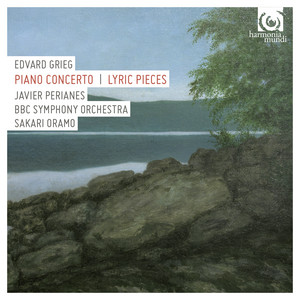 | Lyric Pieces, Book VI, Op. 57: No. 6, Hjemve. Andante | Edvard Grieg, Javier Perianes | E Minor | 0 | 9A | 166 BPM | |
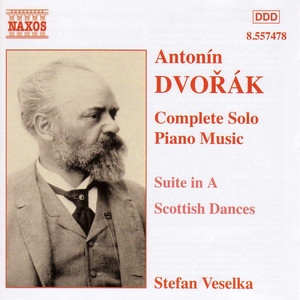 | 2 Pieces, Op. Posth., B. 188: No. 1, Lullaby in G Major | Antonín Dvořák, Stefan Veselka | G Major | 0 | 9B | 66 BPM | |
 | 24 Preludes and Fugues, Op. 87: Fugue No. 7 in A Major | Dmitri Shostakovich, Igor Levit | A Major | 0 | 11B | 97 BPM | |
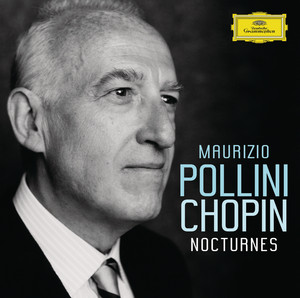 | Nocturne No. 3 In B, Op. 9 No. 3 | Frédéric Chopin, Maurizio Pollini | F♯ Major | 0 | 2B | 68 BPM | |
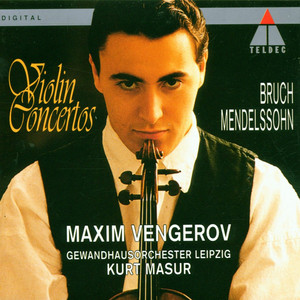 | Bruch: Violin Concerto No. 1 in G Minor, Op. 26: I. Prelude. Allegro moderato | Max Bruch, Maxim Vengerov, Kurt Masur, Gewandhausorchester | E♭ Major | 1 | 5B | 113 BPM | |
| Valse En La Bemol Maj Op69 N1 | Samson François | A♭ Major | 0 | 4B | 141 BPM | |
 | 5 Pieces for Violin and Piano: I. Elegia. Andante larghetto | Valentin Silvestrov, Duo Gazzana | E♭ Major | 0 | 5B | 74 BPM | |
 | Humoresques, Op. 101, B. 187: VII. Poco lento e grazioso | Antonín Dvořák, Tiffany Poon | B♭ Major | 0 | 6B | 66 BPM | |
 | 13 Pieces, Op. 76: No. 2 Etude | Jean Sibelius, Håvard Gimse | A Minor | 2 | 8A | 72 BPM | |
 | Zdes' khorosho ('How Fair This Spot'), Op. 21, No. 7 | Sergei Rachmaninoff, Pablo Ferrandez, Denis Kozhukhin | A Major | 0 | 11B | 87 BPM | |
 | The Well-Tempered Clavier, Book 1: Prelude & Fugue No. 2 in C Minor, BWV 847 | Johann Sebastian Bach, András Schiff | C Minor | 3 | 5A | 90 BPM | |
 | Consolation No. 3 in D-Flat Major, S. 172 | Franz Liszt, Lang Lang | D♭ Major | 0 | 3B | 74 BPM | |
 | Prelude and Allegro in the style of Pugnani | Samuel Sanders, Itzhak Perlman | E Minor | 3 | 9A | 107 BPM | |
 | Bach Siciliano | Nimrod David Pfeffer | G Minor | 0 | 6A | 94 BPM | |
 | Du bist wie eine Blume, Op. 25/24 | Nils Mönkemeyer | A♭ Major | 0 | 4B | 82 BPM | |
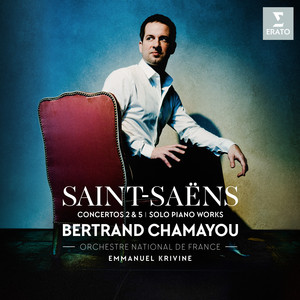 | Saint-Saëns: Piano Concerto No. 2 in G Minor, Op. 22: I. Andante sostenuto | Camille Saint-Saëns, Bertrand Chamayou, Emmanuel Krivine, Orchestre National De France | G Minor | 2 | 6A | 94 BPM |
- ISRC
- GBMNA1812040
- Label
- L-M Records/RCA Records