- BPM
- 81
- Key
- E Major
- Camelot
- 12B
Wiegenlied (Guten Abend, gut' Nacht) by Johannes Brahms, Rundfunk-Jugendchor Wernigerode Song Details
"Wiegenlied (Guten Abend, gut' Nacht)" by Johannes Brahms, Rundfunk-Jugendchor Wernigerode had its release date on 2004. With This song being less than two minutes long, at 1:37, we are fairly confident that this song is not explicit and is safe for all ages. Based on the duration of this song, this song duration is much smaller than the average song duration. The song is number 25 out of 26 in Brahms: Des Knaben Wunderhorn - Alte deutsche Lieder by Rundfunk-Jugendchor Wernigerode. Going off of the ISRC code of this track, we detected that the origin of this track is from Germany. Wiegenlied (Guten Abend, gut' Nacht) is not that popular right now. In our opinion, the overall tone is not very danceable and projects negative sounds, such as being sad, depressed, or angry.
BPM and Tempo
The tempo marking of Wiegenlied (Guten Abend, gut' Nacht) by Johannes Brahms, Rundfunk-Jugendchor Wernigerode is Andante (at a walking pace), since this song has a tempo of 81 BPM. With that information, we can conclude that the song has a slow tempo. The time signature for this track is 4/4.
Music Key
This song is in the music key of E Major. This also means that this song has a camelot key of 12B. So, the perfect camelot match for 12B would be either 12B or 1A. While, 1B can give you a low energy boost. For moderate energy boost, you would use 9B and a high energy boost can either be 2B or 7B. Though, if you want a low energy drop, you should looking for songs with either a camelot key of 12A or 11B will give you a low energy drop, 3B would be a moderate one, and 10B or 5B would be a high energy drop. Lastly, 9A allows you to change the mood.
Want to find the BPM and music key for other songs? Check out our BPM and Key Finder page!
- Popularity
- 1%
- Loudness
- -19.682 dB
- Acousticness
- 99%
- Danceability
- 25%
- Energy
- 16%
- Instrumentalness
- 0%
- Liveness
- 9%
- Loudness
- 67%
- Speechiness
- 4%
- Valence
- 6%
Recommendations
| Track | Artist | Key | Energy | Camelot | BPM | ||
|---|---|---|---|---|---|---|---|
 | Violin Sonata No. 5 in F Major, Op. 24 "Spring": 1. Allegro | Ludwig van Beethoven, Itzhak Perlman, Vladimir Ashkenazy | C Major | 2 | 8B | 152 BPM | |
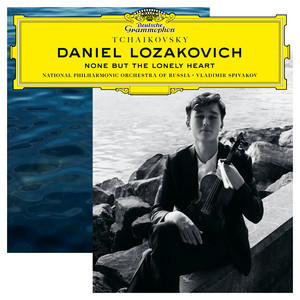 | Souvenir d'un lieu cher, Op. 42: III. Mélodie (Ed. Herrmann) | Pyotr Ilyich Tchaikovsky, Daniel Lozakovich, Stanislav Soloviev | E♭ Major | 1 | 5B | 178 BPM | |
 | 7 Variations on the Air Vien qua, Dorina bella by Bianchi, Op. 7, J. 53: Andante | Carl Maria von Weber, Michael Endres | E Major | 1 | 12B | 87 BPM | |
 | Violin Partita No. 2 in D Minor, BWV 1004: I. Allemande | Johann Sebastian Bach, Hilary Hahn | D Minor | 1 | 7A | 76 BPM | |
 | Wiegenlied, Op. 49, No. 4 | Johannes Brahms, Leonidas Kavakos, Yuja Wang | E♭ Major | 0 | 5B | 74 BPM | |
 | Sonata In G Minor For Cello & Piano, Op. 19: 3. Andante | Sergei Rachmaninoff, Alisa Weilerstein, Inon Barnatan | F Major | 2 | 7B | 82 BPM | |
 | 6 Studies in English Folksong (Version for Cello & Piano): No. 3, Larghetto "Van Dieman's Land" | Ralph Vaughan Williams, Gerald Peregrine, Antony Ingham | D Minor | 0 | 7A | 81 BPM | |
 | Nien, Geliebter, Setze Dich | Georg Friedrich Daumer, Johannes Brahms, One Voice Mixed Chorus, Jane Ramseyer Miller | E Major | 0 | 12B | 86 BPM | |
 | Brahms: Symphony No. 3 in F Major, Op. 90: III. Poco allegretto | Johannes Brahms, Munich Philharmonic Orchestra, Zubin Mehta | F Major | 2 | 7B | 93 BPM | |
 | Halvorsen: Passacaglia (After Handel's Keyboard Suite, HWV 432) | Johan Halvorsen, Itzhak Perlman, Pinchas Zukerman | G Minor | 2 | 6A | 109 BPM | |
 | Lieder ohne Worte (Songs without Words), Book 2, Op. 30: No. 7 in E-Flat Major, Op. 30, No. 1, MWV U103 | Felix Mendelssohn, Péter Nagy | E♭ Major | 0 | 5B | 65 BPM | |
 | Violin Concerto No. 1 in A minor, BWV 1041: I. (Allegro moderato) | Johann Sebastian Bach, Daniel Lozakovich, Chamber Orchestra of the Bavarian Radio, Radoslaw Szulc, Olga Watts | A Minor | 4 | 8A | 91 BPM | |
 | Serenade No. 1 in D Major, Op. 11: IVb. Menuetto II | Johannes Brahms, Gävle Symphony Orchestra, Jaime Martin | G Minor | 0 | 6A | 99 BPM | |
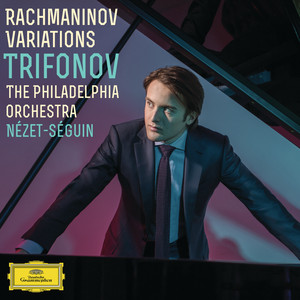 | Rhapsody on a Theme of Paganini, Op. 43: Variation No. 18 Andante cantabile | Sergei Rachmaninoff, Daniil Trifonov, Philadelphia Orchestra, Yannick Nézet-Séguin | D♭ Major | 1 | 3B | 88 BPM | |
 | Gluck: Melodie from Orfeo ed Euridice | Christoph Willibald Gluck, Aurélien Pontier | E♭ Major | 2 | 5B | 107 BPM | |
 | Bach, JS : Well-Tempered Clavier Book 1 : Prelude No.1 in C major BWV846 | Daniel Barenboim | C Major | 0 | 8B | 95 BPM | |
 | 3 Chorales, P. 167: No. 3, Andante (After J.S. Bach's BWV 645) | Ottorino Respighi, Seattle Symphony Orchestra, Gerard Schwarz | E♭ Major | 0 | 5B | 84 BPM | |
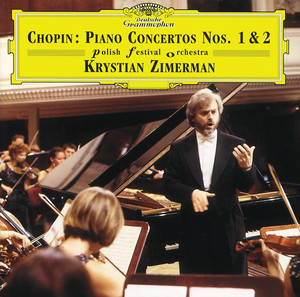 | Piano Concerto No. 2 In F Minor, Op. 21: 3. Allegro vivace | Frédéric Chopin, Krystian Zimerman, Polish Festival Orchestra | B♭ Minor | 2 | 3A | 107 BPM | |
 | Carmen Suite No. 1 (Arr. E. Guiraud): III. Intermezzo | Georges Bizet, Orquestra Simfònica de Barcelona i Nacional de Catalunya, Pablo González | E♭ Major | 0 | 5B | 81 BPM | |
 | I. Pezzo in forma di sonatina | Pyotr Ilyich Tchaikovsky, Wiener KammerOrchester, Philippe Entremont | C Major | 4 | 8B | 112 BPM | |
 | Orfeo ed Euridice, Wq. 30, Act II: Danse des champs-elysées "Mélodie" (Arr. for Piano by Ignaz Friedman) | Christoph Willibald Gluck, Joseph Banowetz | A Major | 0 | 11B | 72 BPM | |
 | Piano Trio No. 1 in B Major, Op. 8: II. Scherzo - Allegro molto | Johannes Brahms, Vienna Piano Trio | B Major | 1 | 1B | 160 BPM | |
 | Concerto in D Minor for Two Violins, BWV 1043: Concerto in D Minor for Two Violins, BWV 1043: I. Vivace | Johann Sebastian Bach, Andrew Manze, Academy of Ancient Music | D♭ Minor | 5 | 12A | 108 BPM | |
 | Keyboard Sonata in D Minor, Kk. 1 | Domenico Scarlatti, Ivo Pogorelich | D Minor | 1 | 7A | 107 BPM | |
 | VI. June. Barcarolle | Pyotr Ilyich Tchaikovsky, Mikhail Pletnev | G Minor | 0 | 6A | 69 BPM |
- ISRC
- DEE700001249
- Label
- L-M Records/RCA Records