- BPM
- 92
- Key
- B♭ Major
- Camelot
- 6B
Der Bettelstudent, Act I: Introduction by Carl Millöcker, Mirko Roschkowski, Erwin Belakowitsch, Linda Plech, Cornelia Zink, Adriane Queiroz, Henryk Bohm, Olaf Plassa, Rupert Bergmann, Alexander Voigt, Daniel Strasser, Steven Scheschareg, Franziska Stanner, Rui dos Santos, Michael Zehe, Yuri Dmytruk, Alexander Joel, Dirk Lohr, Bernd Ander, Mörbisch Festival Choir, Morbisch Festival Orchestra, Uwe Theimer Song Details
Carl Millöcker, Mirko Roschkowski, Erwin Belakowitsch, Linda Plech, Cornelia Zink, Adriane Queiroz, Henryk Bohm, Olaf Plassa, Rupert Bergmann, Alexander Voigt, Daniel Strasser, Steven Scheschareg, Franziska Stanner, Rui dos Santos, Michael Zehe, Yuri Dmytruk, Alexander Joel, Dirk Lohr, Bernd Ander, Mörbisch Festival Choir, Morbisch Festival Orchestra, Uwe Theimer's 'Der Bettelstudent, Act I: Introduction' had a release date set for September 3, 2013. This song is about six minutes long, preciously at 5:51, making this song fairly long compared to other songs. The track order of this song in Carl Millöcker, Uwe Theimer, Morbisch Festival Orchestra's "Millöcker: Der Bettelstudent" album is number 2 out of 19. On top of that, Germany appears to be the country where this track was created. In terms of popularity, Der Bettelstudent, Act I: Introduction is currently unknown. Although the tone can be danceable to some, this track does projects more of a negative sound rather than a postive one.
BPM and Tempo
We consider the tempo marking of Der Bettelstudent, Act I: Introduction by Carl Millöcker, Mirko Roschkowski, Erwin Belakowitsch, Linda Plech, Cornelia Zink, Adriane Queiroz, Henryk Bohm, Olaf Plassa, Rupert Bergmann, Alexander Voigt, Daniel Strasser, Steven Scheschareg, Franziska Stanner, Rui dos Santos, Michael Zehe, Yuri Dmytruk, Alexander Joel, Dirk Lohr, Bernd Ander, Mörbisch Festival Choir, Morbisch Festival Orchestra, Uwe Theimer to be Andante (at a walking pace) because the track has a tempo of 92 BPM, a half-time of 46BPM, and a double-time of 184 BPM. Based on that, the speed of the song's tempo is slow. Activities such as, yoga or pilates, can go well with this song. The time signature for this track is 4/4.
Music Key
B♭ Major is the music key of this track. This also means that this song has a camelot key of 6B. So, the perfect camelot match for 6B would be either 6B or 7A. While, 7B can give you a low energy boost. For moderate energy boost, you would use 3B and a high energy boost can either be 8B or 1B. Though, if you want a low energy drop, you should looking for songs with either a camelot key of 6A or 5B will give you a low energy drop, 9B would be a moderate one, and 4B or 11B would be a high energy drop. Lastly, 3A allows you to change the mood.
Want to find the BPM and music key for other songs? Check out our BPM and Key Finder page!
- Popularity
- 0%
- Loudness
- -11.245 dB
- Acousticness
- 94%
- Danceability
- 46%
- Energy
- 32%
- Instrumentalness
- 0%
- Liveness
- 13%
- Loudness
- 81%
- Speechiness
- 4%
- Valence
- 37%
Recommendations
| Track | Artist | Key | Energy | Camelot | BPM | ||
|---|---|---|---|---|---|---|---|
 | Aida: Triumphmarsch | Giuseppe Verdi, Marko Munih, RSO Ljubljana | E♭ Major | 1 | 5B | 100 BPM | |
 | Rund Um Die Liebe: Rund Um Die Liebe, Ouverture | Oscar Straus, Budapest Strauss Symphony Orchestra | A Major | 3 | 11B | 73 BPM | |
 | Poppa Piccolino | Mantovani & His Orchestra | E Minor | 2 | 9A | 93 BPM | |
 | Nach Herzenslust Polka schnell, op. 155 | Carl Michael Ziehrer, Original C.M.Ziehrer Orchester, Hans Schadenbauer | G Major | 2 | 9B | 76 BPM | |
 | Eight Russian Folksongs for Orchestra, Op. 58: VI. Cradle Song (Lullaby). Moderato | Anatoly Lyadov, Alexander Gauk | C Minor | 2 | 5A | 72 BPM | |
 | Immer nur lächeln (From "Das Land des Lächelns") | Rudolf Schock | D Major | 1 | 10B | 80 BPM | |
 | Die schöne Galathée: Ouvertüre | Franz von Suppé, Lorin Maazel, Wiener Philharmoniker | D Major | 3 | 10B | 91 BPM | |
 | Die verkaufte Braut (2007 Remaster), Akt 2: Wie schäumst du in den Gläsern (Chor: Hans - Kezal - Chor) | Bedřich Smetana, Pilar Lorengar/Fritz Wunderlich/Gottlob Frick/Bamberger Symphoniker/Rudolf Kempe, Rudolf Kempe, Bamberg Symphony | G Major | 5 | 9B | 112 BPM | |
 | Tosca: Recondita armonia | Giacomo Puccini, Andre Kostelanetz, Columbia Symphony Orchestra | C Major | 0 | 8B | 130 BPM | |
 | Fatinitza Marsch | Johann Strauss Orchester | G Major | 4 | 9B | 123 BPM | |
 | Nymphen-Polka, Op. 50 | Josef Strauss, Slovak State Philharmonic Orchestra, Kosice, Walter Hilgers | C Major | 2 | 8B | 75 BPM | |
 | Der Probekuss: In Saus und Braus | Carl Millöcker, Wiener Johann Strauss Orchester, Alfred Eschwe | F Major | 4 | 7B | 78 BPM | |
 | Gasparone: "Auch ich war einst ein junger Mann" | Carl Millöcker, Grosses Operetten Orchester, Franz Marszalek, Willy Schneider, Willy Hofman, Sandor Konya, Herta Talmar, Rita Bartos | G Major | 2 | 9B | 115 BPM | |
 | Klipp-Klapp, Galopp, Op. 466 | Johann Strauss II, Slovak State Philharmonic Orchestra, Kosice, Johannes Wildner | F Major | 3 | 7B | 156 BPM | |
 | Frisch heran! Polka schnell, Op. 386 | Johann Strauss II, Franz Welser-Möst, Wiener Philharmoniker | C Major | 3 | 8B | 90 BPM | |
 | Carnevalslaunen (Polka schnell) | Carl Millöcker, Nürnberger Philharmoniker, Christian Simonis | D Major | 2 | 10B | 108 BPM | |
 | Transylvanian March and Embassy Waltz from 'My Fair Lady': Transylvanian March and Embassy Waltz from 'My Fair Lady' | Frederick Loewe, John Wilson, Sinfonia Of London | E Major | 1 | 12B | 68 BPM | |
 | O Mädchen, mein Mädchen | Rudolf Schock | G Major | 2 | 9B | 80 BPM | |
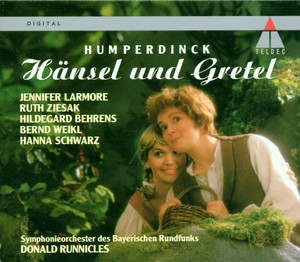 | Humperdinck : Hänsel und Gretel : Act 3 "Halt! Hokuspokus, Hexenschuss!" [The Nibblewitch, Gretel, Hänsel] | Engelbert Humperdinck, Donald Runnicles, Bavarian Radio Symphony Orchestra | B♭ Major | 1 | 6B | 103 BPM | |
 | Der Vetter aus Dingsda: Strahlender Mond, der am Himmelszelt thront | Eduard Künneke, Renate Holm, Werner Schmidt-Boelcke | G Major | 2 | 9B | 82 BPM | |
 | Smetana: The Bartered Bride: Polka | Bedřich Smetana, Sir Charles Mackerras, Philharmonia Orchestra | C Major | 3 | 8B | 94 BPM | |
 | Donau Wellen (Wave Of The Danube) | Ion Ivanovici, Andrew Davis | C Major | 1 | 8B | 199 BPM | |
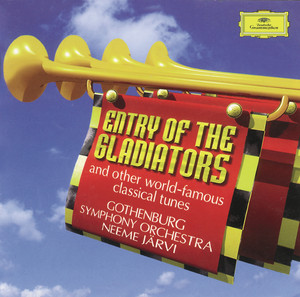 | Ball-Szene | Joseph Hellmesberger, Jr., Gothenburg Symphony Orchestra, Neeme Järvi | B Major | 3 | 1B | 116 BPM | |
 | Echoes of Day | Nuit | G Major | 5 | 9B | 104 BPM | |
 | La belle Hélène: Overture | Jacques Offenbach, Orchestre National de Lille, Darrell Ang | E Major | 2 | 12B | 138 BPM |
- ISRC
- DEU921343202
- Label
- L-M Records/RCA Records