- BPM
- 120
- Key
- E♭ Major
- Camelot
- 5B
String Quintet in C, D.956: 3. Scherzo (Presto) - Trio (Andante sostenuto) by Franz Schubert, Walter Levin, Henry Meyer, Peter Kamnitzer, Lynn Harrell, Lee Fiser Song Details
Franz Schubert, Walter Levin, Henry Meyer, Peter Kamnitzer, Lynn Harrell, Lee Fiser's ' "String Quintet in C, D.956: 3. Scherzo (Presto) - Trio (Andante sostenuto)" was released on its scheduled release date, January 1, 1991. This song appears to be safe for all ages as it is not explicit. There are a total of 8 in the song's album "Schubert: String Quintet In C Major D.956 / Schumann: Piano Quintet In E Flat, Op. 44". In this album, this song's track order is #3. Furthermore, we believe that the track originated from Germany. Based on our statistics, String Quintet in C, D.956: 3. Scherzo (Presto) - Trio (Andante sostenuto)'s popularity is unknown right now. Since there is more of a neutral sound being played, this makes the track somewhat danceable.
BPM and Tempo
With String Quintet in C, D.956: 3. Scherzo (Presto) - Trio (Andante sostenuto) by Franz Schubert, Walter Levin, Henry Meyer, Peter Kamnitzer, Lynn Harrell, Lee Fiser having a BPM of 120 with a half-time of 60 BPM and a double-time of 240 BPM, we would consider this track to have a Moderato (at a moderate speed) tempo marking. Because of this, we believe that the song has an overall fast tempo. Looking at the BPM of this song, this song might go great with walking. The time signature for this track is 4/4.
Music Key
E♭ Major is the music key of this track. Or for those who are familiar with the camelot wheel, this song has a camelot key of 5B. So, the perfect camelot match for 5B would be either 5B or 6A. While, 6B can give you a low energy boost. For moderate energy boost, you would use 2B and a high energy boost can either be 7B or 12B. Though, if you want a low energy drop, you should looking for songs with either a camelot key of 5A or 4B will give you a low energy drop, 8B would be a moderate one, and 3B or 10B would be a high energy drop. Lastly, 2A allows you to change the mood.
Want to find the BPM and music key for other songs? Check out our BPM and Key Finder page!
- Popularity
- 0%
- Loudness
- -22.443 dB
- Acousticness
- 98%
- Danceability
- 43%
- Energy
- 12%
- Instrumentalness
- 80%
- Liveness
- 13%
- Loudness
- 63%
- Speechiness
- 4%
- Valence
- 41%
Recommendations
| Track | Artist | Key | Energy | Camelot | BPM | ||
|---|---|---|---|---|---|---|---|
 | Concerto in D Minor, BWV 974: II. Adagio | Johann Sebastian Bach, Alessandro Marcello, Khatia Buniatishvili | D Minor | 0 | 7A | 73 BPM | |
 | 美しき水車小屋の娘 Op. 25, D. 795: 第2曲 どこへ? | Wilhelm Müller, Franz Schubert, John Ken NUZZO, 近藤亜紀 | G Major | 1 | 9B | 125 BPM | |
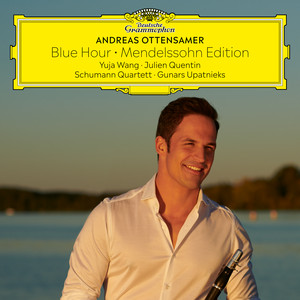 | Lieder ohne Worte I, Op. 19b: VI. Andante sostenuto "Venetian Gondola Song", MWV U78 (Arr. Ottensamer for Clarinet & Strings) | Felix Mendelssohn, Andreas Ottensamer, Schumann Quartett, Gunars Upatnieks | G Minor | 0 | 6A | 84 BPM | |
 | 2 Pieces for the Left Hand, Op. 9: No. 2, Nocturne in D-Flat Major | Alexander Scriabin, Maria Lettberg | A♭ Major | 0 | 4B | 74 BPM | |
 | Forgotten Melodies I, Op. 38: No. 6; Canzona Serenata | Nikolai Medtner, Dmitry Shishkin | B Major | 0 | 1B | 69 BPM | |
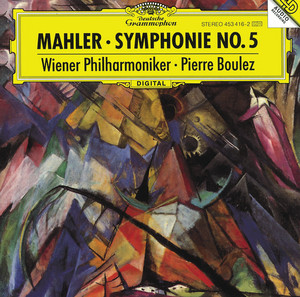 | Symphony No. 5: IV. Adagietto. Sehr langsam | Gustav Mahler, Wiener Philharmoniker, Pierre Boulez | F Major | 0 | 7B | 87 BPM | |
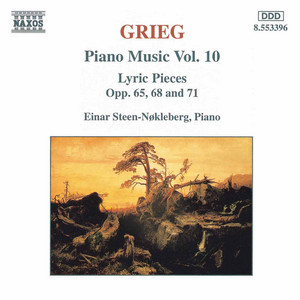 | Lyric Pieces, Book 9, Op. 68: Badnlat (Cradle Song) | Edvard Grieg, Einar Steen-Nøkleberg | B♭ Major | 0 | 6B | 72 BPM | |
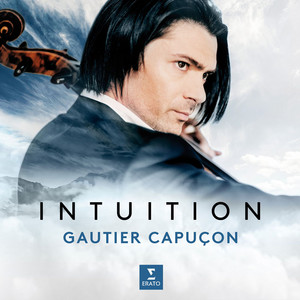 | Saint-Saëns / Transcr. Vidal: Le carnaval des animaux: XIII. Le cygne | Camille Saint-Saëns, Gautier Capuçon, Douglas Boyd, Orchestre de chambre de Paris | G Major | 0 | 9B | 82 BPM | |
 | Pièces Lyriques, Op. 47 No. 3: Mélodie | Edvard Grieg, Shani Diluka | F Major | 0 | 7B | 105 BPM | |
 | Bach, JS: Concerto for 4 Pianos in A Minor, BWV 1065: I. Allegro | Johann Sebastian Bach, David Fray, Audrey Vigoureux, Emmanuel Christien, Jacques Rouvier, Orchestre National Du Capitole De Toulouse | A Minor | 3 | 8A | 108 BPM | |
 | Waltz in F Minor | Vladimir Horowitz, Valery Kuleshov | B♭ Minor | 0 | 3A | 75 BPM | |
 | Franck: Prélude, fugue et variation, Op. 18, FWV 30: Prélude | César Franck, Aldo Ciccolini | B Minor | 0 | 10A | 127 BPM | |
 | El cant dels ocells (Version for Cello & Orchestra) | Pablo Casals, Harriet Krijgh, Gustavo Gimeno, Deutsche Staatsphilharmonie Rheinland-Pfalz | D Major | 0 | 10B | 128 BPM | |
 | Le carnaval des animaux, R. 125: Le cygne | Camille Saint-Saëns, Mischa Maisky, Orpheus Chamber Orchestra | C Major | 0 | 8B | 83 BPM | |
 | Ancient Airs & Dances, Suite III, P. 172: I. Italiana (Anonymous) | Ottorino Respighi, Filarmonica della Scala, Riccardo Chailly | B♭ Major | 1 | 6B | 172 BPM | |
 | Lyric Pieces, Book 5, Op. 54: Nocturne | Edvard Grieg, Alessio Bax | C Major | 0 | 8B | 72 BPM | |
 | Morceaux de fantaisie, Op. 3: No. 2. Prelude in C-Sharp Minor | Sergei Rachmaninoff, Nikolai Lugansky | G Minor | 0 | 6A | 112 BPM | |
 | Berceuse, S. 174 | Franz Liszt, Benjamin Grosvenor | D♭ Major | 0 | 3B | 136 BPM | |
 | Adagio in E-Flat Major | Fanny Mendelssohn, Heather Schmidt | E♭ Minor | 0 | 2A | 90 BPM | |
 | Suite in E Minor, RCT 2: No. 5, Le rappel des oiseaux (Arr. for Piano by Ignaz Friedman) | Jean-Philippe Rameau, Joseph Banowetz | E Minor | 2 | 9A | 83 BPM | |
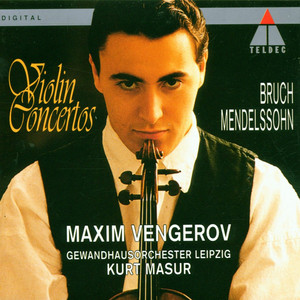 | Bruch : Violin Concerto No.1 in G minor Op.26 : III Finale - Allegro energico | Max Bruch, Maxim Vengerov, Kurt Masur, Gewandhausorchester Leipzig | G Major | 2 | 9B | 90 BPM | |
 | Kinderszenen, Op. 15: Träumerei | Robert Schumann, Vladimir Horowitz | F Major | 0 | 7B | 63 BPM | |
 | The Lark | Mikhail Glinka, Evgeny Kissin | B♭ Minor | 0 | 3A | 96 BPM | |
 | 8 Nocturnes, Op. 368: No. 1, Moderato e cantabile | Carl Czerny, Roberte Mamou | E Major | 0 | 12B | 66 BPM | |
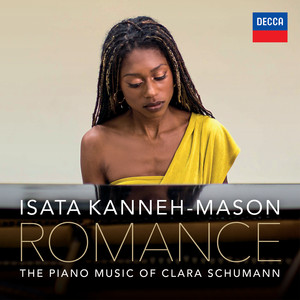 | 3 Romances, Op. 11: No. 1, Andante | Clara Schumann, Isata Kanneh-Mason | E♭ Minor | 0 | 2A | 127 BPM |
- ISRC
- DEF057701663
- Label
- L-M Records/RCA Records