- BPM
- 87
- Key
- D♭ Major
- Camelot
- 3B
Strauss, R: Ariadne auf Naxos, Op. 60, Opera: "Bin ich ein Gott, schuf mich ein Gott" (Ariadne, Bacchus, Najade, Dryade, Echo, Zerbinetta) by Richard Strauss, Herbert von Karajan, Anny Felbermayer, Elisabeth Schwarzkopf, Grace Hoffman, Lisa Otto, Rita Streich, Rudolf Schock, Philharmonia Orchestra Song Details
"Strauss, R: Ariadne auf Naxos, Op. 60, Opera: "Bin ich ein Gott, schuf mich ein Gott" (Ariadne, Bacchus, Najade, Dryade, Echo, Zerbinetta)" by Richard Strauss, Herbert von Karajan, Anny Felbermayer, Elisabeth Schwarzkopf, Grace Hoffman, Lisa Otto, Rita Streich, Rudolf Schock, Philharmonia Orchestra had its release date on 1955. This song is about six minutes long, preciously at 5:42, making this song fairly long compared to other songs. There are a total of 27 in the song's album "R. Strauss: Ariadne auf Naxos". In this album, this song's track order is #8. Furthermore, we believe that the track originated from United Kingdom. Strauss, R: Ariadne auf Naxos, Op. 60, Opera: "Bin ich ein Gott, schuf mich ein Gott" (Ariadne, Bacchus, Najade, Dryade, Echo, Zerbinetta) is unknown right now. In our opinion, the overall tone is not very danceable and projects negative sounds, such as being sad, depressed, or angry.
BPM and Tempo
With Strauss, R: Ariadne auf Naxos, Op. 60, Opera: "Bin ich ein Gott, schuf mich ein Gott" (Ariadne, Bacchus, Najade, Dryade, Echo, Zerbinetta) by Richard Strauss, Herbert von Karajan, Anny Felbermayer, Elisabeth Schwarzkopf, Grace Hoffman, Lisa Otto, Rita Streich, Rudolf Schock, Philharmonia Orchestra having a BPM of 87 with a half-time of 44 BPM and a double-time of 174 BPM, we would consider this track to have a Andante (at a walking pace) tempo marking. Because of this, we believe that the song has an overall slow tempo. Looking at the BPM of this song, this song might go great with yoga or pilates. The time signature for this track is 4/4.
Music Key
This song has a musical key of D♭ Major. Or for those who are familiar with the camelot wheel, this song has a camelot key of 3B. So, the perfect camelot match for 3B would be either 3B or 4A. While, 4B can give you a low energy boost. For moderate energy boost, you would use 12B and a high energy boost can either be 5B or 10B. Though, if you want a low energy drop, you should looking for songs with either a camelot key of 3A or 2B will give you a low energy drop, 6B would be a moderate one, and 1B or 8B would be a high energy drop. Lastly, 12A allows you to change the mood.
Want to find the BPM and music key for other songs? Check out our BPM and Key Finder page!
- Popularity
- 0%
- Loudness
- -13.113 dB
- Acousticness
- 96%
- Danceability
- 17%
- Energy
- 31%
- Instrumentalness
- 5%
- Liveness
- 13%
- Loudness
- 78%
- Speechiness
- 4%
- Valence
- 5%
Recommendations
| Track | Artist | Key | Energy | Camelot | BPM | ||
|---|---|---|---|---|---|---|---|
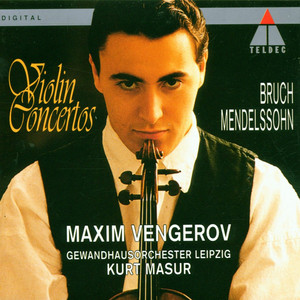 | Bruch : Violin Concerto No.1 in G minor Op.26 : III Finale - Allegro energico | Max Bruch, Maxim Vengerov, Kurt Masur, Gewandhausorchester Leipzig | G Major | 2 | 9B | 90 BPM | |
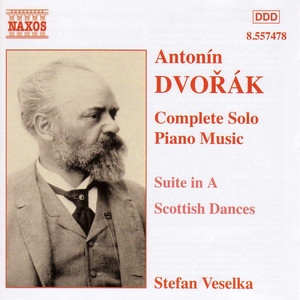 | 2 Pieces, Op. Posth., B. 188: No. 1, Lullaby in G Major | Antonín Dvořák, Stefan Veselka | G Major | 0 | 9B | 66 BPM | |
 | Ständchen in D Minor (After Schubert), S. 560 | Franz Liszt, Lise de la Salle | D Major | 0 | 10B | 76 BPM | |
 | 12 Klavierstücke für kleine und große Kinder, Op. 85: No. 12, Abendlied (Arr. Rot for Cello and Orchestra) | Robert Schumann, Kian Soltani, Camerata Salzburg, Gregory Ahss | E♭ Minor | 2 | 2A | 81 BPM | |
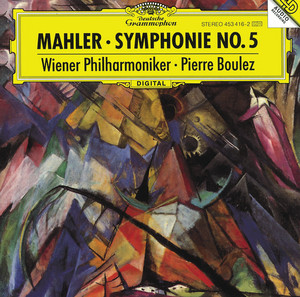 | Symphony No. 5: IV. Adagietto. Sehr langsam | Gustav Mahler, Wiener Philharmoniker, Pierre Boulez | F Major | 0 | 7B | 87 BPM | |
 | Poulenc: Concerto for Two Pianos in D Minor, FP 61: I. Allegro ma non troppo | Francis Poulenc, James Conlon, Rotterdam Philharmonic Orchestra | E♭ Major | 1 | 5B | 103 BPM | |
 | Abendlied, Op. 85, No. 12 (Arr. for String Orchestra by Johan Svendsen) | Robert Schumann, Lucerne Festival Strings, Daniel Dodds | B Major | 1 | 1B | 113 BPM | |
 | Ives / Orch. Brant: A Concord Symphony: III. The Alcotts | Charles Ives, Henry Brant, San Francisco Symphony, Michael Tilson Thomas | E♭ Major | 1 | 5B | 91 BPM | |
 | Aladdin Suite, Op. 34, FS 89: IV. Chinese Dance | Carl Nielsen, South Jutland Symphony Orchestra, Niklas Willen | E Minor | 1 | 9A | 96 BPM | |
 | Cello Concerto No. 1 in A Minor, Op. 33: I. Allegro non troppo | Camille Saint-Saëns, Mischa Maisky, Orpheus Chamber Orchestra | F Major | 2 | 7B | 131 BPM | |
 | Orfeo ed Euridice, Wq. 30 / Act II: Dance of the Blessed Spirits (Arr. by Mathieu Herzog for Cello and Strings) | Christoph Willibald Gluck, Camille Thomas, Brussels Philharmonic, Mathieu Herzog | B Minor | 1 | 10A | 87 BPM | |
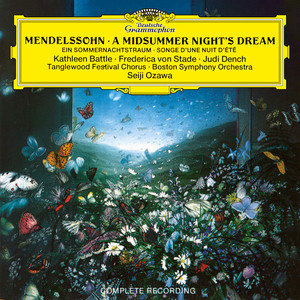 | Overture "A Midsummer Night's Dream", Op. 21 | Felix Mendelssohn, Boston Symphony Orchestra, Seiji Ozawa | E Major | 1 | 12B | 139 BPM | |
 | Elegy, Op. 58 | Edward Elgar, English Northern Philharmonia, David Lloyd-Jones | F Minor | 0 | 4A | 84 BPM | |
 | Suite No. 3, P. 172: I. Italiana: Andantino | Ottorino Respighi, RTÉ National Symphony Orchestra | B♭ Major | 1 | 6B | 94 BPM | |
 | Nocturne | Alexander Borodin, Julian Lloyd Webber, Royal Philharmonic Orchestra, James Judd | D Minor | 1 | 7A | 69 BPM | |
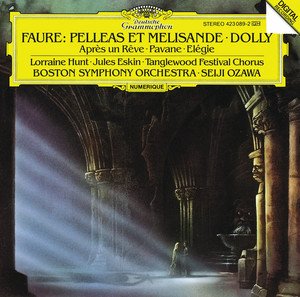 | Pelléas et Mélisande, Op.80: 2. Fileuse. Andantino quasi Allegretto | Gabriel Fauré, Boston Symphony Orchestra, Seiji Ozawa | G Major | 1 | 9B | 88 BPM | |
 | Poème de l'amour et de la mer, Op. 19: Interlude | Ernest Chausson, Véronique Gens, Orchestre National de Lille, Alexandre Bloch | A♭ Major | 0 | 4B | 108 BPM | |
 | 4 Letzte Lieder, TrV 296: No. 2, September | Richard Strauss, Renée Fleming, Munich Philharmonic Orchestra, Christian Thielemann | F♯ Major | 1 | 2B | 81 BPM | |
 | Carmen Suite No. 1 (Arr. E. Guiraud): IV. Séguedille | Georges Bizet, Orquestra Simfònica de Barcelona i Nacional de Catalunya, Pablo González | G Minor | 0 | 6A | 66 BPM | |
 | Feuersnot, Op. 50, TrV 203: Love Scene | Richard Strauss, Neeme Järvi, Royal Scottish National Orchestra | C Major | 1 | 8B | 67 BPM | |
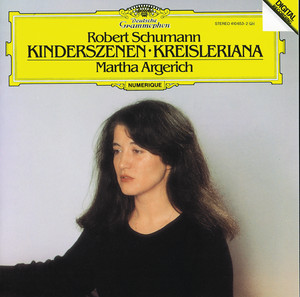 | Kinderszenen, Op. 15: I. Von fremden Ländern und Menschen | Robert Schumann, Martha Argerich | G Major | 0 | 9B | 128 BPM | |
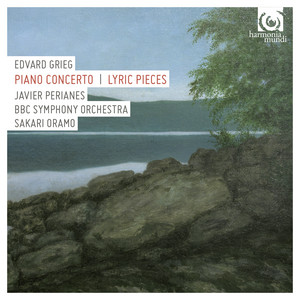 | Piano Concerto in A Minor, Op. 16: III. Allegro moderato molto e marcato | Edvard Grieg, Javier Perianes, BBC Symphony Orchestra, Sakari Oramo | F Major | 2 | 7B | 112 BPM | |
 | I vespri siciliani: Overture (Sinfonia) | Giuseppe Verdi, Berliner Philharmoniker, Claudio Abbado | E Major | 2 | 12B | 77 BPM | |
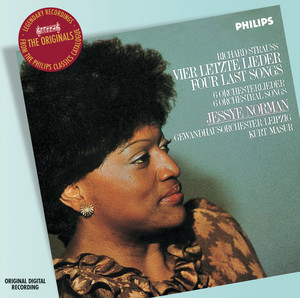 | Cäcilie, Op. 27 No. 2 (Version with Orchestra) | Richard Strauss, Jessye Norman, Gewandhausorchester, Kurt Masur | E♭ Minor | 3 | 2A | 97 BPM | |
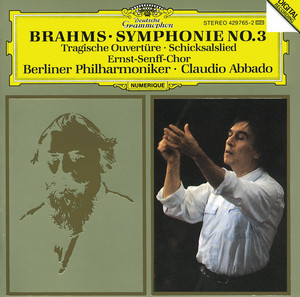 | Symphony No. 3 in F Major, Op. 90: II. Andante | Johannes Brahms, Berliner Philharmoniker, Claudio Abbado | C Major | 0 | 8B | 82 BPM |
- ISRC
- GBAYC9900495
- Label
- L-M Records/RCA Records