- BPM
- 68
- Key
- F♯ Major
- Camelot
- 2B
Il giardino di rose, R.503.19: Prima Parte: Il suo bel verde (Aria) by Alessandro Scarlatti, Alicia Amo, La Ritirata, Josetxu Obregon Song Details
Alessandro Scarlatti, Alicia Amo, La Ritirata, Josetxu Obregon's ' "Il giardino di rose, R.503.19: Prima Parte: Il suo bel verde (Aria)" was released on its scheduled release date, February 14, 2025. With This song being less than two minutes long, at 1:56, we are fairly confident that this song is not explicit and is safe for all ages. Based on the duration of this song, this song duration is much smaller than the average song duration. There are a total of 55 in the song's album "Scarlatti: Il giardino di rose". In this album, this song's track order is #18. Furthermore, we believe that the track originated from Germany. Il giardino di rose, R.503.19: Prima Parte: Il suo bel verde (Aria) is unknown right now. Since there is more of a neutral sound being played, this makes the track somewhat danceable.
BPM and Tempo
With Il giardino di rose, R.503.19: Prima Parte: Il suo bel verde (Aria) by Alessandro Scarlatti, Alicia Amo, La Ritirata, Josetxu Obregon having a BPM of 68 with a half-time of 34 BPM and a double-time of 136 BPM, we would consider this track to have a Adagio (slowly with great expression) tempo marking. Because of this, we believe that the song has an overall slow tempo. The time signature for this track is 4/4.
Music Key
F♯ Major is the music key of this track. Or for those who are familiar with the camelot wheel, this song has a camelot key of 2B. So, the perfect camelot match for 2B would be either 2B or 3A. While, 3B can give you a low energy boost. For moderate energy boost, you would use 11B and a high energy boost can either be 4B or 9B. Though, if you want a low energy drop, you should looking for songs with either a camelot key of 2A or 1B will give you a low energy drop, 5B would be a moderate one, and 12B or 7B would be a high energy drop. Lastly, 11A allows you to change the mood.
Want to find the BPM and music key for other songs? Check out our BPM and Key Finder page!
- Popularity
- 0%
- Loudness
- -16.618 dB
- Acousticness
- 95%
- Danceability
- 42%
- Energy
- 21%
- Instrumentalness
- 0%
- Liveness
- 13%
- Loudness
- 72%
- Speechiness
- 6%
- Valence
- 55%
Recommendations
| Track | Artist | Key | Energy | Camelot | BPM | ||
|---|---|---|---|---|---|---|---|
 | Polifemo: Overture | Nicola Porpora, Stefan Plewniak, Orchestre de l'Opéra Royal | D♭ Major | 4 | 3B | 123 BPM | |
 | Su le sponde del Tebro - Cantata a voce sola con Violini e Tromba: 3. Sinfonia - Aria | Alessandro Scarlatti, Wynton Marsalis, Kathleen Battle, John Nelson, Orchestra of St. Luke's, John Feeney | D Major | 2 | 10B | 94 BPM | |
 | Juditha Triumphans, RV 644, pars prior: Aria (Vagaus) "Matrona inimica" | Antonio Vivaldi, Rachel Redmond, Jordi Savall, Le Concert Des Nations | A Major | 3 | 11B | 174 BPM | |
 | Sonata da camera in G Minor, "O Haupt voll Blut und Wunden": I. Largo | Johann Gottlieb Janitsch, Il Gardellino | F♯ Minor | 2 | 11A | 171 BPM | |
 | Missa Circumcisionis, ZWV 11: Sanctus – Pleni sunt caeli – Osanna I | Jan Dismas Zelenka, Collegium 1704, Collegium Vocale 1704, Václav Luks | C Minor | 1 | 5A | 106 BPM | |
 | Les Boréades, RCT 31: Entrée de Polymnie (Arr. for Baroque Ensemble & Saxophone by Bo Wiget) | Jean-Philippe Rameau, Lautten Compagney, Asya Fateyeva, Wolfgang Katschner | F Major | 1 | 7B | 101 BPM | |
 | Concerto a cinque No. 5, Op. 9: II. Adagio | Tomaso Albinoni, Paul Dombrecht, Il Fondamento | A♭ Minor | 1 | 1A | 97 BPM | |
 | Concerto in E Minor: I. Adagio e staccato | Benedetto Marcello, Concerto Italiano, Rinaldo Alessandrini | B Major | 0 | 1B | 132 BPM | |
| Sonata da camera in G Minor, "O Haupt voll Blut und Wunden": III. Adagio | Johann Gottlieb Janitsch, Il Gardellino | E Major | 1 | 12B | 60 BPM | |
 | Psyche, Act I: Overture | Matthew Locke, Ensemble Correspondances, Sébastien Daucé | D♭ Major | 1 | 3B | 122 BPM | |
 | Gluck: Orfeo ed Euridice, Wq. 30, Act 1: Ballo. Tempo di minuè | Christoph Willibald Gluck, Stefan Plewniak, Il Giardino d'Amore | D Major | 1 | 10B | 93 BPM | |
 | Couperin, F: L'apothéose de Lully: La paix du Parnasse: I. Sonade en trio | François Couperin, John Eliot Gardiner, English Baroque Soloists | C Minor | 1 | 5A | 106 BPM | |
 | Sinfonia in C Major: III. Allegro | Antonio Caldara, Collegium 1704, Vaclav Luks | D Major | 1 | 10B | 93 BPM | |
 | Les Indes galantes: "Tendre Amour" | Jean-Philippe Rameau, Les Arts Florissants, Les solistes du Jardin des Voix 2013, William Christie | C Major | 3 | 8B | 69 BPM | |
 | Sinfonia a quattro: I. Allegro assai | František Tůma, Czech Ensemble Baroque, Roman Válek | B Major | 2 | 1B | 83 BPM | |
 | The Indian Queen, Z. 630: "I attempt from love's sickness" | Henry Purcell, Alfred Deller, Roderick Skeaping, Wieland Kuijken, William Christie | D Major | 1 | 10B | 72 BPM | |
 | Stabat Mater: XII. Fac ut animae donatur | Antonio Caldara, Diego Fasolis, Swiss Radio Choir, Aura Musicale Ensemble, Rene Clemencic | E♭ Minor | 1 | 2A | 71 BPM | |
 | Sonata a 4 in F minor, Op.1: No.4, "Imitatio in Salve Regina mater misericordiæ": in C Minor: II. Adagio | Angelo Ragazzi, Andreas Scholl, Accademia Bizantina, Alessandro Tampieri | E Minor | 1 | 9A | 99 BPM | |
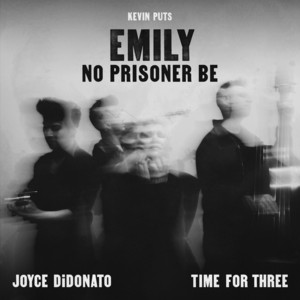 | Emily — No Prisoner Be: No. 18, So set its Sun in Thee | Kevin Puts, Time For Three, Joyce DiDonato | C Minor | 1 | 5A | 106 BPM | |
 | Omphale, Acte I: Air. Calme heureux, agréable paix... | Jean-Baptiste Cardonne, Gyorgy Vashegyi, Orfeo Orchestra, Reinoud Van Mechelen | C Minor | 1 | 5A | 106 BPM | |
 | Ouverture-Suite In D Major TWV 55:D6: II. La Trompette | Georg Philipp Telemann, Jaap Ter Linden, Musica Antiqua Köln, Reinhard Goebel | D♭ Major | 3 | 3B | 128 BPM | |
 | Purcell: Dido and Aeneas, Z. 626: Overture | Henry Purcell, Jupiter, Thomas Dunford | B Minor | 1 | 10A | 68 BPM | |
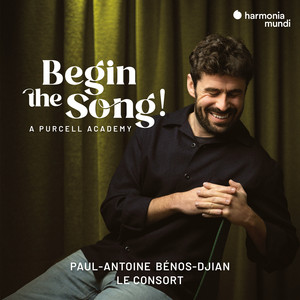 | Now Does the Glorious Day Appear, Z. 332 "Ode for Queen Mary's Birthday": No. 7, By Beauteous Softness | Henry Purcell, Paul-Antoine Benos-Djian, Le Consort | D♭ Minor | 0 | 12A | 71 BPM | |
 | Dardanus Suite, RTC 35A, Act I: Rigaudons I & II | Jean-Philippe Rameau, Indianapolis Baroque Orchestra, Barthold Kuijken | F♯ Major | 1 | 2B | 93 BPM | |
 | Henry Purcell: Two in one upon a Ground | Charivari Agréable | A♭ Minor | 1 | 1A | 77 BPM |
- ISRC
- DEE472400499
- Label
- L-M Records/RCA Records