- BPM
- 173
- Key
- E Major
- Camelot
- 12B
Gawain, Act I (1994 Revised Version): Tableau IVb. Autumn. Night. Here Is Your Second Arm [Live] by Harrison Birtwistle, John Marsden, Alan Ewing, Orchestra Of The Royal Opera House, Kevin Smith, Richard Greager, Penelope Walmsley-Clark, Omar Ebrahim, Marie Angel, Royal Opera Chorus, Elgar Howarth Song Details
"Gawain, Act I (1994 Revised Version): Tableau IVb. Autumn. Night. Here Is Your Second Arm [Live]" by Harrison Birtwistle, John Marsden, Alan Ewing, Orchestra Of The Royal Opera House, Kevin Smith, Richard Greager, Penelope Walmsley-Clark, Omar Ebrahim, Marie Angel, Royal Opera Chorus, Elgar Howarth had its release date on August 5, 2014. With This song being less than two minutes long, at 1:11, we are fairly confident that this song is not explicit and is safe for all ages. Based on the duration of this song, this song duration is much smaller than the average song duration. The track order of this song in Harrison Birtwistle, Orchestra Of The Royal Opera House, Elgar Howarth's "Harrison Birtwistle: Gawain (1994 Revised Version)" album is number 28 out of 65. On top of that, United Kingdom appears to be the country where this track was created. The popularity of Gawain, Act I (1994 Revised Version): Tableau IVb. Autumn. Night. Here Is Your Second Arm [Live] is currently unknown right now. In our opinion, the overall tone is not very danceable and projects negative sounds, such as being sad, depressed, or angry.
BPM and Tempo
We consider the tempo marking of Gawain, Act I (1994 Revised Version): Tableau IVb. Autumn. Night. Here Is Your Second Arm [Live] by Harrison Birtwistle, John Marsden, Alan Ewing, Orchestra Of The Royal Opera House, Kevin Smith, Richard Greager, Penelope Walmsley-Clark, Omar Ebrahim, Marie Angel, Royal Opera Chorus, Elgar Howarth to be Vivace (lively and fast) because the track has a tempo of 173 BPM, a half-time of 86BPM, and a double-time of 346 BPM. Based on that, the speed of the song's tempo is fast. The time signature for this track is 5/4.
Music Key
This song is in the music key of E Major. This also means that this song has a camelot key of 12B. So, the perfect camelot match for 12B would be either 12B or 1A. While, 1B can give you a low energy boost. For moderate energy boost, you would use 9B and a high energy boost can either be 2B or 7B. Though, if you want a low energy drop, you should looking for songs with either a camelot key of 12A or 11B will give you a low energy drop, 3B would be a moderate one, and 10B or 5B would be a high energy drop. Lastly, 9A allows you to change the mood.
Want to find the BPM and music key for other songs? Check out our BPM and Key Finder page!
- Popularity
- 0%
- Loudness
- -18.418 dB
- Acousticness
- 98%
- Danceability
- 20%
- Energy
- 49%
- Instrumentalness
- 0%
- Liveness
- 64%
- Loudness
- 69%
- Speechiness
- 9%
- Valence
- 4%
Recommendations
| Track | Artist | Key | Energy | Camelot | BPM | ||
|---|---|---|---|---|---|---|---|
 | Tríptico R(ojo) | Renato Pedro Di Prinzio, Renato Di Prinzio | E♭ Major | 2 | 5B | 134 BPM | |
 | Symphony No. 2 "The Age of Anxiety" / Part 1 / I. The Prologue: Lento moderato | Leonard Bernstein, Krystian Zimerman, Berliner Philharmoniker, Sir Simon Rattle | C Major | 0 | 8B | 74 BPM | |
 | Amiable Conversation | Henry Cowell | G Major | 2 | 9B | 104 BPM | |
 | Lutoslawski : Concerto for Orchestra : II Cappricio notturno e Arioso (Vivace) | Witold Lutosławski, Daniel Barenboim, Chicago Symphony Orchestra | B♭ Minor | 1 | 3A | 158 BPM | |
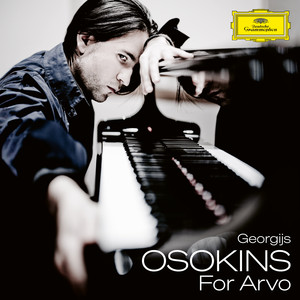 | Partita, Op. 2: III. Larghetto | Georgijs Osokins, Arvo Pärt | F♯ Major | 2 | 2B | 112 BPM | |
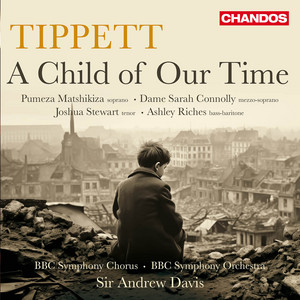 | A Child of our Time, Part I: A Spiritual. Steal away (Soprano, Tenor, Chorus) | Michael Tippett, Pumeza Matshikiza, Joshua Stewart, BBC Symphony Chorus, BBC Symphony Orchestra, Andrew Davis | G Major | 1 | 9B | 81 BPM | |
 | Smith: Desert Ecology: V. Cactus-Yucca Scrub | Gabriella Smith, Delirium Musicum, Étienne Gara | B♭ Minor | 1 | 3A | 89 BPM | |
 | String Quartet No. 3 in D Major, Op. 34: III. Sostenuto. Like a Folk Tune | Erich Wolfgang Korngold, Calidore String Quartet | C Major | 2 | 8B | 165 BPM | |
 | Leaps of Faith | Vanessa Lann, Marcel Worms | C Major | 2 | 8B | 109 BPM | |
 | Dutilleux: Au gré des ondes: I. Prélude en berceuse | Henri Dutilleux, Anne Queffélec | C Major | 0 | 8B | 75 BPM | |
 | Symphony No. 3: I. Introduzione (Andante con moto) — Allegro con moto | Allan Pettersson, Christian Lindberg, Norrköping Symphony Orchestra | C Major | 2 | 8B | 165 BPM | |
| Symphony No. 3: III. Allegro comodo — Allegro deciso | Allan Pettersson, Christian Lindberg, Norrköping Symphony Orchestra | C Major | 2 | 8B | 165 BPM | |
 | Játékok / 8.: Tanulmány a "Hölderlin"-hez | György Kurtág, Márta Kurtág | F♯ Minor | 0 | 11A | 88 BPM | |
 | Job, Scene I: Introduction - Pastoral Dance - Satan's Appeal to God - Saraband of the Sons of God | Ralph Vaughan Williams, English Northern Philharmonia, David Lloyd-Jones | G Minor | 0 | 6A | 129 BPM | |
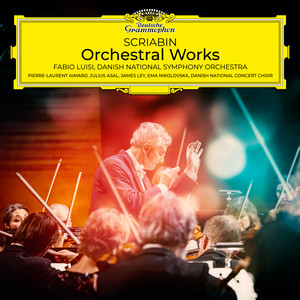 | Rêverie, Op. 24 | Alexander Scriabin, Danish National Symphony Orchestra, Fabio Luisi | B♭ Minor | 2 | 3A | 86 BPM | |
 | String Quartet No. 14 in F-Sharp Major, Op. 142: I. Allegretto | Dmitri Shostakovich, Cuarteto Casals | C Major | 2 | 8B | 165 BPM | |
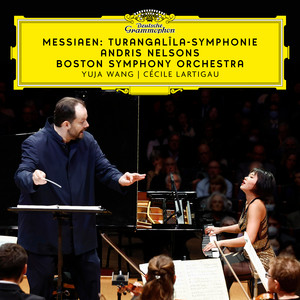 | Turangalîla-Symphonie: VIII. Développement de l'amour | Olivier Messiaen, Yuja Wang, Cécile Lartigau, Boston Symphony Orchestra, Andris Nelsons | D♭ Major | 5 | 3B | 87 BPM | |
 | Romanze F Minor: Romanze F Minor | Sergei Rachmaninoff, Reiner Ginzel, Gitti Pirner | F Minor | 0 | 4A | 166 BPM | |
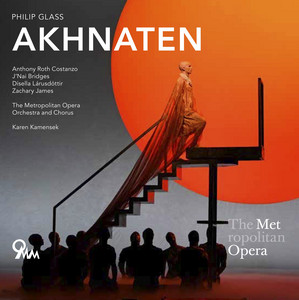 | Akhnaten, Act III Scene 1: The Family | Philip Glass, Metropolitan Opera Orchestra and Chorus, Karen Kamensek, Anthony Roth Costanzo, J'nai Bridges, Lindsay Ohse, Karen Chia-Ling Ho, Chrystal E. Williams, Annie Rosen, Olivia Vote, Suzanne Hendrix, Metropolitan Opera Orchestra | C Major | 1 | 8B | 79 BPM | |
 | Prelude and Fugue: I. Prelude | Alfred Schnittke, Nicolas Stavy | F♯ Minor | 0 | 11A | 117 BPM | |
 | Violin and piano Sonata No. 1, Op. 7: I. Melancholy - Andante Mysterioso | Fazıl Say, Julija Hartig, Reineke Broekhans | C Major | 2 | 8B | 165 BPM | |
 | Histoire du soldat Suite (the Soldier's Tale Suite): VIII. Petit / Grand Chorale | Igor Stravinsky, Rolf Schulte, William Blount, Christopher Gekker, Michael Powell, Frank Morelli, John Feeney, Gordon Gottlieb, Robert Craft | B Minor | 1 | 10A | 61 BPM | |
 | Takemitsu: Romance | Toru Takemitsu, Kenji Miura | B♭ Major | 1 | 6B | 102 BPM | |
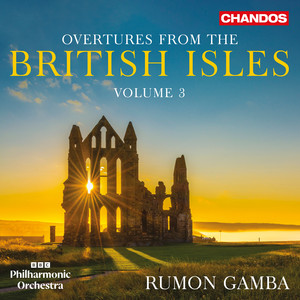 | Resolution, Op. 25 | Alan Bush, BBC Philharmonic, Rumon Gamba | C Major | 2 | 8B | 165 BPM | |
 | 7 Haikus: IV. Con moto assai. Giocoso | Benet Casablancas, Ensemble New Babylon, Lorenzo Ferrándiz Carillo | D♭ Major | 0 | 3B | 75 BPM |
- ISRC
- GBCML1420028
- Label
- L-M Records/RCA Records