- BPM
- 71
- Key
- B Minor
- Camelot
- 10A
Fantasia On Greensleeves by Ralph Vaughan Williams, English String Orchestra, William Boughton Song Details
"Fantasia On Greensleeves" by Ralph Vaughan Williams, English String Orchestra, William Boughton had its release date on January 1, 1994. With this song being around four minutes long, at 4:18, the duration of this song is pretty average compared to other songs. This track is safe for children and doesn't appear to contain any foul language, since the "Explicit" tag was not present in this track. This song is part of Vaughan Williams: Fantasia on a Theme by Thomas Tallis & Orchestral Favourites, Vol. III by Ralph Vaughan Williams, English String Orchestra, William Boughton. The song's track number on the album is #3 out of 8 tracks. Based on our data, United Kingdom was the country where this track was produced or recorded. Fantasia On Greensleeves is not that popular right now. In our opinion, the overall tone is not very danceable and projects negative sounds, such as being sad, depressed, or angry.
BPM and Tempo
Since Fantasia On Greensleeves by Ralph Vaughan Williams, English String Orchestra, William Boughton has a tempo of 71 beats per a minute, the tempo markings of this song would be Adagio (slowly with great expression). With Fantasia On Greensleeves being at 71 BPM, the half-time would be 36 BPM with a double-time of 142 BPM.In addition, we consider the tempo speed to be pretty slow for this song. The time signature for this track is 4/4.
Music Key
This song has a musical key of B Minor. Or for those who are familiar with the camelot wheel, this song has a camelot key of 10A. So, the perfect camelot match for 10A would be either 10A or 9B. While, a low energy boost can consist of either 10B or 11A. For moderate energy boost, you would use 7A and a high energy boost can either be 12A or 5A. However, if you are looking for a low energy drop, finding a song with a camelot key of 9A would be a great choice. Where 1A would give you a moderate drop, and 8A or 3A would be a high energy drop. Lastly, 1B allows you to change the mood.
Want to find the BPM and music key for other songs? Check out our BPM and Key Finder page!
- Popularity
- 2%
- Loudness
- -23.093 dB
- Acousticness
- 81%
- Danceability
- 7%
- Energy
- 4%
- Instrumentalness
- 74%
- Liveness
- 18%
- Loudness
- 62%
- Speechiness
- 4%
- Valence
- 11%
Recommendations
| Track | Artist | Key | Energy | Camelot | BPM | ||
|---|---|---|---|---|---|---|---|
 | St. Paul's Suite, Op. 29 No. 2, H 118: 2. Ostinato: Presto | Gustav Holst, Saint Paul Chamber Orchestra, Christopher Hogwood | D Major | 1 | 10B | 65 BPM | |
 | Suite for Viola & Small Orchestra: I. Prelude | Ralph Vaughan Williams, Helen Callus, New Zealand Symphony Orchestra, Marc Decio Taddei | B Major | 0 | 1B | 119 BPM | |
 | Scottish Fantasy for Violin and Orchestra, Op. 46: I. Introduction: Grave, Adagio cantabile | Max Bruch, Joshua Bell, Academy of St. Martin in the Fields | E♭ Major | 2 | 5B | 60 BPM | |
 | String Quartet No. 1 in D Major, Op. 11, TH 111: II. Andante cantabile | Pyotr Ilyich Tchaikovsky, Heath Quartet | A Minor | 1 | 8A | 82 BPM | |
 | Adagio from Violin Sonata in G Minor, Op. 5 No. 5 (Arr. Leopold Stokowski) | Arcangelo Corelli, Matthias Bamert, BBC Philharmonic | G Minor | 0 | 6A | 175 BPM | |
 | Symphony No. 1 in G Minor: II. Andante commodamente | Vasily Kalinnikov, Ukraine National Symphony Orchestra, Theodore Kuchar | E♭ Major | 0 | 5B | 75 BPM | |
 | Dolly Suite, Op. 56: I. Berceuse | Gabriel Fauré, Katia Labèque, Marielle Labèque | E Major | 0 | 12B | 63 BPM | |
 | Five English Nursery Tunes: IV. Curly Locks | Hubert Clifford, Martyn Brabbins, BBC Philharmonic | B♭ Major | 0 | 6B | 143 BPM | |
 | Vaughan Williams: The Lark Ascending (Excerpt) | Ralph Vaughan Williams, Sir Adrian Boult, Hugh Bean, New Philharmonia Orchestra | B Minor | 1 | 10A | 132 BPM | |
 | Mors et Vita: Judex | Charles Gounod, Richard Hickox Orchestra, Richard Hickox | C Minor | 1 | 5A | 95 BPM | |
 | Ma mère l'oye, M. 60 (Version for Orchestra): I. Pavane de la belle au bois dormant | Maurice Ravel, The Prague Festival Orchestra, Pavel Urbanek | C Major | 0 | 8B | 72 BPM | |
 | Violin Concerto No. 1 in G Minor, Op. 26: II. Adagio | Max Bruch, Arabella Steinbacher, Orquestra Gulbenkian, Lawrence Foster | E♭ Major | 0 | 5B | 100 BPM | |
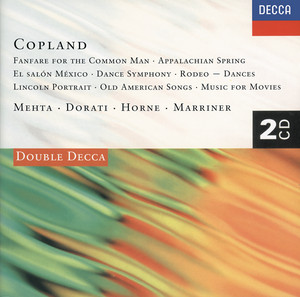 | Quiet City | Aaron Copland, Celia Nicklin, Michael Laird, Academy of St. Martin in the Fields, Sir Neville Marriner | F Major | 1 | 7B | 70 BPM | |
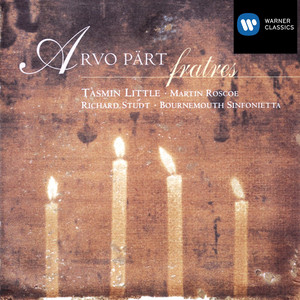 | Pärt: Spiegel im Spiegel | Arvo Pärt, Tasmin Little, Martin Roscoe | F Major | 0 | 7B | 80 BPM | |
 | String Quartet No. 12 in F Major, Op. 96, B. 179 "American": II. Lento | Antonín Dvořák, Pavel Haas Quartet | D Minor | 0 | 7A | 87 BPM | |
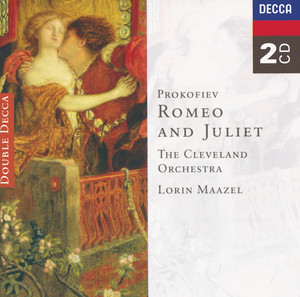 | Romeo and Juliet, Op. 64: Introduction | Sergei Prokofiev, The Cleveland Orchestra, Lorin Maazel | E Major | 1 | 12B | 112 BPM | |
 | Prince Igor: Polovtsian Dances (Version for Chorus) | Alexander Borodin, Kiev Chamber Choir, Ukraine National Radio Symphony Orchestra, Theodore Kuchar | A Major | 2 | 11B | 110 BPM | |
 | Petite suite de concert, Op. 77: II. Demande et reponse | Samuel Coleridge-Taylor, Chicago Sinfonietta, Paul Freeman | G Major | 0 | 9B | 90 BPM | |
 | Adoration | Florence Beatrice Price, Randall Goosby, Zhu Wang | D Major | 1 | 10B | 75 BPM | |
 | Film music for Henry V: 2 Pieces for Strings: II. Passacaglia: Death of Falstaff | William Walton, Bournemouth Sinfonietta, Richard Studt | E Minor | 0 | 9A | 79 BPM | |
 | Mass in G Minor: Agnus Dei | Ralph Vaughan Williams, Choir of St. John's College, Cambridge, George Balfour, Jack Hawkins, Gopal Kambo, William Ashford, Alfred Harrison, Andrew Nethsingha | D Major | 0 | 10B | 76 BPM | |
 | Suite No. 3, P. 172: I. Italiana: Andantino | Ottorino Respighi, RTÉ National Symphony Orchestra | B♭ Major | 1 | 6B | 94 BPM | |
 | Prelude for Cello & Piano | Ernest John Moeran, Gerald Peregrine, Antony Ingham | B Major | 0 | 1B | 111 BPM | |
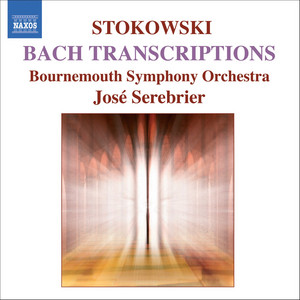 | Messiah, HWV 56, Pt. I: Pastoral Symphony, "Pifa" (Arr. L. Stokowski) | George Frideric Handel, Bournemouth Symphony Orchestra, José Serebrier | C Major | 0 | 8B | 84 BPM | |
 | Florida Suite: II. By the River | Frederick Delius, English Northern Philharmonia, David Lloyd-Jones | G Major | 0 | 9B | 68 BPM |
- ISRC
- GBAJU8400011
- Label
- L-M Records/RCA Records