- BPM
- 92
- Key
- A Major
- Camelot
- 11B
Mignon: Me voici! Tu m'as rachetée by Ambroise Thomas, Rise Stevens, James Melton, Ezio Pinza, Wilfrid Pelletier Song Details
Ambroise Thomas, Rise Stevens, James Melton, Ezio Pinza, Wilfrid Pelletier's 'Mignon: Me voici! Tu m'as rachetée' had a release date set for October 28, 2011. With this song being around four minutes long, at 3:41, the duration of this song is pretty average compared to other songs. This track is safe for children and doesn't appear to contain any foul language, since the "Explicit" tag was not present in this track. There are a total of 43 in the song's album "Thomas: Mignon (Metropolitan Opera)". In this album, this song's track order is #13. Furthermore, we believe that the track originated from United States. In terms of popularity, Mignon: Me voici! Tu m'as rachetée is currently unknown. In our opinion, the overall tone is not very danceable and projects negative sounds, such as being sad, depressed, or angry.
BPM and Tempo
With Mignon: Me voici! Tu m'as rachetée by Ambroise Thomas, Rise Stevens, James Melton, Ezio Pinza, Wilfrid Pelletier having a BPM of 92 with a half-time of 46 BPM and a double-time of 184 BPM, we would consider this track to have a Andante (at a walking pace) tempo marking. Because of this, we believe that the song has an overall slow tempo. Looking at the BPM of this song, this song might go great with yoga or pilates. The time signature for this track is 5/4.
Music Key
A Major is the music key of this track. Or for those who are familiar with the camelot wheel, this song has a camelot key of 11B. So, the perfect camelot match for 11B would be either 11B or 12A. While, 12B can give you a low energy boost. For moderate energy boost, you would use 8B and a high energy boost can either be 1B or 6B. Though, if you want a low energy drop, you should looking for songs with either a camelot key of 11A or 10B will give you a low energy drop, 2B would be a moderate one, and 9B or 4B would be a high energy drop. Lastly, 8A allows you to change the mood.
Want to find the BPM and music key for other songs? Check out our BPM and Key Finder page!
- Popularity
- 0%
- Loudness
- -14.445 dB
- Acousticness
- 97%
- Danceability
- 39%
- Energy
- 37%
- Instrumentalness
- 0%
- Liveness
- 95%
- Loudness
- 76%
- Speechiness
- 9%
- Valence
- 32%
Recommendations
| Track | Artist | Key | Energy | Camelot | BPM | ||
|---|---|---|---|---|---|---|---|
 | Bizet: Carmen, WD 31, Act 4: "À deux cuartos ! À deux cuartos !" (Chœur, Zuñiga, Une marchande, Un bohémien) | Georges Bizet, Michel Plasson, Anne Gotkovsky, Didier Chevalier, Les Éléments, Nicolas Cavallier, Orchestre National Du Capitole De Toulouse | E Major | 0 | 12B | 79 BPM | |
 | Las Hijas del Zebedeo: Carceleras | Ruperto Chapí, Elina Garanca, Staatskapelle Dresden, Fabio Luisi | D Minor | 1 | 7A | 82 BPM | |
 | La bohème, Act II: Chi l'ha richiesto? – Caro! – Fuori il danaro! | Giacomo Puccini, Nicolai Ghiaurov, Gianni Maffeo, Luciano Pavarotti, Rolando Panerai, Elizabeth Harwood, Schöneberger Sängerknaben, Chor der Deutschen Oper Berlin, Berliner Philharmoniker, Herbert von Karajan | B♭ Major | 6 | 6B | 119 BPM | |
 | The Barber of Seville, Act I Scene 2: Ma signor (Bartolo, Soldiers, Townspeople, Rosina, Basilio, Berta, Count, Figaro) | Gioachino Rossini, James Levine, London Symphony Orchestra | C Major | 5 | 8B | 120 BPM | |
 | Principessa divina! | Giacomo Puccini, Masako Deguci, Giovanna Casolla, Lando Bartolini, Gorka Gerrikabeitia, Francisco Heredia, Javier Mas, Vicenc Esteve, Armando Ariostini, Jose Garcia-Quijada, Felipe Bou, Bilbao Choral Society, Orquesta Filarmònica de Màlaga, Ali Rahbari | A♭ Minor | 1 | 1A | 175 BPM | |
 | Thomas: Hamlet, Act 1: "O toi qui fus la femme de mon frère" (Le Roi, Chœur, La Reine) | Ambroise Thomas, Antonio de Almeida, Ambrosian Opera Chorus, Denyce Graves, Samuel Ramey, London Philharmonic Orchestra | E Major | 3 | 12B | 61 BPM | |
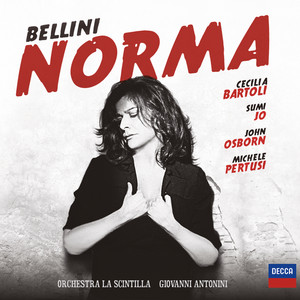 | Norma / Act 2 Scene 1: "Mira, O Norma" | Vincenzo Bellini, Sumi Jo, Cecilia Bartoli, Orchestra La Scintilla, Giovanni Antonini | F Major | 2 | 7B | 74 BPM | |
 | Mignon: Overture | Ambroise Thomas, Royal Scottish National Orchestra, Lance Friedel | D Major | 1 | 10B | 141 BPM | |
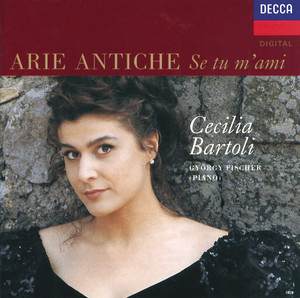 | Chi vuol la zingarella (from Zingari in Fiera) | Giovanni Paisiello, Cecilia Bartoli, György Fischer | G Major | 1 | 9B | 80 BPM | |
 | Don Giovanni, ossia Il dissoluto punito, K.527 / Act 2: "Don Giovanni, a cenar teco m'invitasti" | Wolfgang Amadeus Mozart, Vitalij Kowaljow, Ildebrando D'Arcangelo, Luca Pisaroni, Mahler Chamber Orchestra, Yannick Nézet-Séguin, Vocalensemble Rastatt | C Minor | 2 | 5A | 99 BPM | |
 | Acte III - Tableau IV : Salve Regina | Francis Poulenc, Jean-Pierre Marty | G Major | 2 | 9B | 69 BPM | |
 | Adriana Lecouvreur: Poveri fiori (Act IV) | Francesco Cilea, Kiri Te Kanawa, Myung-Whun Chung, London Symphony Orchestra | D Minor | 0 | 7A | 87 BPM | |
 | Psyché, Act II: Morceau d’ensemble. Seigneur Gorgias ! | Ambroise Thomas, Tassis Christoyannis, Philippe Estèphe, Artavazd Sargsyan, Anna Dowsley, Mercedes Arcuri, Hélène Guilmette, Antoinette Dennefeld, Hungarian National Choir, Hungarian National Philharmonic Orchestra, Gyorgy Vashegyi | B♭ Major | 2 | 6B | 47 BPM | |
 | Così fan tutte, K. 588 / Act I: "Soave sia il vento" | Wolfgang Amadeus Mozart, Miah Persson, Angela Brower, Alessandro Corbelli, Chamber Orchestra of Europe, Yannick Nézet-Séguin | G Minor | 1 | 6A | 88 BPM | |
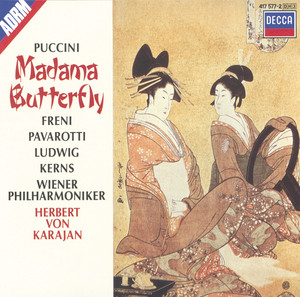 | Madama Butterfly / Act 1: L'Imperial Commissario | Giacomo Puccini, Luciano Pavarotti, Michel Sénéchal, Erna Maria Muhlberger, Mirella Freni, Eva Maria Hurdes, Martha Heigl, Wolfgang Schneider, Robert Kerns, Vienna State Opera Chorus, Wiener Philharmoniker, Herbert von Karajan | G Minor | 2 | 6A | 78 BPM | |
 | Les contes d'Hoffmann: Les oiseaux dans la charmille | Jacques Offenbach, Susanne Elmark, Sønderjyllands Symfoniorkester, Robert Reimer | F♯ Minor | 4 | 11A | 86 BPM | |
 | Puccini: La rondine, Act 1: "Chi il bel sogno di Doretta" (Magda, Yvette, Bianca, Prunier, Lisette, Suzy, Rambaldo, Périchaud, Gobin, Crébillon) | Giacomo Puccini, Angela Gheorghiu, Antonio Pappano, London Symphony Orchestra | B♭ Minor | 8 | 3A | 126 BPM | |
 | Les nuits d'été, H. 81b: Le spectre de la rose, H. 83b | Hector Berlioz, Anne Sofie von Otter, Berliner Philharmoniker, James Levine | B Major | 1 | 1B | 73 BPM | |
 | Air des clochettes (Extrait de Lakmé) | Léo Delibes, Orchestre Paul Kuentz, Elisabeth Vidal | G Major | 1 | 9B | 129 BPM | |
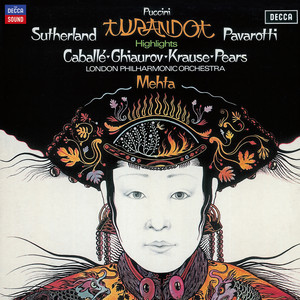 | Turandot / Act 2: "Olà, Pang! Olà, Pong!" | Giacomo Puccini, Tom Krause, Pier Francesco Poli, Piero de Palma, London Philharmonic Orchestra, Zubin Mehta | G Minor | 3 | 6A | 109 BPM | |
 | Norma / Act 2: Mira, o Norma | Vincenzo Bellini, Dame Joan Sutherland, Marilyn Horne, London Symphony Orchestra, Richard Bonynge | F Major | 1 | 7B | 170 BPM | |
 | Handel: Il trionfo del Tempo e del Disinganno, HWV 46a, Pt. 1: Aria. "Un pensiero nemico di pace" (Bellezza) | George Frideric Handel, Natalie Dessay, Le Concert d'Astrée, Emmanuelle Haïm | F♯ Minor | 3 | 11A | 128 BPM | |
 | Carmen, Act II: Chanson bohème. Les tringles des sistres tintaient | Georges Bizet, Christine Barbaux, Agnes Baltsa, Jane Berbié, Berliner Philharmoniker, Herbert von Karajan | C Major | 1 | 8B | 106 BPM | |
 | Tosca, S. 69, Tosca, Act I: Tre sbirri, una carrozza, "Te Deum" | Giacomo Puccini, Dmitri Hvorostovsky, Russia Spiritual Revival Choir, Philharmonia of Russia, Constantine Orbelian | C Minor | 5 | 5A | 73 BPM | |
| Bizet: Carmen, WD 31, Act 1: "C'est bien là, n'est-ce pas ?" (Zuñiga, Don José) | Georges Bizet, Michel Plasson, Nicolas Cavallier, Roberto Alagna, Orchestre National Du Capitole De Toulouse | G Major | 1 | 9B | 84 BPM |
- ISRC
- USY3P1102108
- Label
- L-M Records/RCA Records