- BPM
- 137
- Key
- G Minor
- Camelot
- 6A
Plaisir D'Amour by Jean-Paul-Égide Martini, André Rieu, Johann Strauss Orchestra Song Details
"Plaisir D'Amour" by Jean-Paul-Égide Martini, André Rieu, Johann Strauss Orchestra had its release date on January 1, 2014. With this song being around four minutes long, at 3:54, the duration of this song is pretty average compared to other songs. This track is safe for children and doesn't appear to contain any foul language, since the "Explicit" tag was not present in this track. The track order of this song in André Rieu, Johann Strauss Orchestra's "Love Letters" album is number 10 out of 15. On top of that, Germany appears to be the country where this track was created. Based on our statistics, Plaisir D'Amour's popularity is not that popular right now. In our opinion, the overall tone is not very danceable and projects negative sounds, such as being sad, depressed, or angry.
BPM and Tempo
We consider the tempo marking of Plaisir D'Amour by Jean-Paul-Égide Martini, André Rieu, Johann Strauss Orchestra to be Allegro (fast, quick, and bright) because the track has a tempo of 137 BPM, a half-time of 68BPM, and a double-time of 274 BPM. Based on that, the speed of the song's tempo is fast. Activities such as, walking, can go well with this song. The time signature for this track is 3/4.
Music Key
This song is in the music key of G Minor. Because this track belongs in the G Minor key, the camelot key is 6A. So, the perfect camelot match for 6A would be either 6A or 5B. While, a low energy boost can consist of either 6B or 7A. For moderate energy boost, you would use 3A and a high energy boost can either be 8A or 1A. However, if you are looking for a low energy drop, finding a song with a camelot key of 5A would be a great choice. Where 9A would give you a moderate drop, and 4A or 11A would be a high energy drop. Lastly, 9B allows you to change the mood.
Want to find the BPM and music key for other songs? Check out our BPM and Key Finder page!
- Popularity
- 2%
- Loudness
- -12.444 dB
- Acousticness
- 84%
- Danceability
- 18%
- Energy
- 21%
- Instrumentalness
- 76%
- Liveness
- 17%
- Loudness
- 79%
- Speechiness
- 4%
- Valence
- 8%
Recommendations
| Track | Artist | Key | Energy | Camelot | BPM | ||
|---|---|---|---|---|---|---|---|
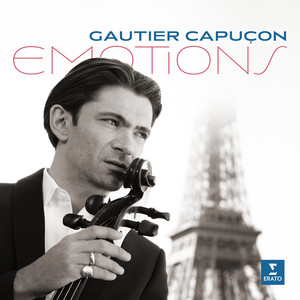 | Dvořák: Rusalka, Op. 114, B. 203, Act 1: Song to the Moon (Instrumental Version) | Antonín Dvořák, Gautier Capuçon, Adrien Perruchon, Orchestre de chambre de Paris | F♯ Major | 1 | 2B | 89 BPM | |
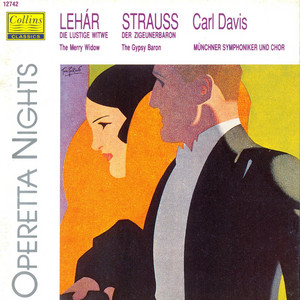 | The Merry Widow: V. Vilja | Franz Lehár, Carl Davis, Munich Symphony Orchestra | B♭ Major | 1 | 6B | 123 BPM | |
 | Iphigénie en Tauride, Wq. 46 (Excerpts): Les Dieux longtemps en courroux | Christoph Willibald Gluck, Munich Radio Orchestra, Lamberto Gardelli, Bavarian Radio Chorus | C Major | 2 | 8B | 86 BPM | |
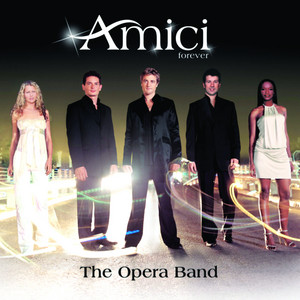 | Soave sia il vento | Wolfgang Amadeus Mozart, Amici forever, Nick Ingman | E Major | 3 | 12B | 116 BPM | |
 | Dorfschwalben aus Österreich - Walzer, Op.164 | Josef Strauss, Willi Boskovsky, Wiener Johann Strauss Orchester, Johann Strauss II | E♭ Major | 1 | 5B | 176 BPM | |
 | Gloria in excelsis Deo | Antonio Vivaldi, Oxford Schola Cantorum, Northern Chamber Orchestra, Nicholas Ward | B Major | 2 | 1B | 106 BPM | |
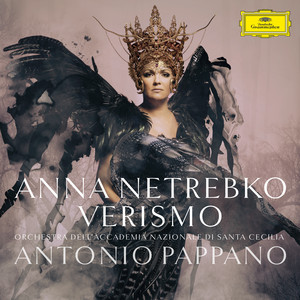 | Madama Butterfly / Act II: "Un bel dì vedremo" | Giacomo Puccini, Anna Netrebko, Orchestra dell'Accademia Nazionale di Santa Cecilia, Antonio Pappano | F♯ Major | 1 | 2B | 86 BPM | |
 | The Gadfly Suite, Op. 97a: Romance | Dmitri Shostakovich, Nemanja Radulović, Deutsches Symphonie-Orchester Berlin, Michail Jurowski | D♭ Major | 1 | 3B | 135 BPM | |
 | Bist du bei mir (Prev. Attrib. Bach as BWV 508) | Gottfried Heinrich Stölzel, Aafje Heynis, Pierre Palla | B Major | 3 | 1B | 73 BPM | |
 | The Tales of Hoffmann: Barcarolle | Jacques Offenbach, Harry Rabinowitz | F Minor | 1 | 4A | 116 BPM | |
 | Elisabethan Serenade | London Festival Symphony Orchestra | F Major | 2 | 7B | 152 BPM | |
 | Exsultate, jubilate, K.165: 1. Exsultate, jubilate | Wolfgang Amadeus Mozart, Julia Lezhneva, Il Giardino Armonico, Giovanni Antonini | G Major | 1 | 9B | 105 BPM | |
 | Plaisir d'amour | Jean-Paul-Égide Martini, Beverly Sills, Andre Kostelanetz, Columbia Symphony Orchestra | F Major | 1 | 7B | 83 BPM | |
 | 6 Miniatures (Arr. T. Batiashvili for Violin & Orchestra): No. 2, Suliko | Sulkhan Tsintsadze, Lisa Batiashvili, Georgisches Kammerorchester | A Major | 0 | 11B | 131 BPM | |
 | Il Barbiere Di Siviglia: Overture | Gioachino Rossini, Donato Renzetti, Orchestra Filarmonica Gioachino Rossini | G Major | 2 | 9B | 136 BPM | |
 | Les Quatres Saisons: Concerto En Fa Mineur, RV 297 "L'hiver": II. Largo | Academy of St. Martin in the Fields, Iona Brown | B♭ Major | 2 | 6B | 130 BPM | |
| Peer Gynt Suite No. 1, Op. 46: I. Le Matin | Academy of St. Martin in the Fields, Sir Neville Marriner | E Major | 1 | 12B | 67 BPM | |
 | La belle Hélène / Act 1: "Au Mont Ida, trois déesses" | Jacques Offenbach, Juan Diego Flórez, Orchestra del Teatro Comunale di Bologna, Roberto Abbado | F Major | 2 | 7B | 88 BPM | |
 | String Quartet in F Major, Op. 3, No. 5, Hob. III:17, "Serenade": II. Andante cantabile (arr. L. Stokowski for orchestra) [Attrib. To Hoffstetter] | Joseph Haydn, Bournemouth Symphony Orchestra, José Serebrier | E Minor | 2 | 9A | 66 BPM | |
 | Die Csárdásfürstin · Operette in 3 Akten (1988 Digital Remaster), Erster Akt: Vorspiel (Orchester) | Emmerich Kálmán, Anneliese Rothenberger, Willy Mattes, Symphonieorchester Graunke | C Minor | 3 | 5A | 74 BPM | |
 | Mozart: Ave verum corpus, K. 618 | Wolfgang Amadeus Mozart, Kölner Kammerchor/Collegium Cartusianum/Peter Neumann, Christoph Prégardien, Diana Montague, Franz-Josef Selig, Kölner Kammerchor, Michael Chance, Peter Neumann, Collegium Cartusianum | D Major | 1 | 10B | 78 BPM | |
 | The Phantom Melody | Albert Ketèlbey, Slovak Radio Symphony Orchestra, Adrian Leaper | E♭ Major | 0 | 5B | 91 BPM | |
 | Norma / Act I: "Casta Diva" (Arr. by Mathieu Herzog for Cello and Orchestra) | Vincenzo Bellini, Camille Thomas, Brussels Philharmonic, Mathieu Herzog | F Major | 1 | 7B | 91 BPM | |
 | Panis Angelicus: Panis Angelicus | César Franck, Cecilia Bartoli, Cinzia Maurizio, Luigi Piovano, Daniele Rossi | G Major | 1 | 9B | 171 BPM | |
 | Tannhäuser: Beglückt darf nun dich, o Heimat, ich schauen | Chor der Deutschen Oper Berlin, Orchester der Deutschen Oper Berlin, Rafael Frühbeck de Burgos | E♭ Major | 2 | 5B | 83 BPM |
- ISRC
- DEF069806290
- Label
- L-M Records/RCA Records