- BPM
- 94
- Key
- B♭ Major
- Camelot
- 6B
Laudate Pueri by Felix Mendelssohn, Haderslev Domkirkes Pigekor, Thomas Berg-Juul, Henrik Skærbæk Jespersen Song Details
"Laudate Pueri" by Felix Mendelssohn, Haderslev Domkirkes Pigekor, Thomas Berg-Juul, Henrik Skærbæk Jespersen had its release date on 2015. With this song being around four minutes long, at 4:10, the duration of this song is pretty average compared to other songs. This track is safe for children and doesn't appear to contain any foul language, since the "Explicit" tag was not present in this track. The track order of this song in Haderslev Domkirkes Pigekor, Thomas Berg-Juul, Den Danske Salmeduo's "Gloria" album is number 5 out of 14. On top of that, Sweden appears to be the country where this track was created. In terms of popularity, Laudate Pueri is currently not that popular. In our opinion, the overall tone is not very danceable and projects negative sounds, such as being sad, depressed, or angry.
BPM and Tempo
We consider the tempo marking of Laudate Pueri by Felix Mendelssohn, Haderslev Domkirkes Pigekor, Thomas Berg-Juul, Henrik Skærbæk Jespersen to be Andante (at a walking pace) because the track has a tempo of 94 BPM, a half-time of 47BPM, and a double-time of 188 BPM. Based on that, the speed of the song's tempo is slow. Activities such as, yoga or pilates, can go well with this song. The time signature for this track is 4/4.
Music Key
B♭ Major is the music key of this track. This also means that this song has a camelot key of 6B. So, the perfect camelot match for 6B would be either 6B or 7A. While, 7B can give you a low energy boost. For moderate energy boost, you would use 3B and a high energy boost can either be 8B or 1B. Though, if you want a low energy drop, you should looking for songs with either a camelot key of 6A or 5B will give you a low energy drop, 9B would be a moderate one, and 4B or 11B would be a high energy drop. Lastly, 3A allows you to change the mood.
Want to find the BPM and music key for other songs? Check out our BPM and Key Finder page!
- Popularity
- 11%
- Loudness
- -17.285 dB
- Acousticness
- 96%
- Danceability
- 37%
- Energy
- 22%
- Instrumentalness
- 98%
- Liveness
- 9%
- Loudness
- 71%
- Speechiness
- 4%
- Valence
- 7%
Recommendations
| Track | Artist | Key | Energy | Camelot | BPM | ||
|---|---|---|---|---|---|---|---|
 | 8 Etudes, Op. 42: No. 5 in C-Sharp Minor. Affannato | Alexander Scriabin, Evgeny Kissin | D♭ Minor | 2 | 12A | 132 BPM | |
 | Bagatelles, Op. 47, B. 79: No. 1 in G Minor, Allegretto scherzando | Antonín Dvořák, Josef Suk, Miroslav Ambroš, Jiří Bárta, Jan Simon | G Minor | 1 | 6A | 99 BPM | |
 | Nocturne No. 2 in C Minor, H. 25 | John Field, Alice Sara Ott | F Major | 0 | 7B | 67 BPM | |
 | Trio Sonata for 2 Violins and Continuo in G Minor, HWV 393 "Dresden" No. 2: III. Largo (Arr. for Oboe, Violin, Harpsichord and Orchestra by Andreas Tarkmann) | George Frideric Handel, Albrecht Mayer, Sinfonia Varsovia, Jakub Haufa, Monika Razynska | B♭ Major | 2 | 6B | 143 BPM | |
 | Salut d'amour, Op. 12 (version for orchestra) | Edward Elgar, Slovak Radio Symphony Orchestra, Adrian Leaper | B♭ Major | 1 | 6B | 82 BPM | |
 | 10 Preludes, Op. 23: No. 5. Alla marcia in G Minor | Sergei Rachmaninoff, Nikolai Lugansky | G Minor | 2 | 6A | 106 BPM | |
 | Dvořák: 4 Romantic Pieces, Op. 75, B. 150: No. 1, Allegro moderato | Antonín Dvořák, Renaud Capuçon, Khatia Buniatishvili | B♭ Major | 1 | 6B | 107 BPM | |
 | Violin Sonata in A major, FWV 8: IV. Allegretto poco mosso | César Franck, Joshua Bell, Jeremy Denk | A Major | 1 | 11B | 94 BPM | |
 | Etude-fantasie in E-Flat Major, Op. 4, "Les Vagues" | Vladimir Horowitz, Valery Kuleshov | G Minor | 1 | 6A | 67 BPM | |
 | Adagio in F, H.XVII No. 9 | Joseph Haydn, Alfred Brendel | F Major | 0 | 7B | 71 BPM | |
 | Holberg Suite, Op. 40: V. Rigaudon (Allegro con brio) | Edvard Grieg, Gothenburg Symphony Orchestra, Neeme Järvi | E Major | 1 | 12B | 71 BPM | |
 | 6 Lieder, Op. 57: 5. Venetianisches Gondellied, MWV K114 | Felix Mendelssohn, Harriet Krijgh, Magda Amara | B Minor | 1 | 10A | 86 BPM | |
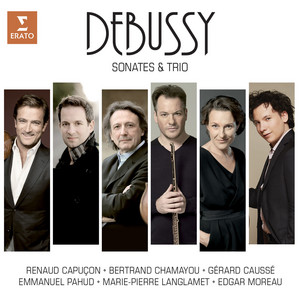 | Debussy: Piano Trio in G Major, CD 5, L. 3: III. Andante espressivo | Claude Debussy, Bertrand Chamayou, Edgar Moreau, Renaud Capuçon | C Major | 1 | 8B | 84 BPM | |
 | String Quartet No. 12 in F major, Op. 96 - "American" B.179: 2. Lento | Antonín Dvořák, Hagen Quartett | D Minor | 1 | 7A | 88 BPM | |
 | Allegro molto agitato in D Minor | Fanny Mendelssohn, Heather Schmidt | D Major | 1 | 10B | 111 BPM | |
 | Piano Concerto No. 1 in B-Flat Minor, Op. 23, TH 55: III. Allegro con fuoco | Pyotr Ilyich Tchaikovsky, Martha Argerich, Royal Philharmonic Orchestra, Charles Dutoit | D Major | 2 | 10B | 137 BPM | |
 | Carmen Variations | Vladimir Horowitz | E Major | 2 | 12B | 148 BPM | |
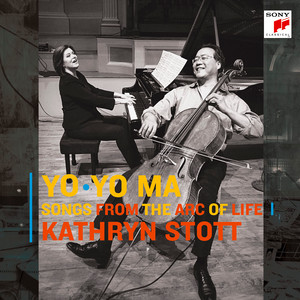 | Après un rêve, Op. 7, No. 1 | Gabriel Fauré, Yo-Yo Ma | F Minor | 0 | 4A | 115 BPM | |
 | Schwanengesang, S. 560: VII. Ständchen (2nd Version, After Schubert D. 957/4) | Franz Liszt, Angela Hewitt | A Major | 2 | 11B | 143 BPM | |
 | Haydn: Cello Concerto No. 1 in C Major, Hob. VIIb, 1: II. Adagio (Cadenza by Britten) | Franz Joseph Haydn, Mstislav Rostropovich, Academy of St. Martin in the Fields | F Major | 1 | 7B | 124 BPM | |
 | Abendlied, Op. 85, No. 12 (Arr. for String Orchestra by Johan Svendsen) | Robert Schumann, Lucerne Festival Strings, Daniel Dodds | B Major | 1 | 1B | 113 BPM | |
 | Piano Concerto No. 2 in F Major, Op. 102: II. Andante | Dmitri Shostakovich, Boris Giltburg, Royal Liverpool Philharmonic Orchestra, Vasily Petrenko | C Minor | 0 | 5A | 80 BPM | |
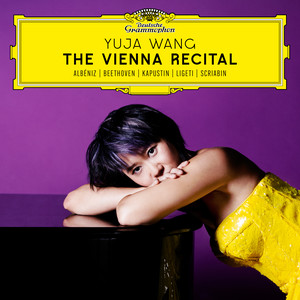 | Orfeo ed Euridice, Wq. 30: Melodie dell'Orfeo (Arr. Sgambati for Piano) | Yuja Wang | D♭ Minor | 1 | 12A | 80 BPM | |
 | Violin Concerto In E Minor, Op. 64, MWV O14: I. Allegro molto appassionato | Felix Mendelssohn, Anne-Sophie Mutter, Gewandhausorchester, Kurt Masur | E Minor | 1 | 9A | 81 BPM | |
 | Kinderszenen | Robert Schumann, Ivan Moravec | F Major | 0 | 7B | 131 BPM |
- ISRC
- SEYOK1763075
- Label
- L-M Records/RCA Records