- BPM
- 74
- Key
- B Major
- Camelot
- 1B
Wagner: Tristano ed Isotta, Act 3: Morte d'amore. "Dolce e calmo" (Isotta) by Richard Wagner, Maria Callas, Arturo Basile, Orchestra Sinfonica Di Torino Della Rai Song Details
"Wagner: Tristano ed Isotta, Act 3: Morte d'amore. "Dolce e calmo" (Isotta)" by Richard Wagner, Maria Callas, Arturo Basile, Orchestra Sinfonica Di Torino Della Rai had its release date on February 14, 2023. Since This song is still less than 10 minute long, it is still considered a pretty long duration song compared to the average song length. This song does not appear to be explicit due to the lack of the "E" tag. The song is number 16 out of 20 in From Callas With Love by Maria Callas, Camille Saint-Saëns, Gaetano Donizetti, Georges Bizet, Giacomo Puccini, Gioachino Rossini, Giuseppe Verdi, Jules Massenet, Richard Wagner, Wolfgang Amadeus Mozart. Going off of the ISRC code of this track, we detected that the origin of this track is from United Kingdom. Wagner: Tristano ed Isotta, Act 3: Morte d'amore. "Dolce e calmo" (Isotta) is not that popular right now. In our opinion, the overall tone is not very danceable and projects negative sounds, such as being sad, depressed, or angry.
BPM and Tempo
The tempo marking of Wagner: Tristano ed Isotta, Act 3: Morte d'amore. "Dolce e calmo" (Isotta) by Richard Wagner, Maria Callas, Arturo Basile, Orchestra Sinfonica Di Torino Della Rai is Adagio (slowly with great expression), since this song has a tempo of 74 BPM. With that information, we can conclude that the song has a slow tempo. The time signature for this track is 4/4.
Music Key
This song has a musical key of B Major. This also means that this song has a camelot key of 1B. So, the perfect camelot match for 1B would be either 1B or 2A. While, 2B can give you a low energy boost. For moderate energy boost, you would use 10B and a high energy boost can either be 3B or 8B. Though, if you want a low energy drop, you should looking for songs with either a camelot key of 1A or 12B will give you a low energy drop, 4B would be a moderate one, and 11B or 6B would be a high energy drop. Lastly, 10A allows you to change the mood.
Want to find the BPM and music key for other songs? Check out our BPM and Key Finder page!
- Popularity
- 8%
- Loudness
- -11.769 dB
- Acousticness
- 97%
- Danceability
- 14%
- Energy
- 31%
- Instrumentalness
- 25%
- Liveness
- 23%
- Loudness
- 80%
- Speechiness
- 4%
- Valence
- 4%
Recommendations
| Track | Artist | Key | Energy | Camelot | BPM | ||
|---|---|---|---|---|---|---|---|
 | Verdi: La forza del destino, Act 4 Scene 6: No. 17, Melodia, "Pace, pace, mio Dio!" (Leonora) | Giuseppe Verdi, Maria Callas, Orchestra Del Teatro Alla Scala, Milano, Tullio Serafin | E♭ Major | 1 | 5B | 81 BPM | |
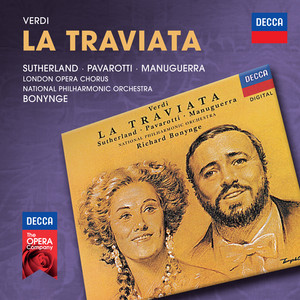 | La traviata / Act 1: Un dì felice, eterea...Si ridesta in ciel l'aurora | Giuseppe Verdi, Luciano Pavarotti, Dame Joan Sutherland, Alexander Oliver, The London Opera Chorus, National Philharmonic Orchestra, Richard Bonynge | B♭ Major | 2 | 6B | 102 BPM | |
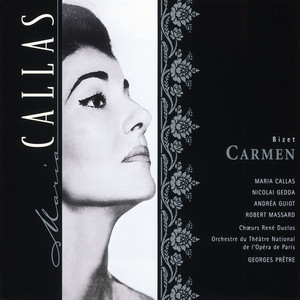 | Bizet: Carmen, Act 4: "C'est toi!...Viva! viva! la course est belle!" (Carmen, José, Chorus) | Georges Bizet, Maria Callas, Nicolai Gedda, Choeurs Rene Duclos, Choeurs D'Enfants Jean Pesneaud, Orchestre de l'Opéra National de Paris, Georges Prêtre, Orchestre du Théâtre National de l'Opéra Paris, Paris Opera Orchestra | D♭ Major | 2 | 3B | 119 BPM | |
 | Rossini: Il barbiere di Siviglia, Act 1: "Una voce poco fa" (Rosina) | Gioachino Rossini, Elsa Dreisig, Michael Schønwandt, Orchestre national de Montpellier Occitanie | F♯ Major | 1 | 2B | 81 BPM | |
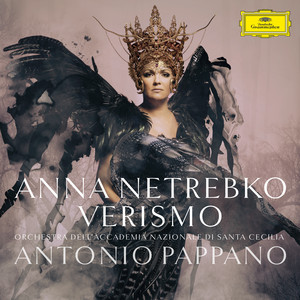 | Mefistofele / Act III: "L'altra notte in fondo al mare" | Arrigo Boito, Anna Netrebko, Orchestra dell'Accademia Nazionale di Santa Cecilia, Antonio Pappano | C Major | 0 | 8B | 78 BPM | |
 | Pagliacci, Act I: "Recitar! Vesti la giubba" (Canio) | Ruggero Leoncavallo, Orchestra dell'Accademia Nazionale di Santa Cecilia, Francesco Molinari-Prandelli, Mario del Monaco | E Major | 2 | 12B | 89 BPM | |
 | Orfeo ed Euridice, Wq. 30 / Act 3: "Che farò senza Euridice?" | Christoph Willibald Gluck, Teresa Berganza, Orchestra of the Royal Opera House, Covent Garden, Sir Alexander Gibson | C Major | 1 | 8B | 77 BPM | |
 | Rigoletto, Act I: Partite? Crudele! | Giuseppe Verdi, Francesco Demuro, Eglė Šidlauskaitė, Tomas Pavilionis, Dmitri Hvorostovsky, Kaunas State Choir, Kaunas City Symphony Orchestra, Constantine Orbelian | A♭ Major | 1 | 4B | 106 BPM | |
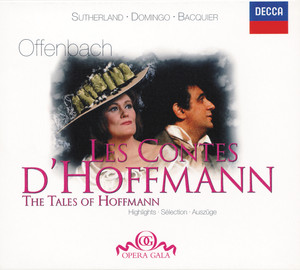 | Les Contes d'Hoffmann / Act 2: "Belle nuit, ô nuit d'amour" | Jacques Offenbach, Dame Joan Sutherland, Huguette Tourangeau, Chorus Pro Arte Lausanne Du Brassus, Radio Suisse Romande Chorus, Orchestre de la Suisse Romande, Richard Bonynge | D Major | 1 | 10B | 82 BPM | |
 | Adriana Lecouvreur / Act II: "Acerba voluttà, dolce tortura ... O vagabonda stella d'Oriente" | Francesco Cilea, Elina Garanca, Orquestra de la Comunitat Valenciana, Roberto Abbado | F Major | 2 | 7B | 177 BPM | |
 | Lecuona: María la O: "Mulata infeliz" | Lisette Oropesa | E♭ Major | 2 | 5B | 94 BPM | |
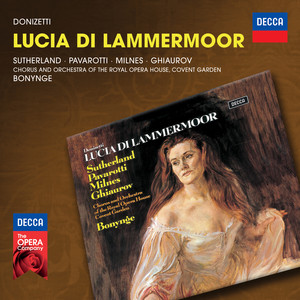 | Lucia di Lammermoor / Act 3: "Spargi d'amore pianto" | Gaetano Donizetti, Dame Joan Sutherland, Sherrill Milnes, Nicolai Ghiaurov, Chorus of the Royal Opera House, Covent Garden, Orchestra of the Royal Opera House, Covent Garden, Richard Bonynge | C Major | 1 | 8B | 126 BPM | |
 | La clemenza di Tito, K. 621 / Act I: "Ah perdona al primo affetto" | Wolfgang Amadeus Mozart, Anna Netrebko, Elina Garanca, Staatskapelle Dresden, Sebastian Weigle | A Major | 1 | 11B | 87 BPM | |
 | La Wally / Act 1: "Ebben? Ne andrò lontana" | Alfredo Catalani, Angela Gheorghiu, Orchestra del Teatro Regio di Torino, John Mauceri | E Major | 1 | 12B | 87 BPM | |
 | Orphée et Eurydice: J'ai perdu mon Eurydice | Maria Callas, Georges Prêtre, The Orchestra National De La Radiodiffusion Francaise | C Major | 2 | 8B | 71 BPM | |
 | Carmen / Act 1: Ma Mère, je la vois! | Georges Bizet, Katia Ricciarelli, José Carreras, Berliner Philharmoniker, Herbert von Karajan | G Major | 1 | 9B | 144 BPM | |
 | Bizet: Carmen, WD 31, Act 1: Habanera. "L'amour est un oiseau rebelle" (Carmen, Chœur) | Georges Bizet, Maria Callas, Choeurs Rene Duclos, Georges Prêtre, Orchestre du Théâtre National de l'Opéra de Paris | D Major | 1 | 10B | 102 BPM | |
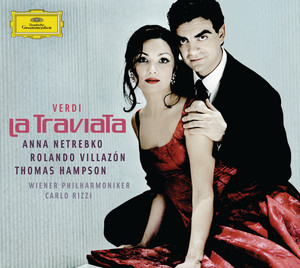 | La traviata / Act 1: "Dell'invito trascorsa è già l'ora" | Giuseppe Verdi, Anna Netrebko, Helene Schneiderman, Herman Wallen, Salvatore Cordella, Rolando Villazón, Paul Gay, Wiener Philharmoniker, Carlo Rizzi, Vienna State Opera Chorus, Rupert Huber | A Major | 2 | 11B | 82 BPM | |
 | Tosca | Renata Tebaldi, Chorus and Orchestra of the Accademia di Santa Cecilia, Rome, Francesco Molinari-Pradelli | D Major | 2 | 10B | 112 BPM | |
 | Benvenuto Cellini / Act I: "Les belles fleures" - "Entre l'amour et le devoir" - Quand j'aurai votre âge | Hector Berlioz, Anna Netrebko, Wiener Philharmoniker, Gianandrea Noseda | A Major | 2 | 11B | 83 BPM | |
| Lucia di Lammermoor / Act 3: Oh, giusto cielo!...Il dolce suono | Gaetano Donizetti, Dame Joan Sutherland, Orchestra of the Royal Opera House, Covent Garden, Richard Bonynge | F Minor | 1 | 4A | 92 BPM | |
 | Bizet: Carmen, WD 31, Act 3, Scene 1: "Je dis que rien ne m'épouvante" (Micaëla) | Georges Bizet, Giuseppe Sinopoli, Angela Gheorghiu, Bavarian State Orchestra | F Major | 1 | 7B | 190 BPM | |
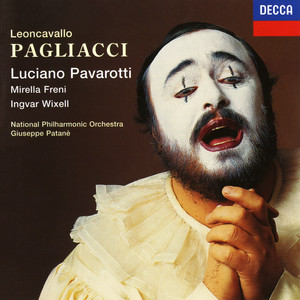 | Pagliacci / Act 2: "E dessa! Dei, come è bella" | Ruggero Leoncavallo, Ingvar Wixell, Mirella Freni, Vincenzo Bello, National Philharmonic Orchestra, Giuseppe Patanè | A Major | 2 | 11B | 77 BPM | |
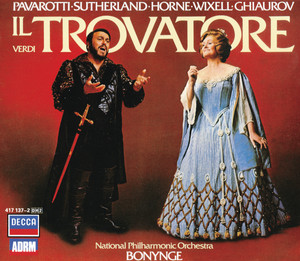 | Il Trovatore / Act 2: "Il balen del suo sorriso...Qual suono! o ciel!" | Giuseppe Verdi, Ingvar Wixell, Nicolai Ghiaurov, The London Opera Chorus, National Philharmonic Orchestra, Richard Bonynge | D♭ Major | 3 | 3B | 94 BPM | |
| Barbieri: El barberillo de Lavapiés: "Canción de Paloma" | Lisette Oropesa | A Major | 2 | 11B | 142 BPM |
- ISRC
- GBAYC1400019
- Label
- L-M Records/RCA Records