- BPM
- 130
- Key
- B♭ Major
- Camelot
- 6B
Les Contes d'Hoffmann: Le conseiller Lindorf, morbleu! - Dans les rôles d'amoureux langoureux by Jacques Offenbach, Martial Singher, Alessio De Paolis, Pierre Monteux Song Details
"Les Contes d'Hoffmann: Le conseiller Lindorf, morbleu! - Dans les rôles d'amoureux langoureux" by Jacques Offenbach, Martial Singher, Alessio De Paolis, Pierre Monteux had its release date on October 28, 2011. With this song being around four minutes long, at 4:04, the duration of this song is pretty average compared to other songs. This track is safe for children and doesn't appear to contain any foul language, since the "Explicit" tag was not present in this track. There are a total of 41 in the song's album "Offenbach: Les Contes d'Hoffmann (Metropolitan Opera)". In this album, this song's track order is #2. Furthermore, we believe that the track originated from United States. Based on our statistics, Les Contes d'Hoffmann: Le conseiller Lindorf, morbleu! - Dans les rôles d'amoureux langoureux's popularity is unknown right now. In our opinion, the overall tone is not very danceable and projects negative sounds, such as being sad, depressed, or angry.
BPM and Tempo
With Les Contes d'Hoffmann: Le conseiller Lindorf, morbleu! - Dans les rôles d'amoureux langoureux by Jacques Offenbach, Martial Singher, Alessio De Paolis, Pierre Monteux having a BPM of 130 with a half-time of 65 BPM and a double-time of 260 BPM, we would consider this track to have a Allegro (fast, quick, and bright) tempo marking. Because of this, we believe that the song has an overall fast tempo. Looking at the BPM of this song, this song might go great with walking. The time signature for this track is 4/4.
Music Key
This song is in the music key of B♭ Major. Or for those who are familiar with the camelot wheel, this song has a camelot key of 6B. So, the perfect camelot match for 6B would be either 6B or 7A. While, 7B can give you a low energy boost. For moderate energy boost, you would use 3B and a high energy boost can either be 8B or 1B. Though, if you want a low energy drop, you should looking for songs with either a camelot key of 6A or 5B will give you a low energy drop, 9B would be a moderate one, and 4B or 11B would be a high energy drop. Lastly, 3A allows you to change the mood.
Want to find the BPM and music key for other songs? Check out our BPM and Key Finder page!
- Popularity
- 0%
- Loudness
- -16.929 dB
- Acousticness
- 97%
- Danceability
- 34%
- Energy
- 25%
- Instrumentalness
- 0%
- Liveness
- 93%
- Loudness
- 72%
- Speechiness
- 8%
- Valence
- 7%
Recommendations
| Track | Artist | Key | Energy | Camelot | BPM | ||
|---|---|---|---|---|---|---|---|
 | Polonaise in A-Flat Major, Op. 53 | Frédéric Chopin, Evgeny Kissin | A♭ Major | 3 | 4B | 85 BPM | |
 | Thaïs / Acte Deux: Meditation | Jules Massenet, Christer Thorvaldsson, Gothenburg Symphony Orchestra, Neeme Järvi | D Major | 1 | 10B | 86 BPM | |
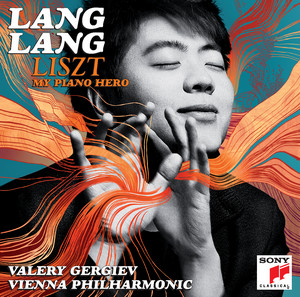 | La campanella in G-Sharp Minor (From "Grandes études de Paganini", S. 141/3) | Franz Liszt, Lang Lang | A♭ Minor | 3 | 1A | 88 BPM | |
 | The Thieving Magpie - From “A Clockwork Orange" | Gioachino Rossini, National Philharmonic Orchestra, Riccardo Chailly | E Major | 2 | 12B | 89 BPM | |
 | Sylvia: Act I: Valse lente | Léo Delibes, Razumovsky Symphony Orchestra, Andrew Mogrelia | A♭ Major | 0 | 4B | 111 BPM | |
 | Hungarian Dances, WoO 1: No. 1 in G Minor | Johannes Brahms, Cristian Mandeal, George Enescu Philharmonic Orchestra, Bucharest | G Minor | 2 | 6A | 73 BPM | |
 | Carmen Concert Fantasy, Op. 25: IV. Allegro moderato | Pablo de Sarasate, Tianwa Yang, Navarre Symphony Orchestra, Ernest Martinez Izquierdo | D Major | 1 | 10B | 111 BPM | |
 | Peer Gynt Suite No. 1, Op. 46: I. Le Matin | Academy of St. Martin in the Fields, Sir Neville Marriner | E Major | 1 | 12B | 67 BPM | |
 | Peer Gynt Suite No.1 op. 46 Anitra's Dance (Tempo di Mazurka) | Academy of St. Martin in the Fields | E Minor | 0 | 9A | 168 BPM | |
 | J. Strauss: Radetzky March | Johann Strauss I, Willi Boskovsky, Wiener Johann Strauss Orchester | A Major | 4 | 11B | 112 BPM | |
 | Carmina Burana: VI. Dance | Carl Orff, Orchester der Deutschen Oper Berlin, Eugen Jochum | F Major | 2 | 7B | 139 BPM | |
 | Tritsch Tratsch - Galopp Polka, Op. 214 | Orchestra of the Viennese Volksoper & Alfred Scholz | A Major | 2 | 11B | 80 BPM | |
 | Carmen Ballet Suite (after Bizet): IX. Torero | Rodion Shchedrin, Slovenian Symphony Orchestra, Anton Nanut | F Major | 5 | 7B | 115 BPM | |
 | The Carnival of the Animals, R. 125: XIII. The Swan (Arr. for Cello and Piano) | Camille Saint-Saëns, Yo-Yo Ma, Kathryn Stott | C Major | 2 | 8B | 99 BPM | |
 | Jazz Suite No. 1: I. Waltz | Dmitri Shostakovich, Russian State Symphony Orchestra, Dmitry Yablonsky | E♭ Major | 1 | 5B | 173 BPM | |
 | Carmen, Opera Suite No. 1: V. Seguedille, Act 1 | London Festival Orchestra, Alfred Scholz | D Major | 0 | 10B | 92 BPM | |
 | Das Liebesverbot: Overture | Richard Wagner, Staatskapelle Dresden, Giuseppe Sinopoli | G Major | 6 | 9B | 120 BPM | |
 | Prokofiev: Suite No. 2 from Romeo and Juliet, Op. 64ter: I. The Montagues and Capulets (Excerpt) | Sergei Prokofiev, Philadelphia Orchestra, Riccardo Muti | A Minor | 3 | 8A | 108 BPM | |
 | Offenbach & Rosenthal: Gaîté parisienne: XV. Valse | Jacques Offenbach, Manuel Rosenthal, Orchestre de l'Opéra de Monte-Carlo | G Major | 6 | 9B | 164 BPM | |
 | Sailing By | Ronald Binge, Slovak Radio Symphony Orchestra, Ernest Tomlinson | F Major | 0 | 7B | 80 BPM | |
 | Madama Butterfly, SC 74: Humming Chorus | Giacomo Puccini, Slovak Philharmonic Chorus, Slovak Radio Symphony Orchestra, Ali Rahbari | B♭ Major | 0 | 6B | 81 BPM | |
 | Rigoletto, Atto III, Canzone: "La donna è mobile" | Giuseppe Verdi, Jonas Kaufmann, Pier Giorgio Morandi, Parma Opera Orchestra | B Major | 2 | 1B | 136 BPM | |
 | Salut d'amour, Op. 12 (version for orchestra) | Edward Elgar, Slovak Radio Symphony Orchestra, Adrian Leaper | B♭ Major | 1 | 6B | 82 BPM | |
 | Strauss II, J: Frühlingsstimmen, Op. 410 | Johann Strauss II, Hallé, Bryden Thomson | B♭ Major | 0 | 6B | 103 BPM | |
 | Offenbach: Les Contes d'Hoffmann, Act 4: "Belle nuit, ô nuit d'amour" (Barcarolle) [Nicklausse, Giulietta, Chorus] | Jacques Offenbach, Sylvain Cambreling, Ann Murray, Jessye Norman, Orchestre De L'Opéra National Du Théatre Royal De La Monnaie, Bruxelles | D Major | 0 | 10B | 79 BPM |
- ISRC
- USY3P1102806
- Label
- L-M Records/RCA Records