- BPM
- 70
- Key
- E♭ Major
- Camelot
- 5B
Variations on an Original Theme, Op. 36 "Enigma": Variations on an Original Theme, Op. 36, "Enigma": Variation 9: Nimrod (a. J. Jaeger) by Edward Elgar, London Philharmonic Orchestra, Sir Adrian Boult Song Details
"Variations on an Original Theme, Op. 36 "Enigma": Variations on an Original Theme, Op. 36, "Enigma": Variation 9: Nimrod (a. J. Jaeger)" by Edward Elgar, London Philharmonic Orchestra, Sir Adrian Boult had its release date on October 26, 2010. With this song being around four minutes long, at 3:59, the duration of this song is pretty average compared to other songs. This track is safe for children and doesn't appear to contain any foul language, since the "Explicit" tag was not present in this track. The song is number 19 out of 20 in Fiennes, Ralph: Kipling by Ralph Fiennes. Going off of the ISRC code of this track, we detected that the origin of this track is from United Kingdom. Variations on an Original Theme, Op. 36 "Enigma": Variations on an Original Theme, Op. 36, "Enigma": Variation 9: Nimrod (a. J. Jaeger) is unknown right now. In our opinion, the overall tone is not very danceable and projects negative sounds, such as being sad, depressed, or angry.
BPM and Tempo
The tempo marking of Variations on an Original Theme, Op. 36 "Enigma": Variations on an Original Theme, Op. 36, "Enigma": Variation 9: Nimrod (a. J. Jaeger) by Edward Elgar, London Philharmonic Orchestra, Sir Adrian Boult is Adagio (slowly with great expression), since this song has a tempo of 70 BPM. With that information, we can conclude that the song has a slow tempo. The time signature for this track is 4/4.
Music Key
E♭ Major is the music key of this track. This also means that this song has a camelot key of 5B. So, the perfect camelot match for 5B would be either 5B or 6A. While, 6B can give you a low energy boost. For moderate energy boost, you would use 2B and a high energy boost can either be 7B or 12B. Though, if you want a low energy drop, you should looking for songs with either a camelot key of 5A or 4B will give you a low energy drop, 8B would be a moderate one, and 3B or 10B would be a high energy drop. Lastly, 2A allows you to change the mood.
Want to find the BPM and music key for other songs? Check out our BPM and Key Finder page!
- Popularity
- 0%
- Loudness
- -22.573 dB
- Acousticness
- 97%
- Danceability
- 16%
- Energy
- 9%
- Instrumentalness
- 82%
- Liveness
- 10%
- Loudness
- 62%
- Speechiness
- 4%
- Valence
- 4%
Recommendations
| Track | Artist | Key | Energy | Camelot | BPM | ||
|---|---|---|---|---|---|---|---|
 | Orfeo ed Euridice, Wq. 30 / Act II: Dance of the Blessed Spirits (Arr. by Mathieu Herzog for Cello and Strings) | Christoph Willibald Gluck, Camille Thomas, Brussels Philharmonic, Mathieu Herzog | B Minor | 1 | 10A | 87 BPM | |
 | Fauré: Élégie, Op. 24 (Orchestral Version) | Gabriel Fauré, Paavo Järvi, Eric Picard, Orchestre de Paris | A♭ Major | 0 | 4B | 89 BPM | |
 | From Jewish Life: I. Prayer (Arr. for Cello & Orchestra) | Ernest Bloch, Harriet Krijgh, Gustavo Gimeno, Deutsche Staatsphilharmonie Rheinland-Pfalz | F Minor | 1 | 4A | 91 BPM | |
 | Gaîté parisienne: Barcarolle | Jacques Offenbach, Berliner Philharmoniker, Herbert von Karajan | D Major | 0 | 10B | 82 BPM | |
 | Enigma Variations, Op. 36: Var. 9. Adagio "Nimrod" | Edward Elgar, BBC Symphony Orchestra, Leonard Bernstein | E♭ Major | 0 | 5B | 79 BPM | |
 | Romeo and Juliette, Op. 64 (Arr. for Viola and Piano by Vadim Borisovsky, Orchestration for Viola and String Orchestra by François Vallières): Introduction | Sergei Prokofiev, Elvira Misbakhova, I Musici de Montréal, Jean-François Rivest | D Major | 1 | 10B | 99 BPM | |
 | Die Nacht, D. deest (Arr. Lechner/Márquez for Cello & Guitar) | Franz Schubert, Anja Lechner, Pablo Marquez | G Major | 0 | 9B | 85 BPM | |
 | Kol Nidrei - Adagio For Cello, Opus 47 | Max Bruch, Alisa Weilerstein, Staatskapelle Berlin, Daniel Barenboim | D Major | 1 | 10B | 81 BPM | |
 | Mendelssohn: Song Without Words in D Major, Op. 109, MWV Q34 | Felix Mendelssohn, Jacqueline du Pré, Gerald Moore | D Major | 0 | 10B | 93 BPM | |
 | Zdes' khorosho ('How Fair This Spot'), Op. 21, No. 7 | Sergei Rachmaninoff, Pablo Ferrandez, Denis Kozhukhin | A Major | 0 | 11B | 87 BPM | |
 | 16 Waltzes, Op. 39 (Version for Piano Duet): No. 15 in A-Flat Major | Johannes Brahms, Tal & Groethuysen | A Major | 0 | 11B | 126 BPM | |
 | Suite from "The Victorian Kitchen Garden": I. Prelude. Andante pastorale | Paul Reade, Michael Collins, Michael McHale | B♭ Major | 0 | 6B | 67 BPM | |
 | Tristan und Isolde, WWV 90: Prelude To Act I | Richard Wagner, Gewandhausorchester Leipzig, Andris Nelsons | A Minor | 1 | 8A | 79 BPM | |
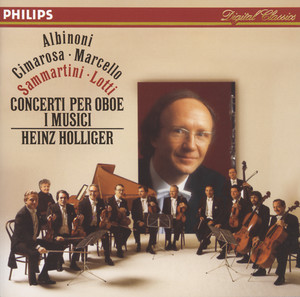 | Oboe Concerto in D Minor, S. Z799: II. Adagio | Alessandro Marcello, Heinz Holliger, I Musici | D Minor | 1 | 7A | 79 BPM | |
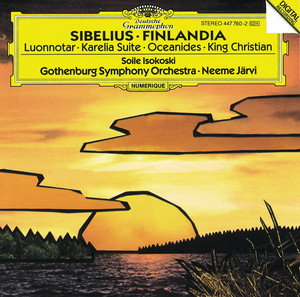 | Andante Festivo | Jean Sibelius, Gothenburg Symphony Orchestra, Neeme Järvi | G Major | 1 | 9B | 86 BPM | |
 | Violin Concerto No. 1 in G Minor, Op. 26: II. Adagio | Max Bruch, Joshua Bell, Academy of St. Martin in the Fields, Sir Neville Marriner | E♭ Major | 1 | 5B | 85 BPM | |
 | Piano Quintet in A Minor, Op. 84: I. Moderato - Allegro | Edward Elgar, Marie-Elisabeth Hecker, Caroline Widmann, David McCarroll, Pauline Sachse, Martin Helmchen | C Major | 2 | 8B | 116 BPM | |
 | Holst: St. Paul's Suite, Op. 29 No. 2: IV. Finale. The Dargason | Gustav Holst, Sir Neville Marriner, Academy of St. Martin in the Fields | B♭ Major | 4 | 6B | 113 BPM | |
 | 4 Lieder, Op. 82, B. 157: I. Lasst mich allein. Andante (Arr. Soltani For Solo Cello and Cello Ensemble) | Antonín Dvořák, Kian Soltani, Staatskapelle Berlin, Cellists, Otto Tolonen | B Major | 0 | 1B | 140 BPM | |
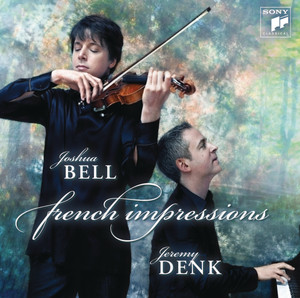 | Violin Sonata in A major, FWV 8: IV. Allegretto poco mosso | César Franck, Joshua Bell, Jeremy Denk | A Major | 1 | 11B | 94 BPM | |
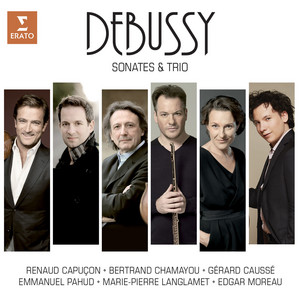 | Debussy: Piano Trio in G Major, CD 5, L. 3: III. Andante espressivo | Claude Debussy, Bertrand Chamayou, Edgar Moreau, Renaud Capuçon | C Major | 1 | 8B | 84 BPM | |
 | 2 Aquarelles: Lento, ma non troppo | Frederick Delius, Royal Northern Sinfonia, David Lloyd-Jones | F Major | 0 | 7B | 71 BPM | |
 | Piano Concerto No. 2 in F Major, Op. 102: II. Andante | Dmitri Shostakovich, Boris Giltburg, Royal Liverpool Philharmonic Orchestra, Vasily Petrenko | C Minor | 0 | 5A | 80 BPM | |
 | Variations on a Rococo Theme, Op. 33, TH 57: Var: VI. Andante | Pyotr Ilyich Tchaikovsky, Jean-Guihen Queyras, BBC Symphony Orchestra, Jiří Bělohlávek | D Major | 0 | 10B | 114 BPM | |
 | Cello Concerto No. 1 in A Minor, Op. 33: I. Allegro non troppo | Camille Saint-Saëns, Mischa Maisky, Orpheus Chamber Orchestra | F Major | 2 | 7B | 131 BPM |
- ISRC
- GBYDS1000261
- Label
- L-M Records/RCA Records