- BPM
- 71
- Key
- E Minor
- Camelot
- 9A
Puccini: La bohème, Act 4: "C'è Mimì...c'e Mimì che mi seque" (Musetta/Rodolfo/Schaunard/Mimì/Marcello) by Giacomo Puccini, Anna Moffo, Antonino Votto, Orchestra Del Teatro Alla Scala, Milano Song Details
"Puccini: La bohème, Act 4: "C'è Mimì...c'e Mimì che mi seque" (Musetta/Rodolfo/Schaunard/Mimì/Marcello)" by Giacomo Puccini, Anna Moffo, Antonino Votto, Orchestra Del Teatro Alla Scala, Milano had its release date on 1958. With this song being about 5 minutes long, at This song is fairly a long song compared to the average song length. This song does not have an "Explicit" tag, making it safe for all ages. The track order of this song in Giacomo Puccini, Maria Callas, Coro Del Teatro Alla Scala Di Milano, Giuseppe Di Stefano, Orchestra Del Teatro Alla Scala, Milano's "La Bohème - Puccini" album is number 9 out of 26. On top of that, Italy appears to be the country where this track was created. Puccini: La bohème, Act 4: "C'è Mimì...c'e Mimì che mi seque" (Musetta/Rodolfo/Schaunard/Mimì/Marcello) is not that popular right now. In our opinion, the overall tone is not very danceable and projects negative sounds, such as being sad, depressed, or angry.
BPM and Tempo
We consider the tempo marking of Puccini: La bohème, Act 4: "C'è Mimì...c'e Mimì che mi seque" (Musetta/Rodolfo/Schaunard/Mimì/Marcello) by Giacomo Puccini, Anna Moffo, Antonino Votto, Orchestra Del Teatro Alla Scala, Milano to be Adagio (slowly with great expression) because the track has a tempo of 71 BPM, a half-time of 36BPM, and a double-time of 142 BPM. Based on that, the speed of the song's tempo is slow. The time signature for this track is 3/4.
Music Key
This song is in the music key of E Minor. Because this track belongs in the E Minor key, the camelot key is 9A. So, the perfect camelot match for 9A would be either 9A or 8B. While, a low energy boost can consist of either 9B or 10A. For moderate energy boost, you would use 6A and a high energy boost can either be 11A or 4A. However, if you are looking for a low energy drop, finding a song with a camelot key of 8A would be a great choice. Where 12A would give you a moderate drop, and 7A or 2A would be a high energy drop. Lastly, 12B allows you to change the mood.
Want to find the BPM and music key for other songs? Check out our BPM and Key Finder page!
- Popularity
- 16%
- Loudness
- -19.073 dB
- Acousticness
- 97%
- Danceability
- 18%
- Energy
- 8%
- Instrumentalness
- 0%
- Liveness
- 18%
- Loudness
- 68%
- Speechiness
- 5%
- Valence
- 4%
Recommendations
| Track | Artist | Key | Energy | Camelot | BPM | ||
|---|---|---|---|---|---|---|---|
 | Mozart: Le nozze di Figaro, K. 492, Act 2: Cavatina. "Porgi, amor" (Contessa) | Wolfgang Amadeus Mozart, Maria Callas, Nicola Rescigno, Orchestre De La Société Des Concerts Du Conservatoire | G Major | 3 | 9B | 83 BPM | |
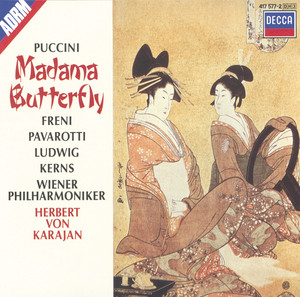 | Madama Butterfly / Act 2: Vespa! Rospo maledetto! | Giacomo Puccini, Christa Ludwig, Michel Sénéchal, Mirella Freni, Wiener Philharmoniker, Herbert von Karajan | G Major | 3 | 9B | 81 BPM | |
 | Simon Boccanegra / Act 1: Cielo di stelle orbato (Gabriele, Amalia, Ancella, Pietro) | Giuseppe Verdi, Mirella Freni, Maria Fausta Gallamini, José Carreras, Giovanni Foiani, Orchestra Del Teatro Alla Scala, Milano, Claudio Abbado | E Major | 0 | 12B | 79 BPM | |
 | La Bohème / Act 4: "O Mimì, tu più non torni" | Giacomo Puccini, Roberto Alagna, Simon Keenlyside, Roberto de Candia, Ildebrando D'Arcangelo, Orchestra Del Teatro Alla Scala, Milano, Riccardo Chailly | A Major | 1 | 11B | 109 BPM | |
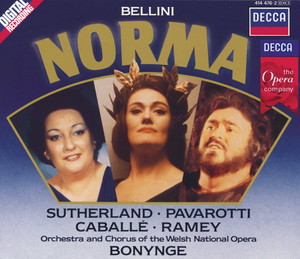 | Norma / Act 1: Ah! bello a me ritorna | Vincenzo Bellini, Dame Joan Sutherland, Samuel Ramey, Welsh National Opera Chorus, Welsh National Opera Orchestra, Richard Bonynge | F Major | 2 | 7B | 78 BPM | |
| Simon Boccanegra, Prologue: Che dicesti? | Giuseppe Verdi, José van Dam, Giovanni Foiani, Piero Cappuccilli, Orchestra Del Teatro Alla Scala, Milano, Claudio Abbado, Coro Del Teatro Alla Scala Di Milano, Romano Gandolfi | D Major | 1 | 10B | 93 BPM | |
 | Don Giovanni K527 (1987 Digital Remaster): Mi tradì quell' alma ingrata | Maria Callas, Orchestre De La Société Des Concerts Du Conservatoire, Nicola Rescigno | E♭ Major | 1 | 5B | 90 BPM | |
 | Puccini: Tosca, Act 2: "Vissi d'arte, vissi d'amore" (Tosca, Scarpia) | Giacomo Puccini, Antonio Pappano, Angela Gheorghiu, Ruggero Raimondi, Orchestra of the Royal Opera House & Covent Garden | D Major | 0 | 10B | 84 BPM | |
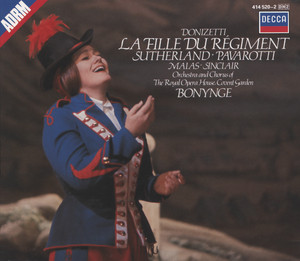 | La fille du régiment / Act 1: Au bruit de la guerre | Gaetano Donizetti, Dame Joan Sutherland, Spiro Malas, Orchestra of the Royal Opera House, Covent Garden, Richard Bonynge | G Major | 2 | 9B | 120 BPM | |
 | Suor Angelica: Ah, son dannata! | Giacomo Puccini, Dame Joan Sutherland, The London Opera Chorus, National Philharmonic Orchestra, Richard Bonynge | A Major | 1 | 11B | 109 BPM | |
 | Puccini: Turandot, Act 2: "Ho una casa nell’Honan" (Ping, Pong, Pang, Coro) | Giacomo Puccini, Antonio Pappano, Coro dell'Accademia Nazionale Di Santa Cecilia, Gregory Bonfatti, Mattia Olivieri, Siyabonga Maqungo, Orchestra dell'Accademia Nazionale di Santa Cecilia | A Major | 0 | 11B | 81 BPM | |
 | Les Contes d'Hoffmann / Act 1: "Il était une fois à la cour d'Eisenach" (La légende de Kleinzach) | Jacques Offenbach, Plácido Domingo, Robin Leggate, Choeurs de Radio France, Orchestre National De France, Seiji Ozawa | A Minor | 2 | 8A | 94 BPM | |
 | Macbeth / Act 4: Una macchia è qui tuttora | Giuseppe Verdi, Stefania Malagu, Shirley Verrett, Carlo Zardo, Orchestra Del Teatro Alla Scala, Milano, Claudio Abbado | D♭ Major | 0 | 3B | 82 BPM | |
 | Cilèa: L'Arlesiana, Act 2: "È la solita storia del pastore" (Federico) | Francesco Cilea, Rolando Villazón, Marcello Viotti, Munich Radio Orchestra, Muenchner Rundfunkorchester | A Minor | 1 | 8A | 168 BPM | |
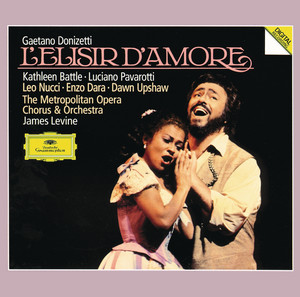 | L'elisir d'amore / Act I: "Udite, udite, o rustici" | Gaetano Donizetti, Enzo Dara, Metropolitan Opera Chorus, Metropolitan Opera Orchestra, James Levine | A Major | 2 | 11B | 129 BPM | |
 | La Fanciulla del West: Ch'ella mi creda | Giacomo Puccini, Plácido Domingo, Sherrill Milnes, Orchestra of the Royal Opera House, Covent Garden, Zubin Mehta, Chorus of the Royal Opera House, Covent Garden | D Major | 5 | 10B | 75 BPM | |
 | Puccini: Tosca, Act 1: "Ah! Finalmente!" (Angelotti, Sagrestano, Cavaradossi) | Giacomo Puccini, Victor de Sabata, Franco Calabrese, Giuseppe Di Stefano, Melchiorre Luise, Orchestra Del Teatro Alla Scala, Milano | C Major | 2 | 8B | 111 BPM | |
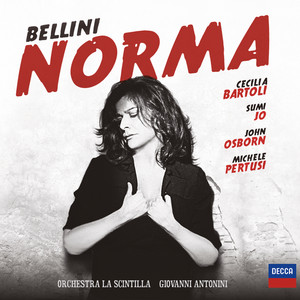 | Norma (Ed. Biondi & Minasi), Act I Scene 1: Me protegge, me difende | Vincenzo Bellini, John Osborn, Reinaldo Macias, International Chamber Vocalists, Orchestra La Scintilla, Giovanni Antonini | E♭ Major | 4 | 5B | 59 BPM | |
 | Norma (1997 Digital Remaster), ACT 2, Scene 3: Guerra, guerra! La galliche selve (Coro) | Vincenzo Bellini, Coro Del Teatro Alla Scala Di Milano, Orchestra Del Teatro Alla Scala, Milano, Tullio Serafin, Orchestra Del Teatro Alla Scala Di Milan | A Major | 3 | 11B | 136 BPM | |
| Bellini: Norma, Act 2: "Non parti?" (Coro) | Vincenzo Bellini, Orchestra Del Teatro Alla Scala, Milano, Tullio Serafin, Coro Del Teatro Alla Scala Di Milano | A♭ Major | 0 | 4B | 74 BPM | |
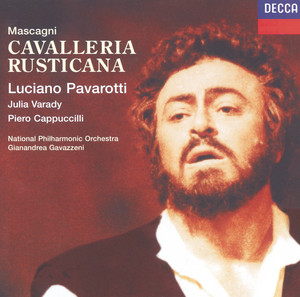 | Cavalleria rusticana: "Voi lo sapete, o mama" (Romanza) | Pietro Mascagni, Julia Varady, Ida Bormida, National Philharmonic Orchestra, Gianandrea Gavazzeni | E Major | 1 | 12B | 101 BPM | |
 | Manon / Act III: "Suis-je gentille ainsi?" / "Obéissons, quand leur voix appelle" | Jules Massenet, Anna Netrebko, Wiener Philharmoniker, Gianandrea Noseda, Wiener Staatsopernchor | G Major | 1 | 9B | 104 BPM | |
 | Don Pasquale, Act II Prima Scena: Chercherò lontana terra (Ernesto) | Gaetano Donizetti, Gösta Winbergh/Philharmonia Orchestra/Riccardo Muti, Riccardo Muti, Philharmonia Orchestra | F Minor | 1 | 4A | 92 BPM | |
| Madama Butterfly, Act I: Gran ventura | Giacomo Puccini, Mirella Freni, Michel Sénéchal, Luciano Pavarotti, Robert Kerns, Wiener Philharmoniker, Herbert von Karajan | D♭ Major | 0 | 3B | 139 BPM | |
 | Mascagni: Cavalleria rusticana: Intermezzo sinfonico (Andante sostenuto) | Pietro Mascagni, Orchestra Del Teatro Alla Scala, Milano, Tullio Serafin | F Major | 1 | 7B | 85 BPM |
- ISRC
- ITD009700287
- Label
- L-M Records/RCA Records