- BPM
- 127
- Key
- E Major
- Camelot
- 12B
Swan Lake, Op. 20, Pt. 3: VII. Danse espagnole by Pyotr Ilyich Tchaikovsky, Royal Philharmonic Orchestra, Nicolae Moldoveanu Song Details
Pyotr Ilyich Tchaikovsky, Royal Philharmonic Orchestra, Nicolae Moldoveanu's 'Swan Lake, Op. 20, Pt. 3: VII. Danse espagnole' had a release date set for 2010. The duration of This song is about two minutes long, specifically at 2:28. This song does not appear to have any foul language. Swan Lake, Op. 20, Pt. 3: VII. Danse espagnole's duration is considered a little bit shorter than the average duration of a typical track. There are a total of 108 in the song's album "Tchaikovsky: Complete Ballets". In this album, this song's track order is #38. Furthermore, we believe that the track originated from Netherlands. Based on our statistics, Swan Lake, Op. 20, Pt. 3: VII. Danse espagnole's popularity is not that popular right now. Although the tone can be danceable to some, this track does projects more of a negative sound rather than a postive one.
BPM and Tempo
With Swan Lake, Op. 20, Pt. 3: VII. Danse espagnole by Pyotr Ilyich Tchaikovsky, Royal Philharmonic Orchestra, Nicolae Moldoveanu having a BPM of 127 with a half-time of 64 BPM and a double-time of 254 BPM, we would consider this track to have a Allegro (fast, quick, and bright) tempo marking. Because of this, we believe that the song has an overall fast tempo. Looking at the BPM of this song, this song might go great with walking. The time signature for this track is 5/4.
Music Key
This song has a musical key of E Major. Or for those who are familiar with the camelot wheel, this song has a camelot key of 12B. So, the perfect camelot match for 12B would be either 12B or 1A. While, 1B can give you a low energy boost. For moderate energy boost, you would use 9B and a high energy boost can either be 2B or 7B. Though, if you want a low energy drop, you should looking for songs with either a camelot key of 12A or 11B will give you a low energy drop, 3B would be a moderate one, and 10B or 5B would be a high energy drop. Lastly, 9A allows you to change the mood.
Want to find the BPM and music key for other songs? Check out our BPM and Key Finder page!
- Popularity
- 7%
- Loudness
- -23.883 dB
- Acousticness
- 99%
- Danceability
- 53%
- Energy
- 1%
- Instrumentalness
- 85%
- Liveness
- 12%
- Loudness
- 60%
- Speechiness
- 6%
- Valence
- 27%
Recommendations
| Track | Artist | Key | Energy | Camelot | BPM | ||
|---|---|---|---|---|---|---|---|
 | Serenade | Jairos | C Major | 2 | 8B | 118 BPM | |
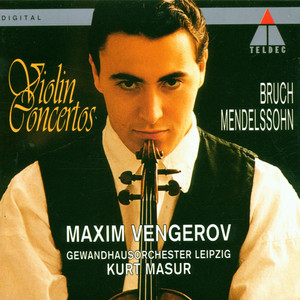 | Mendelssohn: Violin Concerto in E Minor, Op. 64, MWV O14: II. Andante | Felix Mendelssohn, Maxim Vengerov, Kurt Masur, Gewandhausorchester | C Major | 1 | 8B | 96 BPM | |
 | Spartacus: Adagio of Spartacus and Phrygia | Aram Khachaturian, Wiener Philharmoniker | A♭ Major | 1 | 4B | 129 BPM | |
 | Zdes' khorosho ('How Fair This Spot'), Op. 21, No. 7 | Sergei Rachmaninoff, Pablo Ferrandez, Denis Kozhukhin | A Major | 0 | 11B | 87 BPM | |
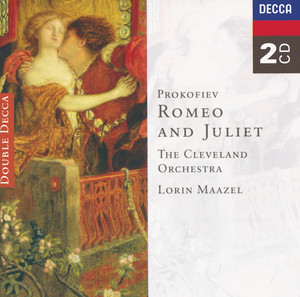 | Romeo and Juliet, Op. 64: Introduction | Sergei Prokofiev, The Cleveland Orchestra, Lorin Maazel | E Major | 1 | 12B | 112 BPM | |
 | Carmen Ballet Suite (after Bizet): IX. Torero | Rodion Shchedrin, Slovenian Symphony Orchestra, Anton Nanut | F Major | 5 | 7B | 115 BPM | |
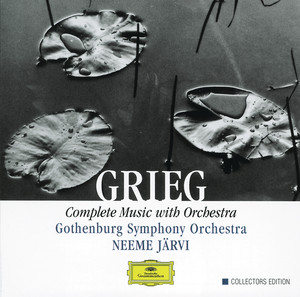 | In Autumn, Op. 11 | Edvard Grieg, Gothenburg Symphony Orchestra, Neeme Järvi | A Minor | 1 | 8A | 109 BPM | |
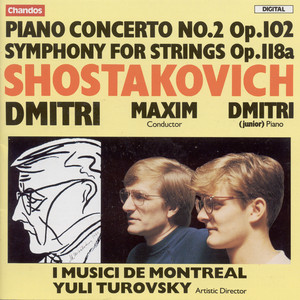 | Piano Concerto No. 2 in F Major, Op. 102: II. Andante | Dmitri Shostakovich, I Musici de Montréal, Maxim Shostakovich | C Minor | 0 | 5A | 177 BPM | |
 | Ancient Airs & Dances, Suite III, P. 172: III. Siciliana (Anonymous) | Ottorino Respighi, Boston Symphony Orchestra, Seiji Ozawa | C Minor | 2 | 5A | 109 BPM | |
 | 2 Pieces, Op. Posth., B. 188: No. 1, Lullaby in G Major | Antonín Dvořák, Stefan Veselka | G Major | 0 | 9B | 66 BPM | |
 | Hungarian Dance No. 5 | Johannes Brahms, Isaac Stern, Milton Katims, Columbia Symphony Orchestra | G Minor | 2 | 6A | 111 BPM | |
 | Praeludium & Allegro "by Gaetano Pugnani" | Fritz Kreisler, Joshua Bell, Paul Coker | E Minor | 2 | 9A | 103 BPM | |
 | Salut d'amour, Op. 12 | Edward Elgar, Sueye Park, Love Derwinger | E Major | 1 | 12B | 83 BPM | |
 | Coppélia: Valse Lente | Léo Delibes, Orchestra of the Royal Opera House, Covent Garden | E♭ Major | 1 | 5B | 72 BPM | |
 | Stolze & Tchaikovsky: Onegin: Opening Scene - Dance of the Young Girls (After Eugen Onegin, Op. 24) | Kurt-Heinz Stolze, Pyotr Ilyich Tchaikovsky, John Lanchbery, Sydney Symphony Orchestra | E♭ Major | 0 | 5B | 118 BPM | |
 | Carmen Suite No. 1 (Arr. E. Guiraud): III. Intermezzo | Georges Bizet, Orquestra Simfònica de Barcelona i Nacional de Catalunya, Pablo González | E♭ Major | 0 | 5B | 81 BPM | |
 | Giselle, Act 2: No. 18 Giselle and Albrecht Pas de deux | Adolphe Adam, Tasmanian Symphony Orchestra, Nicolette Fraillon | A♭ Major | 1 | 4B | 129 BPM | |
 | Masquerade - Ballet Suite: 1. Waltz | Aram Khachaturian, London Symphony Orchestra, Stanley Black | C Major | 3 | 8B | 100 BPM | |
 | On the Beautiful Blue Danube, Op. 314 | Johann Strauss II, Carl Michalski, Vienna Volksoper Orchestra | D Major | 0 | 10B | 94 BPM | |
 | Giselle, Act I: Variation de Giselle | Adolphe Adam, Academy of St. Martin in the Fields, Sir Neville Marriner | E Major | 0 | 12B | 78 BPM | |
 | Les danses polovtsiennes (Extraits de l'opéra Le Prince Igor): II. Danse des hommes | Alexander Borodin, Anima Eterna, Jos Van Immerseel | A Major | 0 | 11B | 87 BPM | |
 | 21 Hungarian Dances, WoO 1: Hungarian Dance No. 4 in F Minor. Poco sostenuto (Orch. Juon in F-Sharp Minor) | Johannes Brahms, Wiener Philharmoniker, Claudio Abbado | F♯ Minor | 2 | 11A | 80 BPM | |
 | 12 Violin Concertos, Op. 8 "Il cimento dell'armonia e dell'inventione" / Concerto No. 2 in G Minor for solo violin, RV315 "L'Estate": 3. Presto | Antonio Vivaldi, Janine Jansen, Candida Thompson, Henk Rubingh, Julian Rachlin, Maarten Jansen, Stacey Watton, Liz Kenny, Jan Jansen | C Minor | 5 | 5A | 152 BPM | |
| Giselle, Act 2: No. 12 Ensemble Dance of the Wilis, Lead Wilis’ Variations, Myrtha’s Second, Variation, Lead Wilis and ensemble | Adolphe Adam, Tasmanian Symphony Orchestra, Nicolette Fraillon | A♭ Major | 1 | 4B | 129 BPM | |
 | Finlandia, Op. 26 | Jean Sibelius, Berliner Philharmoniker, Herbert von Karajan | A♭ Major | 3 | 4B | 67 BPM |
- ISRC
- NLY331412647
- Label
- L-M Records/RCA Records