- BPM
- 82
- Key
- G Major
- Camelot
- 9B
Mathis Der Maler, 2nd Tableau, Scene 3: Dürfen wir sagen, was uns bedrängt? (Riedinger/Albrecht/Pommersfelden) by Paul Hindemith, Rafael Kubelik, Bayerischer Rundfunk, Bavarian Radio Symphony Orchestra Song Details
Paul Hindemith, Rafael Kubelik, Bayerischer Rundfunk, Bavarian Radio Symphony Orchestra's ' "Mathis Der Maler, 2nd Tableau, Scene 3: Dürfen wir sagen, was uns bedrängt? (Riedinger/Albrecht/Pommersfelden)" was released on its scheduled release date, April 1, 1995. With This song being less than two minutes long, at 1:09, we are fairly confident that this song is not explicit and is safe for all ages. Based on the duration of this song, this song duration is much smaller than the average song duration. The track order of this song in Paul Hindemith, Rafael Kubelik's "Hindemith: Mathis der Maler" album is number 16 out of 61. Mathis Der Maler, 2nd Tableau, Scene 3: Dürfen wir sagen, was uns bedrängt? (Riedinger/Albrecht/Pommersfelden) is not that popular right now. Since there is more of a neutral sound being played, this makes the track somewhat danceable.
BPM and Tempo
We consider the tempo marking of Mathis Der Maler, 2nd Tableau, Scene 3: Dürfen wir sagen, was uns bedrängt? (Riedinger/Albrecht/Pommersfelden) by Paul Hindemith, Rafael Kubelik, Bayerischer Rundfunk, Bavarian Radio Symphony Orchestra to be Andante (at a walking pace) because the track has a tempo of 82 BPM, a half-time of 41BPM, and a double-time of 164 BPM. Based on that, the speed of the song's tempo is slow. The time signature for this track is 3/4.
Music Key
This song has a musical key of G Major. This also means that this song has a camelot key of 9B. So, the perfect camelot match for 9B would be either 9B or 10A. While, 10B can give you a low energy boost. For moderate energy boost, you would use 6B and a high energy boost can either be 11B or 4B. Though, if you want a low energy drop, you should looking for songs with either a camelot key of 9A or 8B will give you a low energy drop, 12B would be a moderate one, and 7B or 2B would be a high energy drop. Lastly, 6A allows you to change the mood.
Want to find the BPM and music key for other songs? Check out our BPM and Key Finder page!
- Popularity
- 1%
- Loudness
- -19.78 dB
- Acousticness
- 96%
- Danceability
- 52%
- Energy
- 27%
- Instrumentalness
- 0%
- Liveness
- 47%
- Loudness
- 67%
- Speechiness
- 4%
- Valence
- 59%
Recommendations
| Track | Artist | Key | Energy | Camelot | BPM | ||
|---|---|---|---|---|---|---|---|
 | Sibelius: Symphony No. 1 in E Minor, Op. 39: III. Scherzo. Allegro | Jean Sibelius, Paavo Berglund, Helsinki Philharmonic Orchestra | C Major | 2 | 8B | 109 BPM | |
 | Piano Concerto in A Minor, Op. 7: III. Finale. Allegro non troppo - Allegro molto | Clara Schumann, Veronica Jochum, Bamberg Symphony, Joseph Silverstein | F Minor | 1 | 4A | 103 BPM | |
 | Le Tombeau de Couperin, M. 68a: I. Prélude. Vif | Maurice Ravel, Les Siècles, François-Xavier Roth | F♯ Major | 0 | 2B | 74 BPM | |
 | El sombrero de tres picos, Pt. 2: I. Danza de los vecinos | Manuel de Falla, Carlos Miguel Prieto, The Orchestra of the Americas | D Major | 1 | 10B | 100 BPM | |
 | Quatuor en Fa Majeur, M. 35: I. Allegro moderato | Maurice Ravel, Jerusalem Quartet | F Major | 1 | 7B | 92 BPM | |
 | Sonate, Op. 71: II. Nocturne – Presque adagio | Charles Koechlin, Julien Hardy, Simon Zaoui | E♭ Major | 0 | 5B | 77 BPM | |
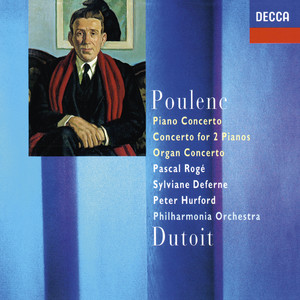 | Concerto for 2 Pianos and Orchestra in D minor, FP 61: 2. Larghetto | Francis Poulenc, Sylviane Deferne, Pascal Rogé, Philharmonia Orchestra, Charles Dutoit | G Minor | 1 | 6A | 101 BPM | |
 | Violin Sonata in E Minor, P. 85: III. Allemanda. Allegro moderato (After J.S. Bach's BWV 1023) | Ottorino Respighi, Ilkka Talvi, Seattle Symphony Orchestra, Gerard Schwarz | E Minor | 0 | 9A | 77 BPM | |
 | Ibert: 3 Pièces brèves: II. Andante | Jacques Ibert, Les Vents Français, Tullio Serafin, Philharmonia Orchestra | A♭ Major | 0 | 4B | 61 BPM | |
 | Honegger : Symphony No.1 in C major : II Adagio | Arthur Honegger, Charles Dutoit, Bavarian Radio Symphony Orchestra | B Major | 0 | 1B | 78 BPM | |
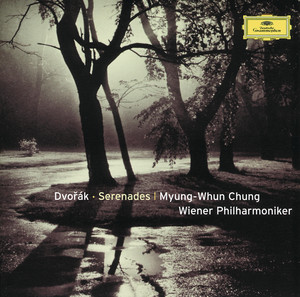 | Serenade for Wind in D Minor, Op. 44: III. Andante con moto | Antonín Dvořák, Martin Gabriel, Alexander Oehlberger, Peter Schmidl, Andreas Wieser, Stepan Turnovsky, Wolfgang Koblitz, Fritz Faltl, Ronald Janezic, Thomas Joebstl, Wolfgang Vladar, Wolfgang Herzer, Herbert Mayr, Myung-Whun Chung | A Major | 0 | 11B | 139 BPM | |
 | Sextet for Wind Quintet & Piano, FP 100: I. Allegro vivace: Tres vite et emporte | Francis Poulenc, Philippe Bernold, Olivier Doise, Ronald Van Spaendonck, Laurent Lefèvre, Hervé Joulain, Alexandre Tharaud | A Minor | 1 | 8A | 140 BPM | |
 | Klavierstück in C Major - 1 | Anton Webern, Jean-Jacques Dünki | A Minor | 0 | 8A | 70 BPM | |
 | Pulcinella Suite: II. Serenata | Igor Stravinsky, Tapiola Sinfonietta, Masaaki Suzuki | C Minor | 0 | 5A | 87 BPM | |
 | L'Horloge de Flore: 3h - Galant de jour | Jean Françaix, Albrecht Mayer, Academy of St. Martin in the Fields, Mathias Mönius | A Minor | 1 | 8A | 90 BPM | |
 | Symphony No. 1, Op. 9: III. Andante tranquillo | Samuel Barber, Leonard Slatkin, St. Louis Symphony | B♭ Major | 3 | 6B | 93 BPM | |
 | Neon Waves | Lumi Risto | D Major | 1 | 10B | 130 BPM | |
 | Jūra, MKČ 102: II. Exposition, Secondary Theme | Mikalojus Konstantinas Čiurlionis, Lithuanian National Symphony Orchestra, Mirga Gražinytė-Tyla | A Minor | 0 | 8A | 85 BPM | |
| Fantasia & Fugue in C Minor, Op. 86 (After J.S. Bach's BWV 537): Fantasia | Edward Elgar, Seattle Symphony Orchestra, Gerard Schwarz | F Minor | 1 | 4A | 143 BPM | |
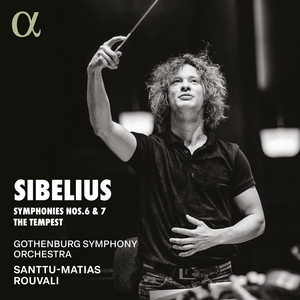 | Symphony No. 6 in D Major, Op. 104: IV. Allegro molto - Allegro assai - Doppio più lento | Jean Sibelius, Santtu-Matias Rouvali, Gothenburg Symphony Orchestra | G Major | 3 | 9B | 110 BPM | |
 | Sinfonietta, FP 141: I. Allegro con fuoco | Francis Poulenc, RTÉ National Symphony Orchestra, Jean-Luc Tingaud | G Major | 0 | 9B | 111 BPM | |
 | Divertimento for Strings, Sz. 113: III. Allegro assai | Béla Bartók, Orpheus Chamber Orchestra | B♭ Major | 1 | 6B | 105 BPM | |
 | Ephesiaká II | Radoslaw Pallarz, Sebastian Manz | E Minor | 0 | 9A | 73 BPM | |
 | String Quartet No. 1 in A Major: II. Andante con moto | Alexander Borodin, Budapest Haydn Quartet | F♯ Minor | 1 | 11A | 88 BPM | |
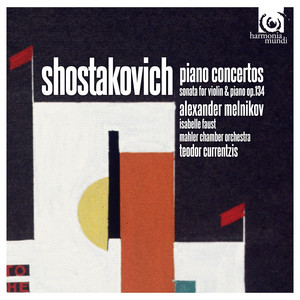 | Piano Concerto No. 2 Op. 102 in F Major: I. Allegro | Dmitri Shostakovich, Alexander Melnikov, Mahler Chamber Orchestra, Teodor Currentzis | B♭ Major | 2 | 6B | 73 BPM |
- ISRC
- This song does not have an ISRC.
- Label
- L-M Records/RCA Records