- BPM
- 83
- Key
- G Major
- Camelot
- 9B
Requiem in D Minor, Op. 48: II. Offertoire by Gabriel Fauré, John Rutter, Simon Standage, John Scott, City of London Sinfonia, The Cambridge Singers, Stephen Varcoe Song Details
"Requiem in D Minor, Op. 48: II. Offertoire" by Gabriel Fauré, John Rutter, Simon Standage, John Scott, City of London Sinfonia, The Cambridge Singers, Stephen Varcoe had its release date on April 1, 2010. Since This song is still less than 10 minute long, it is still considered a pretty long duration song compared to the average song length. This song does not appear to be explicit due to the lack of the "E" tag. The song is number 2 out of 16 in Fauré: Requiem & Other Sacred Music by Gabriel Fauré, John Rutter, The Cambridge Singers, City of London Sinfonia. Going off of the ISRC code of this track, we detected that the origin of this track is from United Kingdom. Requiem in D Minor, Op. 48: II. Offertoire is not that popular right now. In our opinion, the overall tone is not very danceable and projects negative sounds, such as being sad, depressed, or angry.
BPM and Tempo
The tempo marking of Requiem in D Minor, Op. 48: II. Offertoire by Gabriel Fauré, John Rutter, Simon Standage, John Scott, City of London Sinfonia, The Cambridge Singers, Stephen Varcoe is Andante (at a walking pace), since this song has a tempo of 83 BPM. With that information, we can conclude that the song has a slow tempo. The time signature for this track is 1/4.
Music Key
This song is in the music key of G Major. This also means that this song has a camelot key of 9B. So, the perfect camelot match for 9B would be either 9B or 10A. While, 10B can give you a low energy boost. For moderate energy boost, you would use 6B and a high energy boost can either be 11B or 4B. Though, if you want a low energy drop, you should looking for songs with either a camelot key of 9A or 8B will give you a low energy drop, 12B would be a moderate one, and 7B or 2B would be a high energy drop. Lastly, 6A allows you to change the mood.
Want to find the BPM and music key for other songs? Check out our BPM and Key Finder page!
- Popularity
- 16%
- Loudness
- -25.206 dB
- Acousticness
- 99%
- Danceability
- 21%
- Energy
- 5%
- Instrumentalness
- 97%
- Liveness
- 10%
- Loudness
- 58%
- Speechiness
- 5%
- Valence
- 4%
Recommendations
| Track | Artist | Key | Energy | Camelot | BPM | ||
|---|---|---|---|---|---|---|---|
 | Requiem: Agnus Dei | John Rutter, Elin Manahan Thomas, Choir of Clare College, Cambridge, City of London Sinfonia, Timothy Brown | B♭ Major | 0 | 6B | 132 BPM | |
 | Mass for Double Choir: III. Credo | Frank Martin, Westminster Choir, Joe Miller | E Minor | 1 | 9A | 135 BPM | |
 | 2 Sacred Chants: No. 1, Mercy of Peace | Valentin Silvestrov, Latvian Radio Choir, Sigvards Kļava | D Major | 0 | 10B | 80 BPM | |
 | Ten Poems on Texts by Revolutionary Poets, Op. 88: No. 5: To Those Condemned to Death | Dmitri Shostakovich, Chorus of the Academy of Choral Arts, Victor Popov | A Major | 0 | 11B | 77 BPM | |
 | Credo in F Major: II. Crucifixus | Antonio Lotti, Thomas Hengelbrock | B Minor | 1 | 10A | 94 BPM | |
 | Magnificat in B flat major: Magnificat anima mea | Francesco Durante, Thomas Hengelbrock | A Major | 3 | 11B | 126 BPM | |
 | Magnificat in B-Flat | Charles Villiers Stanford, Ely Cathedral Choir, Jeremy Filsell, Paul Trepte | B♭ Major | 1 | 6B | 131 BPM | |
 | I Thank You God for Most This Amazing Day | BYU Singers | C Major | 1 | 8B | 70 BPM | |
| Liturgical Chants: 4 Spiritual Songs. Alleluia | Valentin Silvestrov, Ieva Ezeriete, Kārlis Rūtentāls, Dace Strautmane, Latvian Radio Choir, Sigvards Kļava | C Major | 1 | 8B | 129 BPM | |
 | Eternal Source of Light Divine | George Frideric Handel, Fair Oriana | B Major | 1 | 1B | 87 BPM | |
 | Requiem: V. Agnus Dei | John Rutter, The Cambridge Singers, City of London Sinfonia | F Major | 0 | 7B | 78 BPM | |
 | Ubi caritas | Paul Mealor, John Rutter, The Cambridge Singers, Alison Hill | D Major | 2 | 10B | 108 BPM | |
 | Messe basse: I. Kyrie | Gabriel Fauré, Stephen Cleobury, Choir of King's College, Cambridge, Tom Etheridge, Joshua Curtis | A♭ Major | 1 | 4B | 74 BPM | |
| Mass for Double Choir: IV. Sanctus - Benedictus | Frank Martin, Westminster Choir, Joe Miller | D Major | 2 | 10B | 124 BPM | |
 | Gloria, FP 177: V. Domine Deus, Agnus Dei | Francis Poulenc, Kathleen Battle, Boston Symphony Orchestra, Seiji Ozawa, Tanglewood Festival Chorus, John Oliver | E Major | 1 | 12B | 95 BPM | |
 | Requiem, Op. 48, N. 97: I. Introit et Kyrie | Gabriel Fauré, La Chapelle Royale, Ensemble Musique Oblique, Philippe Herreweghe, Les Petits Chanteurs de Saint-Louis | D Minor | 0 | 7A | 108 BPM | |
 | Lord, Now Lettest Thou Thy Servant Depart | Pavel Chesnokov, PaTRAM Institute Male Choir, Vladimir Gorbik | C Major | 1 | 8B | 69 BPM | |
 | Ave Maria, WAB 6 | Anton Bruckner, St. Bride's Church Choir, Fleet Street, Matthew Morley, Robert Jones | D Major | 0 | 10B | 133 BPM | |
 | Missa Tempore Quadragesimae, MH 553: Credo. Et resurrexit | Michael Haydn, Purcell Choir, Orfeo Orchestra, Gyorgy Vashegyi | B Major | 1 | 1B | 167 BPM | |
 | Dixit Maria ad angelum | Hans Leo Hassler, The Cambridge Singers, John Rutter | G Minor | 1 | 6A | 143 BPM | |
 | Crossing the Bar | Hubert Parry, Choir of Jesus College, Cambridge, Mark Williams | D Major | 1 | 10B | 70 BPM | |
| Requiem: VII. Lux aeterna | John Rutter, The Cambridge Singers, Donna Deam, City of London Sinfonia | G Major | 1 | 9B | 71 BPM | |
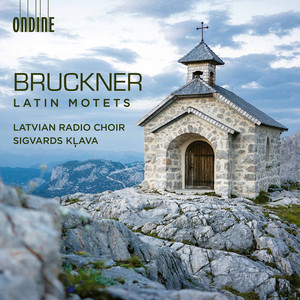 | Tota pulchra es, WAB 46 | Anton Bruckner, Jānis Kurševs, Latvian Radio Choir, Kristīne Adamaite, Sigvards Kļava | C Major | 0 | 8B | 131 BPM | |
 | Handel: Giulio Cesare in Egitto, HWV 17, Act 1: Duetto. "Son nata a lagrimar" (Cornelia, Sesto) | George Frideric Handel, Nathalie Stutzmann, Orfeo 55 | D♭ Major | 2 | 3B | 120 BPM | |
 | Liturgy of St. John Chrysostom, Op. 41: VIII. The Creed | Pyotr Ilyich Tchaikovsky, National Choir Of The Ukraine "Dumka", Yevhen Savchuk | C Minor | 1 | 5A | 165 BPM |
- ISRC
- GBAKR8452002
- Label
- L-M Records/RCA Records