- BPM
- 114
- Key
- C Major
- Camelot
- 8B
Verdi: Messa da Requiem: VII. Rex tremendae by Giuseppe Verdi, Riccardo Muti, Cheryl Studer, Coro Del Teatro Alla Scala Di Milano, Dolora Zajic, Luciano Pavarotti, Samuel Ramey, Orchestra Del Teatro Alla Scala, Milano Song Details
"Verdi: Messa da Requiem: VII. Rex tremendae" by Giuseppe Verdi, Riccardo Muti, Cheryl Studer, Coro Del Teatro Alla Scala Di Milano, Dolora Zajic, Luciano Pavarotti, Samuel Ramey, Orchestra Del Teatro Alla Scala, Milano had its release date on January 1, 1987. With this song being around four minutes long, at 3:53, the duration of this song is pretty average compared to other songs. This track is safe for children and doesn't appear to contain any foul language, since the "Explicit" tag was not present in this track. This song is part of Verdi: Messa da Requiem by Giuseppe Verdi, Riccardo Muti, Orchestra Del Teatro Alla Scala, Milano. The song's track number on the album is #7 out of 19 tracks. Based on our data, United Kingdom was the country where this track was produced or recorded. In terms of popularity, Verdi: Messa da Requiem: VII. Rex tremendae is currently not that popular. In our opinion, the overall tone is not very danceable and projects negative sounds, such as being sad, depressed, or angry.
BPM and Tempo
Since Verdi: Messa da Requiem: VII. Rex tremendae by Giuseppe Verdi, Riccardo Muti, Cheryl Studer, Coro Del Teatro Alla Scala Di Milano, Dolora Zajic, Luciano Pavarotti, Samuel Ramey, Orchestra Del Teatro Alla Scala, Milano has a tempo of 114 beats per a minute, the tempo markings of this song would be Moderato (at a moderate speed). With Verdi: Messa da Requiem: VII. Rex tremendae being at 114 BPM, the half-time would be 57 BPM with a double-time of 228 BPM.In addition, we consider the tempo speed to be pretty moderate for this song. The time signature for this track is 4/4.
Music Key
This song is in the music key of C Major. Or for those who are familiar with the camelot wheel, this song has a camelot key of 8B. So, the perfect camelot match for 8B would be either 8B or 9A. While, 9B can give you a low energy boost. For moderate energy boost, you would use 5B and a high energy boost can either be 10B or 3B. Though, if you want a low energy drop, you should looking for songs with either a camelot key of 8A or 7B will give you a low energy drop, 11B would be a moderate one, and 6B or 1B would be a high energy drop. Lastly, 5A allows you to change the mood.
Want to find the BPM and music key for other songs? Check out our BPM and Key Finder page!
- Popularity
- 3%
- Loudness
- -19.236 dB
- Acousticness
- 96%
- Danceability
- 24%
- Energy
- 22%
- Instrumentalness
- 1%
- Liveness
- 9%
- Loudness
- 68%
- Speechiness
- 5%
- Valence
- 8%
Recommendations
| Track | Artist | Key | Energy | Camelot | BPM | ||
|---|---|---|---|---|---|---|---|
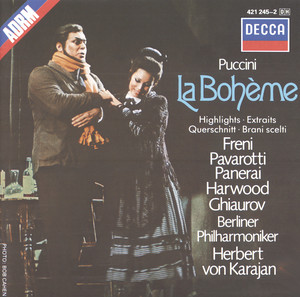 | La bohème, Act IV: Oh Dio! Mimi! – Che ha detto il medico? | Giacomo Puccini, Gianni Maffeo, Mirella Freni, Luciano Pavarotti, Elizabeth Harwood, Rolando Panerai, Berliner Philharmoniker, Herbert von Karajan | A Major | 0 | 11B | 90 BPM | |
 | Lohengrin, WWV 75 / Act I: "Seht hin! Sie naht, die hart Beklagte!" | Richard Wagner, Kurt Moll, Cheryl Studer, Vienna State Opera Chorus, Peter Burian, Wiener Philharmoniker, Claudio Abbado | E Major | 0 | 12B | 137 BPM | |
 | La bohème, Act I: Si sente meglio? | Giacomo Puccini, Luciano Pavarotti, Mirella Freni, Berliner Philharmoniker, Herbert von Karajan | D Minor | 1 | 7A | 124 BPM | |
 | Requiem in D Minor, K. 626: No 4, Sequence - Rex Tremendae | Wolfgang Amadeus Mozart, Sir Colin Davis, London Symphony Chorus, London Symphony Orchestra | G Minor | 1 | 6A | 91 BPM | |
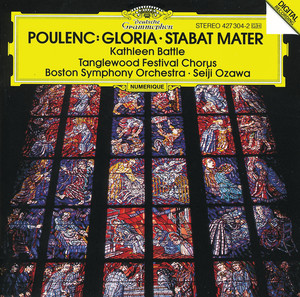 | Stabat Mater, FP 148: 9. Sancta mater | Francis Poulenc, Kathleen Battle, Boston Symphony Orchestra, Seiji Ozawa, Tanglewood Festival Chorus, John Oliver | B♭ Minor | 1 | 3A | 84 BPM | |
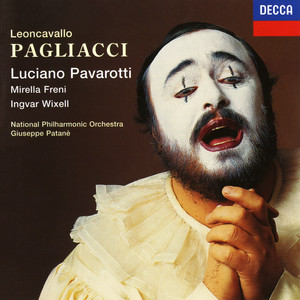 | Pagliacci / Act 1: "I zampognari!" | Ruggero Leoncavallo, Luciano Pavarotti, Finchley Children's Music Group, The London Opera Chorus, National Philharmonic Orchestra, Giuseppe Patanè | C Major | 2 | 8B | 122 BPM | |
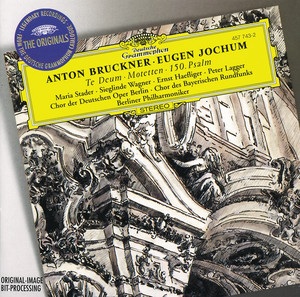 | Te Deum, WAB 45: III. Aeterna fac cum sanctis tuis | Anton Bruckner, Maria Stader, Sieglinde Wagner, Ernst Haefliger, Peter Lagger, Wolfgang Meyer, Berliner Philharmoniker, Eugen Jochum, Chor der Deutschen Oper Berlin, Walter Hagen-Groll | B♭ Major | 4 | 6B | 64 BPM | |
 | Orfeo ed Euridice: Act I, Scene 1, Coro: Ah, se intorno a quest'urna funesta | Christoph Willibald Gluck, René Jacobs, RIAS Kammerchor, Freiburger Barockorchester | F Minor | 1 | 4A | 80 BPM | |
 | Stabat Mater, Op. 58: IV. Fac, ut ardeat cor meum (Largo) | Antonín Dvořák, Philippe Herreweghe, Collegium Vocale Gent, Royal Flemish Philharmonic, Florian Boesch | B♭ Minor | 0 | 3A | 79 BPM | |
 | L'elisir d'amore / Act 1: "Tran, tran, tran, tran - In guerra ed in amor" | Gaetano Donizetti, Dominic Cossa, Dame Joan Sutherland, Luciano Pavarotti, English Chamber Orchestra, Richard Bonynge | C Major | 3 | 8B | 90 BPM | |
 | Salome, Op. 54 / Scene 3: "Lass mich deinen Mund küssen, Jochanaan!" | Richard Strauss, Cheryl Studer, Bryn Terfel, Orchester der Deutschen Oper Berlin, Giuseppe Sinopoli | G Major | 0 | 9B | 94 BPM | |
 | La traviata / Act 1: "Follie! Delirio vano è questo!" - "Sempre libera" | Giuseppe Verdi, Kiri Te Kanawa, Alfredo Kraus, Orchestra del Maggio Musicale Fiorentino, Zubin Mehta | D♭ Major | 1 | 3B | 91 BPM | |
 | Der Freischütz, J. 277, Act III: Wer legt auf ihn so strengen Bann? | Carl Maria von Weber, Gundula Janowitz, Edith Mathis, Peter Schreier, Bernd Weikl, Franz Crass, Siegfried Vogel, MDR Leipzig Radio Chorus, Staatskapelle Dresden, Carlos Kleiber | E♭ Major | 2 | 5B | 86 BPM | |
 | Falstaff, Act I: Sei polli, sei scellini | Giuseppe Verdi, Bryn Terfel, Anthony Mee, Anatolij Kotscherga, Berliner Philharmoniker, Claudio Abbado | C Major | 3 | 8B | 68 BPM | |
 | Mozart: Requiem in D Minor, K. 626: XI. Sanctus | Wolfgang Amadeus Mozart, Riccardo Muti, Stockholm Chamber Choir, Swedish Radio Choir, Berliner Philharmoniker | D Major | 3 | 10B | 77 BPM | |
 | Gounod: Faust, Act 2: Invocation. "Avant de quitter ces lieux" (Valentin) | Charles Gounod, Michel Plasson, Thomas Hampson, Orchestre Du Capitole De Toulouse | A Minor | 1 | 8A | 94 BPM | |
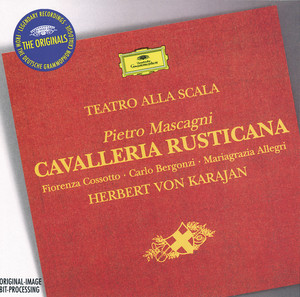 | Cavalleria rusticana: Introduzione | Pietro Mascagni, Orchestra Del Teatro Alla Scala, Milano, Herbert von Karajan, Coro Del Teatro Alla Scala Di Milano | C Major | 3 | 8B | 166 BPM | |
 | Mozart: Don Giovanni, K. 527, Act 1: Duetto. "Fuggi, crudele, fuggi!" (Donna Anna, Don Ottavio) | Wolfgang Amadeus Mozart, Riccardo Muti, Cheryl Studer, Frank Lopardo, Wiener Philharmoniker | F Major | 1 | 7B | 177 BPM | |
| Stabat Mater, FP 148: 5. Quis est homo | Francis Poulenc, Kathleen Battle, Boston Symphony Orchestra, Seiji Ozawa, Tanglewood Festival Chorus, John Oliver | A Minor | 3 | 8A | 97 BPM | |
| Salome, Op.54 / Scene 4: "Ah! Ich habe deinen Mund geküsst, Jochanaan" | Richard Strauss, Cheryl Studer, Horst Hiestermann, Orchester der Deutschen Oper Berlin, Giuseppe Sinopoli | D♭ Major | 1 | 3B | 85 BPM | |
 | War Requiem, Op. 66: I. Requiem aeternam: a. Requiem aeternam | Benjamin Britten, London Symphony Chorus, The Bach Choir, Highgate School Choir, Melos Ensemble, Simon Preston, London Symphony Orchestra | A Minor | 0 | 8A | 79 BPM | |
 | Elijah, Op. 70, MWV A25 / Part 2: "It is enough! O Lord, now take away my life" | Felix Mendelssohn, Bryn Terfel, David Watkin, Stephen Doughty, Orchestra of the Age of Enlightenment, Paul Daniel | B Minor | 1 | 10A | 91 BPM | |
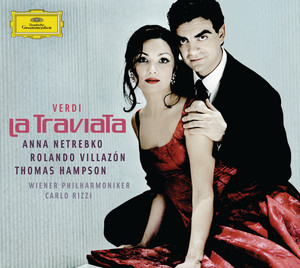 | La traviata / Act I: "Si ridesta in ciel l'aurora" | Giuseppe Verdi, Anna Netrebko, Rolando Villazón, Helene Schneiderman, Herman Wallen, Salvatore Cordella, Paul Gay, Wiener Philharmoniker, Carlo Rizzi, Wiener Staatsopernchor, Rupert Huber | A♭ Major | 4 | 4B | 103 BPM | |
 | Ein deutsches Requiem, Op. 45: VI. Denn wir haben hie keine bleibende Statt | Johannes Brahms, Katherine Fuge, Matthew Brook, The Monteverdi Choir, Orchestre Révolutionnaire et Romantique, John Eliot Gardiner | C Major | 2 | 8B | 122 BPM | |
 | Bellini: Norma, Act 2: "Non parti?" (Coro) | Vincenzo Bellini, Orchestra Del Teatro Alla Scala, Milano, Tullio Serafin, Coro Del Teatro Alla Scala Di Milano | A♭ Major | 0 | 4B | 74 BPM |
- ISRC
- GBAYC8700837
- Label
- L-M Records/RCA Records