- BPM
- 131
- Key
- D Major
- Camelot
- 10B
9 Preludes, Op. 1: No. 6, Lento mesto by Karol Szymanowski, Matthias Roth Song Details
"9 Preludes, Op. 1: No. 6, Lento mesto" by Karol Szymanowski, Matthias Roth had its release date on September 7, 2018. The duration of This song is about two minutes long, specifically at 2:12. This song does not appear to have any foul language. 9 Preludes, Op. 1: No. 6, Lento mesto's duration is considered a little bit shorter than the average duration of a typical track. There are a total of 28 in the song's album "Szymanowski & Ravel: Piano Works". In this album, this song's track order is #20. Furthermore, we believe that the track originated from Germany. Based on our statistics, 9 Preludes, Op. 1: No. 6, Lento mesto's popularity is unknown right now. Although the tone can be danceable to some, this track does projects more of a negative sound rather than a postive one.
BPM and Tempo
With 9 Preludes, Op. 1: No. 6, Lento mesto by Karol Szymanowski, Matthias Roth having a BPM of 131 with a half-time of 66 BPM and a double-time of 262 BPM, we would consider this track to have a Allegro (fast, quick, and bright) tempo marking. Because of this, we believe that the song has an overall fast tempo. Looking at the BPM of this song, this song might go great with walking. The time signature for this track is 3/4.
Music Key
This song is in the music key of D Major. Or for those who are familiar with the camelot wheel, this song has a camelot key of 10B. So, the perfect camelot match for 10B would be either 10B or 11A. While, 11B can give you a low energy boost. For moderate energy boost, you would use 7B and a high energy boost can either be 12B or 5B. Though, if you want a low energy drop, you should looking for songs with either a camelot key of 10A or 9B will give you a low energy drop, 1B would be a moderate one, and 8B or 3B would be a high energy drop. Lastly, 7A allows you to change the mood.
Want to find the BPM and music key for other songs? Check out our BPM and Key Finder page!
- Popularity
- 0%
- Loudness
- -22.093 dB
- Acousticness
- 99%
- Danceability
- 42%
- Energy
- 13%
- Instrumentalness
- 88%
- Liveness
- 7%
- Loudness
- 63%
- Speechiness
- 5%
- Valence
- 5%
Recommendations
| Track | Artist | Key | Energy | Camelot | BPM | ||
|---|---|---|---|---|---|---|---|
 | 10 Pieces, Op. 24: 3. Caprice | Jean Sibelius, Håvard Gimse | E Minor | 1 | 9A | 62 BPM | |
 | Fantasiestücke, Op. 12: Des Abends | Robert Schumann, Tanguy de Williencourt | A Major | 1 | 11B | 87 BPM | |
 | 20 Mazurkas, Op. 50: No. 14, Animato | Karol Szymanowski, Krystian Zimerman | G Minor | 0 | 6A | 78 BPM | |
 | Schubert: Minuet and Trio in A Major, D. 334 / German Dance in C-Sharp Major, D. 139 | Franz Schubert, Christian Zacharias | A Major | 1 | 11B | 111 BPM | |
 | Antiche Danze Ed Arie Per Liuto (Ancient Airs And Dances), P. 114: VI. Passacaglia | Ottorino Respighi, Konstantin Scherbakov | G Minor | 2 | 6A | 96 BPM | |
 | Król Roger (King Roger), Op. 46, Act II: Dance of the Shepherd's Followers | Karol Szymanowski, Wojtek Drabowicz, Olga Pasichnyk, Krzysztof Szmyt, Piotr Beczala, Romuald Tesarowicz, Stefania Toczyska, Ryszard Wroblewski, Justyna Kabala, Maciej Dunin-Borkowski, Alla Polacca Choir, Polish National Opera Chorus, Polish National Opera Orchestra, Jacek Kaspszyk | D Major | 0 | 10B | 63 BPM | |
 | Impromptu No.3 in A Flat Major, Op.34 | Gabriel Fauré, Pascal Rogé | A Minor | 1 | 8A | 82 BPM | |
 | Piano Concerto in F-Sharp Minor, Op. 20: II. Andante | Alexander Scriabin, Konstantin Scherbakov, Moscow Philharmonic Orchestra, Igor Golovschin | E♭ Major | 0 | 5B | 81 BPM | |
 | Piano Sonata in G Minor: I. Allegro molto agitato | Fanny Mendelssohn, Heather Schmidt | B Minor | 3 | 10A | 87 BPM | |
 | Larghetto | Germaine Tailleferre, Cristina Ariagno | D♭ Minor | 0 | 12A | 114 BPM | |
 | Poulenc: Cello Sonata, FP 143: II. Cavatine | Francis Poulenc, Daniel Müller-Schott/Robert Kulek | F♯ Major | 0 | 2B | 77 BPM | |
 | Nielsen: 5 Piano Pieces, Op. 3: No. 1, Folk Tune | Carl Nielsen, Leif Ove Andsnes | C Major | 0 | 8B | 76 BPM | |
 | Forgotten Melodies I, Op. 38: II. Danza Graziosa | Nikolai Medtner, Geoffrey Tozer | A Major | 2 | 11B | 109 BPM | |
 | 3 Czech Dances, H. 154: No. 3, Polka | Bohuslav Martinů, Joseph Havlat | F Major | 2 | 7B | 102 BPM | |
 | Nocturne No. 2 in B Major, Op. 33/2 | Gabriel Fauré, Eric Le Sage | E Minor | 1 | 9A | 127 BPM | |
 | Ravel: Violin Sonata No. 2 in G Major, M. 77: I. Allegretto | Maurice Ravel, Renaud Capuçon, Frank Braley | G Major | 0 | 9B | 124 BPM | |
 | 12 Studies for Piano, Op. 46: II. Light Staccato Chords | York Bowen, Nicolas Namoradze | F Major | 0 | 7B | 83 BPM | |
 | Trois pièces: Hymne | Francis Poulenc, Alexandre Tharaud | E♭ Major | 1 | 5B | 71 BPM | |
 | Symphony in C Major, Op. 46: II. Sehr langsam - | Hans Pfitzner, Seattle Symphony Orchestra, Gerard Schwarz | F Major | 0 | 7B | 87 BPM | |
 | Églogue | Franz Liszt, André Laplante | A♭ Major | 0 | 4B | 74 BPM | |
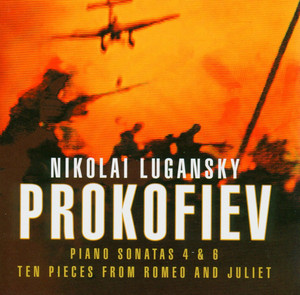 | Prokofiev: Piano Sonata No. 6 in A Major, Op. 82: II. Allegretto | Sergei Prokofiev, Nikolai Lugansky | F Major | 0 | 7B | 90 BPM | |
 | Concerto for String Orchestra: I. Allegro | Grażyna Bacewicz, Capella Bydgostiensis, Mariusz Smolij | C Major | 2 | 8B | 125 BPM | |
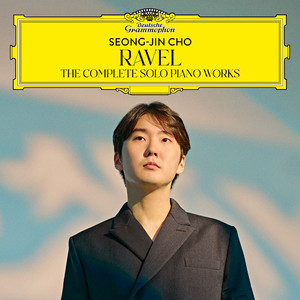 | Miroirs, M. 43: II. Oiseaux tristes | Maurice Ravel, Seong-Jin Cho | E Major | 2 | 12B | 142 BPM | |
 | 2 Pieces for the Left Hand, Op. 9: No. 1, Prelude in C-Sharp Minor | Alexander Scriabin, Maria Lettberg | A Major | 0 | 11B | 126 BPM | |
 | Prélude, Choral et Fugue, FWV 21: Prélude. Moderato | César Franck, Nikolai Lugansky | G Major | 0 | 9B | 68 BPM |
- ISRC
- DET901862720
- Label
- L-M Records/RCA Records