- BPM
- 80
- Key
- A Minor
- Camelot
- 8A
Barber: Adagio for Strings - slowed + reverb by Samuel Barber, Classical Slowed + Reverb Song Details
"Barber: Adagio for Strings - slowed + reverb" by Samuel Barber, Classical Slowed + Reverb had its release date on March 15, 2024. Since This song is still less than 10 minute long, it is still considered a pretty long duration song compared to the average song length. This song does not appear to be explicit due to the lack of the "E" tag. Because this song is the only song in Barber: Adagio for Strings - slowed + reverb and no other songs are present in the album, we classify this track as a single. Going off of the ISRC code of this track, we detected that the origin of this track is from United States. Barber: Adagio for Strings - slowed + reverb is not that popular right now. In our opinion, the overall tone is not very danceable and projects negative sounds, such as being sad, depressed, or angry.
BPM and Tempo
The tempo marking of Barber: Adagio for Strings - slowed + reverb by Samuel Barber, Classical Slowed + Reverb is Andante (at a walking pace), since this song has a tempo of 80 BPM. With that information, we can conclude that the song has a slow tempo. The time signature for this track is 4/4.
Music Key
This song has a musical key of A Minor. Because this track belongs in the A Minor key, the camelot key is 8A. So, the perfect camelot match for 8A would be either 8A or 7B. While, a low energy boost can consist of either 8B or 9A. For moderate energy boost, you would use 5A and a high energy boost can either be 10A or 3A. However, if you are looking for a low energy drop, finding a song with a camelot key of 7A would be a great choice. Where 11A would give you a moderate drop, and 6A or 1A would be a high energy drop. Lastly, 11B allows you to change the mood.
Want to find the BPM and music key for other songs? Check out our BPM and Key Finder page!
- Popularity
- 1%
- Loudness
- -17.99 dB
- Acousticness
- 97%
- Danceability
- 7%
- Energy
- 14%
- Instrumentalness
- 86%
- Liveness
- 8%
- Loudness
- 70%
- Speechiness
- 4%
- Valence
- 3%
Recommendations
| Track | Artist | Key | Energy | Camelot | BPM | ||
|---|---|---|---|---|---|---|---|
 | Concerto in D Minor, BWV 974: II. Adagio (Arr. for Cello and Piano by Mischa Maisky) | Johann Sebastian Bach, Mischa Maisky, Lily Maisky | B♭ Major | 3 | 6B | 139 BPM | |
 | Adagio in D Minor, BWV 974: II. Adagio | Johann Sebastian Bach, Alexandre Tharaud | D Minor | 0 | 7A | 65 BPM | |
 | Symphony No. 9 in E Minor, Op. 95 "From the New World": II. Largo | Antonín Dvořák, New York Philharmonic, Alan Gilbert | D♭ Major | 0 | 3B | 87 BPM | |
 | Adagio For Strings And Storm | Nico Cartosio | E Minor | 1 | 9A | 65 BPM | |
 | Violin Concerto No. 1 in G Minor, Op. 26: II. Adagio | Max Bruch, Joshua Bell, Academy of St. Martin in the Fields, Sir Neville Marriner | E♭ Major | 1 | 5B | 85 BPM | |
 | Vocalise, Op. 34, No. 14 | Sergei Rachmaninoff, Berliner Philharmoniker, Lorin Maazel | E Minor | 1 | 9A | 76 BPM | |
 | The Firebird (L'oiseau De Feu) - Suite (1919): Finale | Igor Stravinsky, Orchestre de l'Opéra National de Paris, Myung-Whun Chung | E Major | 2 | 12B | 78 BPM | |
 | Notturno for Strings and Harp | Arnold Schoenberg, Daniel Hope, Zürcher Kammerorchester, Jane Berthe | A♭ Major | 1 | 4B | 75 BPM | |
 | Albinoni: Adagio in G Minor | Tomaso Albinoni, Sir Neville Marriner, Academy of St. Martin in the Fields | C Minor | 1 | 5A | 90 BPM | |
 | Lieder ohne Worte, Op. 19b: Lieder ohne Worte (Song without Words) No. 6 in G Minor, Op. 19, No. 6, "Venezianisches Gondellied" [Venetian Gondola Song] | Felix Mendelssohn, Péter Nagy | G Major | 0 | 9B | 101 BPM | |
 | Consolation No. 3 in D-Flat Major, S. 172/3 | Franz Liszt, Vladimir Horowitz | D♭ Major | 0 | 3B | 70 BPM | |
 | Adoration (Arr. Gray for Violin & Orchestra) | Florence Beatrice Price, Randall Goosby, Philadelphia Orchestra, Yannick Nézet-Séguin | D Major | 3 | 10B | 74 BPM | |
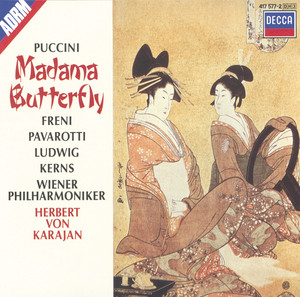 | Madama Butterfly, Act II: Coro a bocca chiusa "Humming Chorus" | Giacomo Puccini, Wiener Staatsopernchor, Wiener Philharmoniker, Herbert von Karajan | B♭ Major | 0 | 6B | 78 BPM | |
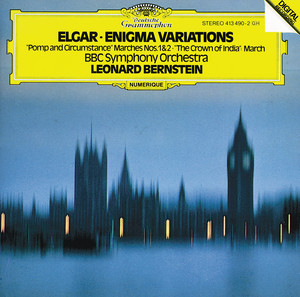 | Enigma Variations, Op. 36: Var. 1. L'istesso tempo "C.A.E." | Edward Elgar, BBC Symphony Orchestra, Leonard Bernstein | G Minor | 0 | 6A | 81 BPM | |
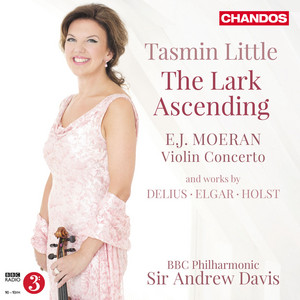 | The Lark Ascending | Ralph Vaughan Williams, Andrew Davis, BBC Philharmonic, BBC Symphony Orchestra, Tasmin Little | E Minor | 0 | 9A | 80 BPM | |
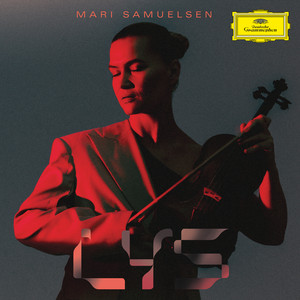 | White Flowers Take Their Bath | Meredi, Mari Samuelsen, Scoring Berlin, Jonathan Stockhammer | A Major | 1 | 11B | 97 BPM | |
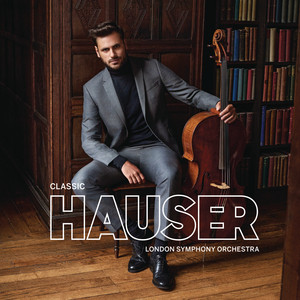 | Nessun Dorma | Giacomo Puccini, HAUSER, London Symphony Orchestra, Robert Ziegler | D Major | 5 | 10B | 96 BPM | |
 | Prince Igor: Polovtsian Dances (Version for Chorus) | Alexander Borodin, Kiev Chamber Choir, Ukraine National Radio Symphony Orchestra, Theodore Kuchar | A Major | 2 | 11B | 110 BPM | |
 | Adagio for Strings, Op. 11 | Samuel Barber, Janos Balint, Lajos Lencsés, Reinhold Friedrich, Budapest Strings, Béla Bánfalvi | B♭ Minor | 0 | 3A | 102 BPM | |
 | Polovetsian Dances from Prince Igor: Introduzione | Alexander Borodin, George Szell, The Cleveland Orchestra | A Major | 1 | 11B | 83 BPM | |
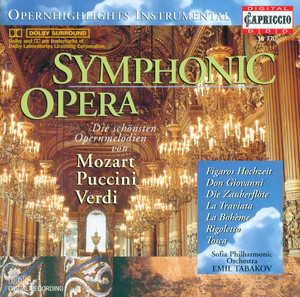 | Turandot, Act III: Nessun dorma (Arr. For orchestra) | Giacomo Puccini, Sofia Philharmonic Orchestra, Emil Tabakov | D Major | 1 | 10B | 85 BPM | |
 | Paradis: Sicilienne 파라디스 시실리안느 | 김준영 | E♭ Major | 0 | 5B | 137 BPM | |
 | Concerto No. 2 for Piano and Orchestra, Op. 102: II. Andante - 2017 Remastered Version | Dmitri Shostakovich, Leonard Bernstein, New York Philharmonic | F Major | 1 | 7B | 172 BPM | |
 | Piazzolla: Oblivion | Julian Lloyd Webber, John Lenehan | D Minor | 0 | 7A | 81 BPM | |
 | Piano Sonata No. 14 in C-Sharp Minor, Op. 27 No. 2 "Moonlight": I. Adagio sostenuto (Arr. for String Quartet by Paul Cassidy) | Ludwig van Beethoven, Brodsky Quartet | D♭ Minor | 0 | 12A | 78 BPM |
- ISRC
- USSM12400944
- Label
- L-M Records/RCA Records