- BPM
- 67
- Key
- D Minor
- Camelot
- 7A
Piano Concerto No. 1 in C Major, Op. 15: III. Rondo. Allegro scherzando (Cadenza by Kempff) by Ludwig van Beethoven, Wilhelm Kempff, Berliner Philharmoniker, Ferdinand Leitner Song Details
Ludwig van Beethoven, Wilhelm Kempff, Berliner Philharmoniker, Ferdinand Leitner's ' "Piano Concerto No. 1 in C Major, Op. 15: III. Rondo. Allegro scherzando (Cadenza by Kempff)" was released on its scheduled release date, September 18, 2020. With This song being less than two minutes long, at 1:18, we are fairly confident that this song is not explicit and is safe for all ages. Based on the duration of this song, this song duration is much smaller than the average song duration. The song is number 1 out of 5 in Beethoven: The Piano Concertos in under 10 minutes by Ludwig van Beethoven, Wilhelm Kempff, Berliner Philharmoniker, Ferdinand Leitner. Going off of the ISRC code of this track, we detected that the origin of this track is from Germany. Piano Concerto No. 1 in C Major, Op. 15: III. Rondo. Allegro scherzando (Cadenza by Kempff) is not that popular right now. The mood doesn't appear to be that danceable, but it still produces a high amount of positive energy.
BPM and Tempo
The tempo marking of Piano Concerto No. 1 in C Major, Op. 15: III. Rondo. Allegro scherzando (Cadenza by Kempff) by Ludwig van Beethoven, Wilhelm Kempff, Berliner Philharmoniker, Ferdinand Leitner is Adagio (slowly with great expression), since this song has a tempo of 67 BPM. With that information, we can conclude that the song has a slow tempo. The time signature for this track is 4/4.
Music Key
This song is in the music key of D Minor. Because this track belongs in the D Minor key, the camelot key is 7A. So, the perfect camelot match for 7A would be either 7A or 6B. While, a low energy boost can consist of either 7B or 8A. For moderate energy boost, you would use 4A and a high energy boost can either be 9A or 2A. However, if you are looking for a low energy drop, finding a song with a camelot key of 6A would be a great choice. Where 10A would give you a moderate drop, and 5A or 12A would be a high energy drop. Lastly, 10B allows you to change the mood.
Want to find the BPM and music key for other songs? Check out our BPM and Key Finder page!
- Popularity
- 2%
- Loudness
- -21.613 dB
- Acousticness
- 99%
- Danceability
- 26%
- Energy
- 16%
- Instrumentalness
- 95%
- Liveness
- 19%
- Loudness
- 64%
- Speechiness
- 4%
- Valence
- 60%
Recommendations
| Track | Artist | Key | Energy | Camelot | BPM | ||
|---|---|---|---|---|---|---|---|
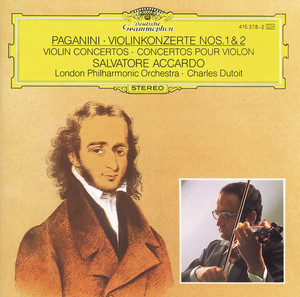 | Violin Concerto No. 2 in B Minor, Op. 7, MS. 48: III. Rondo à la clochette, 'La campanella' | Niccolò Paganini, Salvatore Accardo, London Philharmonic Orchestra, Charles Dutoit | B Minor | 2 | 10A | 105 BPM | |
 | Lieder ohne Worte, Op. 19: No. 6 in G Minor (Andante sostenuto) "Venetian Gondola Song", MWV U78 | Felix Mendelssohn, Jan Lisiecki | G Minor | 0 | 6A | 168 BPM | |
 | Symphony No. 9 in E Minor, Op. 95 "From the New World": I. Adagio — Allegro molto | Antonín Dvořák, New York Philharmonic, Alan Gilbert | E Minor | 1 | 9A | 125 BPM | |
 | Kinderszenen, Op. 15: VII. Träumerei | Robert Schumann, Alfred Brendel | F Major | 0 | 7B | 135 BPM | |
 | Piano Sonata No. 12 in F Major, K. 332: II. Adagio | Wolfgang Amadeus Mozart, Maria João Pires | F Major | 0 | 7B | 73 BPM | |
 | Csardas: Csardas | Vittorio Monti, Robert Koenig, Si-Qing Lu | D Major | 1 | 10B | 170 BPM | |
 | Prelude In G Minor Op. 23 No. 5 | Vladimir Horowitz | G Minor | 3 | 6A | 112 BPM | |
 | String Quintet in E Major, Op. 13, No. 5: III. Minuetto | Luigi Boccherini, Lazar Gosman | A Major | 1 | 11B | 99 BPM | |
 | Serenade | Jairos | F Major | 0 | 7B | 73 BPM | |
 | Bruch : Violin Concerto No.1 in G minor Op.26 : III Finale - Allegro energico | Max Bruch, Maxim Vengerov, Kurt Masur, Gewandhausorchester Leipzig | G Major | 2 | 9B | 90 BPM | |
 | Tchaikovsky: Swan Lake, Op. 20, Act 2: No. 10, Scene. Moderato | Pyotr Ilyich Tchaikovsky, André Previn, London Symphony Orchestra | E Minor | 2 | 9A | 87 BPM | |
 | Piano Concerto No. 5 in E-Flat Major, Op. 73 "Emperor": 2. Adagio un poco mosso | Ludwig van Beethoven, Alfred Brendel, Wiener Philharmoniker, Sir Simon Rattle | B Major | 0 | 1B | 85 BPM | |
 | Haydn: Cello Concerto No. 1 in C Major, Hob. VIIb, 1: I. Moderato (Cadenza by Britten) | Franz Joseph Haydn, Mstislav Rostropovich, Academy of St. Martin in the Fields | C Major | 1 | 8B | 68 BPM | |
 | Ravel: Pavane pour une infante défunte, M. 19 | Maurice Ravel, Monique Haas | E Minor | 0 | 9A | 101 BPM | |
| Orchestral Suite No. 3 in D Major, BWV 1068: Air | Frank Shipway, Royal Philharmonic Orchestra | D Major | 1 | 10B | 78 BPM | ||
 | Consolation No. 3 in D-Flat Major, S. 172/3 | Franz Liszt, Vladimir Horowitz | D♭ Major | 0 | 3B | 70 BPM | |
 | Kinderszenen | Robert Schumann, Ivan Moravec | F Major | 0 | 7B | 131 BPM | |
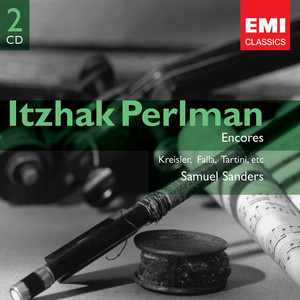 | Prelude and Allegro in the style of Pugnani | Samuel Sanders, Itzhak Perlman | E Minor | 3 | 9A | 107 BPM | |
 | Piano Concerto No. 5 in E Flat, Op.73 'Emperor': II. Adagio un poco mosso | Wolfgang Sawallisch, Philharmonia Orchestra, Youri Egorov | B Major | 0 | 1B | 132 BPM | |
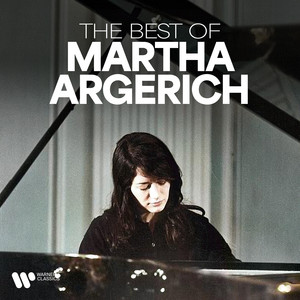 | Scarlatti, D: Keyboard Sonata in D Minor, Kk. 141 | Martha Argerich | F♯ Major | 3 | 2B | 104 BPM | |
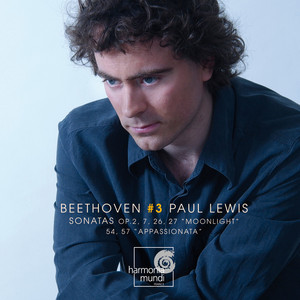 | Piano Sonata No. 14 in C-Sharp Minor, Op. 27 No. 2 "Moonlight": I. Adagio sostenuto | Ludwig van Beethoven, Paul Lewis | D♭ Minor | 0 | 12A | 172 BPM | |
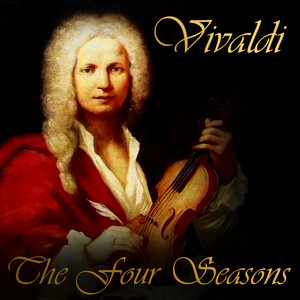 | The Four Seasons (Concerti Op.8 Nos.1-4) Spring (La Primavera) Op.8 No.1 E Major: Allegro | Baroque Festival Orchestra, Alberto Lizzio | E Major | 0 | 12B | 87 BPM | |
 | Für Elise, WoO 59 | Ludwig van Beethoven, Nelly Kokinos | A Minor | 1 | 8A | 127 BPM | |
 | Sonata No. 14 in C-Sharp Minor, Op. 27 No. 2 "Moonlight": 1. Adagio sostenuto | Valentina Lisitsa | D♭ Minor | 0 | 12A | 70 BPM | |
 | Le carnaval des animaux, R. 125: Le cygne | Camille Saint-Saëns, Mischa Maisky, Orpheus Chamber Orchestra | C Major | 0 | 8B | 83 BPM |
- ISRC
- DEF056101714
- Label
- L-M Records/RCA Records