- BPM
- 95
- Key
- A♭ Major
- Camelot
- 4B
Waltz Ⅰ (J.Brahms) by Johannes Brahms, 정아름 Song Details
Johannes Brahms, 정아름's ' "Waltz Ⅰ (J.Brahms)" was released on its scheduled release date, May 13, 2022. With This song being less than two minutes long, at 1:49, we are fairly confident that this song is not explicit and is safe for all ages. Based on the duration of this song, this song duration is much smaller than the average song duration. There is only one song in 정아름 발레클래스 음악 제2집 (Areum Jeong’s Ballet Class Music vol.2 Ae-ip), so we believe that "Waltz Ⅰ (J.Brahms)" is a single. In terms of popularity, Waltz Ⅰ (J.Brahms) is currently not that popular. Since there is more of a neutral sound being played, this makes the track somewhat danceable.
BPM and Tempo
The tempo marking of Waltz Ⅰ (J.Brahms) by Johannes Brahms, 정아름 is Andante (at a walking pace), since this song has a tempo of 95 BPM. With that information, we can conclude that the song has a slow tempo. This song can go great with yoga or pilates. The time signature for this track is 4/4.
Music Key
This song is in the music key of A♭ Major. This also means that this song has a camelot key of 4B. So, the perfect camelot match for 4B would be either 4B or 5A. While, 5B can give you a low energy boost. For moderate energy boost, you would use 1B and a high energy boost can either be 6B or 11B. Though, if you want a low energy drop, you should looking for songs with either a camelot key of 4A or 3B will give you a low energy drop, 7B would be a moderate one, and 2B or 9B would be a high energy drop. Lastly, 1A allows you to change the mood.
Want to find the BPM and music key for other songs? Check out our BPM and Key Finder page!
- Popularity
- 9%
- Loudness
- -20.122 dB
- Acousticness
- 99%
- Danceability
- 55%
- Energy
- 8%
- Instrumentalness
- 85%
- Liveness
- 17%
- Loudness
- 66%
- Speechiness
- 7%
- Valence
- 40%
Recommendations
| Track | Artist | Key | Energy | Camelot | BPM | ||
|---|---|---|---|---|---|---|---|
 | Serenade in B-Flat Major, K. 361 "Gran Partita": III. Adagio | Wolfgang Amadeus Mozart, Orpheus Chamber Orchestra | E♭ Major | 0 | 5B | 68 BPM | |
 | Enigma Variations, Op. 36: Theme. Andante | Edward Elgar, BBC Symphony Orchestra, Leonard Bernstein | G Minor | 0 | 6A | 113 BPM | |
 | Carmen Variations | Vladimir Horowitz | E Major | 2 | 12B | 148 BPM | |
 | Cello Sonata No. 1 in E Minor, Op. 38: II. Allegretto quasi menuetto | Johannes Brahms, Maria Kliegel, Kristin Merscher | A Minor | 0 | 8A | 104 BPM | |
 | Bruch: Violin Concerto No. 1 in G Minor, Op. 26: II. Adagio | Max Bruch, Maxim Vengerov, Kurt Masur, Gewandhausorchester | E♭ Major | 1 | 5B | 110 BPM | |
 | The Lark | Mikhail Glinka, Evgeny Kissin | B♭ Minor | 0 | 3A | 96 BPM | |
 | Double Concerto in A Minor, Op. 102 for Violin, Cello and Orchestra: III. Vivace non troppo | Johannes Brahms, Joshua Bell, Steven Isserlis, Academy of St. Martin in the Fields | A Minor | 2 | 8A | 86 BPM | |
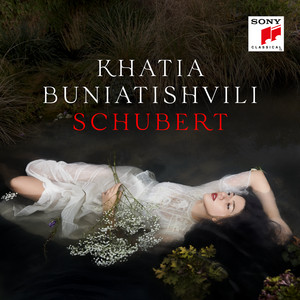 | Ständchen, S. 560 (Trans. from Schwanengesang No. 4, D. 957) | Franz Schubert, Franz Liszt, Khatia Buniatishvili | D Major | 0 | 10B | 67 BPM | |
 | Wie Melodien zieht es mir | Johannes Brahms, Jungin Huh | D Major | 5 | 10B | 123 BPM | |
![21 Hungarian Dances, WoO 1: Hungarian Dance No. 1 in G Minor (arr. For orchestra) [Orch. J. Brahms] by Johannes Brahms, London Philharmonic Orchestra, Marin Alsop](https://i.scdn.co/image/ab67616d00001e02652a3346f04f528486b5a47f) | 21 Hungarian Dances, WoO 1: Hungarian Dance No. 1 in G Minor (arr. For orchestra) [Orch. J. Brahms] | Johannes Brahms, London Philharmonic Orchestra, Marin Alsop | G Minor | 2 | 6A | 133 BPM | |
 | L'Oiseau de feu, K10: X. Khorovod (Ronde) des princesses | Igor Stravinsky, Orchestre de Paris, Klaus Mäkelä | F Minor | 0 | 4A | 68 BPM | |
 | Symphony No. 10 in E Minor, Op. 93: II. Allegro | Dmitri Shostakovich, Royal Liverpool Philharmonic Orchestra, Vasily Petrenko | B♭ Minor | 6 | 3A | 89 BPM | |
 | Ständchen in D Minor (After Schubert), S. 560 | Franz Liszt, Lise de la Salle | D Major | 0 | 10B | 76 BPM | |
 | Symphony No. 3 In C Minor, Op. 78 "Organ Symphony": 2b. Maestoso - Più allegro - Molto allegro | Camille Saint-Saëns, Simon Preston, Berliner Philharmoniker, James Levine | C Major | 3 | 8B | 106 BPM | |
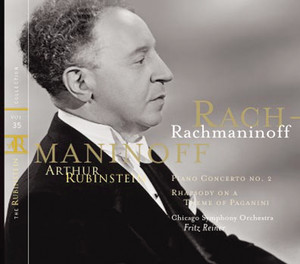 | Piano Concerto No. 2 in C Minor, Op. 18: I. Moderato | Sergei Rachmaninoff, Arthur Rubinstein, Fritz Reiner | C Minor | 1 | 5A | 71 BPM | |
 | 2 Pieces for the Left Hand, Op. 9: No. 2, Nocturne in D-Flat Major | Alexander Scriabin, Maria Lettberg | A♭ Major | 0 | 4B | 74 BPM | |
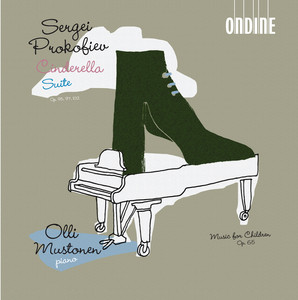 | 10 Pieces, Op. 12: No. 7, Prelude | Sergei Prokofiev, Olli Mustonen | C Major | 1 | 8B | 76 BPM | |
 | Fauré: Pavane, Op. 50 (Instrumental Version) | Gabriel Fauré, Sir Neville Marriner, Academy of St. Martin in the Fields | F♯ Minor | 1 | 11A | 70 BPM | |
 | Pelléas et Mélisande Suite, Op. 80: III. Sicilienne. Allegretto molto moderato | Gabriel Fauré, Berliner Philharmoniker, Daniel Barenboim | E♭ Major | 0 | 5B | 56 BPM | |
 | Oboe Concerto in D Minor: II. Adagio | Alessandro Marcello, Jozsef Kiss, Budapest Ferenc Erkel Chamber Orchestra | D Minor | 1 | 7A | 131 BPM | |
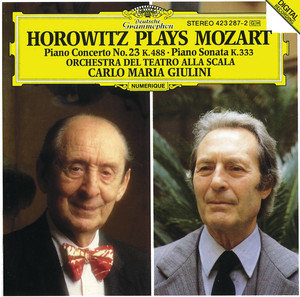 | Piano Concerto No. 23 in A Major, K. 488: I. Allegro (Cadenza by Busoni) | Wolfgang Amadeus Mozart, Vladimir Horowitz, Orchestra Del Teatro Alla Scala, Milano, Carlo Maria Giulini | A Major | 1 | 11B | 140 BPM | |
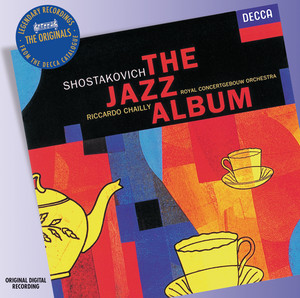 | Jazz Suite No. 2: IV. Waltz I | Dmitri Shostakovich, Royal Concertgebouw Orchestra, Riccardo Chailly | B♭ Major | 2 | 6B | 178 BPM | |
 | Humoresque, Op. 101, No. 7 | Antonín Dvořák, Kim Dami | F♯ Major | 1 | 2B | 83 BPM | |
| Bruch : Violin Concerto No.1 in G minor Op.26 : III Finale - Allegro energico | Max Bruch, Maxim Vengerov, Kurt Masur, Gewandhausorchester Leipzig | G Major | 2 | 9B | 90 BPM | |
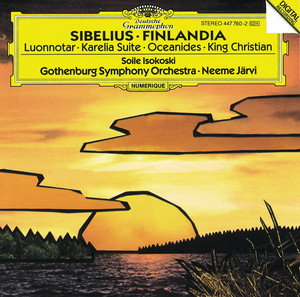 | Andante Festivo | Jean Sibelius, Gothenburg Symphony Orchestra, Neeme Järvi | G Major | 1 | 9B | 86 BPM |
- ISRC
- KRRAR2206137
- Label
- L-M Records/RCA Records