- BPM
- 172
- Key
- B♭ Major
- Camelot
- 6B
Three Pieces from 'Richard III' : March by William Walton, Marco Lo Muscio Song Details
"Three Pieces from 'Richard III' : March" by William Walton, Marco Lo Muscio had its release date on January 1, 2002. With This song being less than two minutes long, at 1:31, we are fairly confident that this song is not explicit and is safe for all ages. Based on the duration of this song, this song duration is much smaller than the average song duration. There are a total of 16 in the song's album "Organ Visions II". In this album, this song's track order is #14. Furthermore, we believe that the track originated from France. The popularity of Three Pieces from 'Richard III' : March is currently unknown right now. In our opinion, the overall tone is not very danceable and projects negative sounds, such as being sad, depressed, or angry.
BPM and Tempo
With Three Pieces from 'Richard III' : March by William Walton, Marco Lo Muscio having a BPM of 172 with a half-time of 86 BPM and a double-time of 344 BPM, we would consider this track to have a Vivace (lively and fast) tempo marking. Because of this, we believe that the song has an overall fast tempo. The time signature for this track is 4/4.
Music Key
The music key of this track is B♭ Major. Or for those who are familiar with the camelot wheel, this song has a camelot key of 6B. So, the perfect camelot match for 6B would be either 6B or 7A. While, 7B can give you a low energy boost. For moderate energy boost, you would use 3B and a high energy boost can either be 8B or 1B. Though, if you want a low energy drop, you should looking for songs with either a camelot key of 6A or 5B will give you a low energy drop, 9B would be a moderate one, and 4B or 11B would be a high energy drop. Lastly, 3A allows you to change the mood.
Want to find the BPM and music key for other songs? Check out our BPM and Key Finder page!
- Popularity
- 0%
- Loudness
- -13.006 dB
- Acousticness
- 82%
- Danceability
- 20%
- Energy
- 24%
- Instrumentalness
- 96%
- Liveness
- 34%
- Loudness
- 78%
- Speechiness
- 3%
- Valence
- 16%
Recommendations
| Track | Artist | Key | Energy | Camelot | BPM | ||
|---|---|---|---|---|---|---|---|
 | A Cotswold Hill Tune | Charles Wilfrid Orr, Royal Ballet Sinfonia, David Lloyd-Jones | G Major | 1 | 9B | 80 BPM | |
 | Orfeo ed Euridice, Wq. 30 / Act II: Dance of the Blessed Spirits (Arr. by Mathieu Herzog for Cello and Strings) | Christoph Willibald Gluck, Camille Thomas, Brussels Philharmonic, Mathieu Herzog | B Minor | 1 | 10A | 87 BPM | |
 | Warsaw Concerto | Richard Addinsell, Jean-Yves Thibaudet, BBC Symphony Orchestra, Hugh Wolff | B Major | 1 | 1B | 76 BPM | |
 | Ancient Airs & Dances, Suite III, P. 172: I. Italiana (Anonymous) | Ottorino Respighi, Filarmonica della Scala, Riccardo Chailly | B♭ Major | 1 | 6B | 172 BPM | |
 | Carmen Suite No. 1 (Arr. E. Guiraud): III. Intermezzo | Georges Bizet, Orquestra Simfònica de Barcelona i Nacional de Catalunya, Pablo González | E♭ Major | 0 | 5B | 81 BPM | |
 | Quiet City | Aaron Copland, Paula Engerer, Scott Moore, Nashville Chamber Orchestra, Paul Gambill | F Major | 0 | 7B | 72 BPM | |
 | Zdes' khorosho ('How Fair This Spot'), Op. 21, No. 7 | Sergei Rachmaninoff, Pablo Ferrandez, Denis Kozhukhin | A Major | 0 | 11B | 87 BPM | |
 | Le carnaval des animaux, R. 125: Le cygne | Camille Saint-Saëns, Mischa Maisky, Orpheus Chamber Orchestra | C Major | 0 | 8B | 83 BPM | |
| O, Waly Waly | John Rutter, Royal Ballet Sinfonia, David Lloyd-Jones | G Major | 1 | 9B | 80 BPM | |
 | Gypsy Melodies, Op. 55, B. 104: IV. Songs My Mother Taught Me (Adapt. for Cello and Orchestra) | Antonín Dvořák, Camille Thomas, Brussels Philharmonic, Mathieu Herzog | C Minor | 1 | 5A | 100 BPM | |
 | Piano Concerto in G Major, M. 83: II. Adagio assai | Maurice Ravel, Krystian Zimerman, Cleveland Orchestra, Pierre Boulez | E Major | 0 | 12B | 74 BPM | |
 | Love's Labour's Lost, Op. 28a: II. Longaville's Sonnet | Gerald Finzi, Robert Plane, Royal Northern Sinfonia, Howard Griffiths | D Minor | 0 | 7A | 94 BPM | |
 | Stille Musik: III. Augenblicke der Serenade | Valentin Silvestrov | C Major | 0 | 8B | 86 BPM | |
 | Irish Lament | Ernest John Moeran, Gerald Peregrine, Antony Ingham | D Minor | 0 | 7A | 131 BPM | |
 | Enigma Variations, Op. 36: Var. 9. Adagio "Nimrod" | Edward Elgar, BBC Symphony Orchestra, Leonard Bernstein | E♭ Major | 0 | 5B | 79 BPM | |
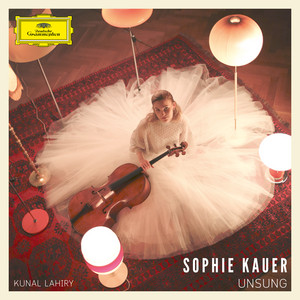 | 3 Romances, Op. 22: No. 1, Andante molto (Arr. Knoth for Cello and Piano) | Clara Schumann, Sophie Kauer, Kunal Lahiry | D♭ Major | 0 | 3B | 68 BPM | |
 | On hearing the first Cuckoo in Spring | Frederick Delius, Academy of St. Martin in the Fields, Sir Neville Marriner | G Major | 1 | 9B | 80 BPM | |
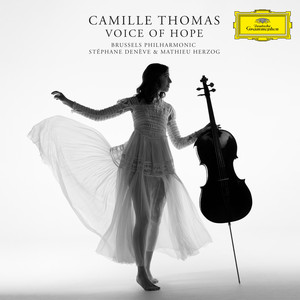 | Dido and Aeneas, Z. 626 / Act III: "When I Am Laid in Earth" Dido's Lamento (Arr. by Mathieu Herzog for Cello and Strings) | Henry Purcell, Camille Thomas, Brussels Philharmonic, Mathieu Herzog | G Minor | 1 | 6A | 77 BPM | |
 | Air | Gustav Holst, Royal Ballet Sinfonia, David Lloyd-Jones | G Major | 1 | 9B | 80 BPM | |
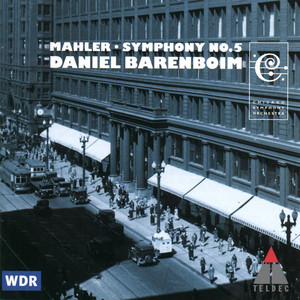 | Mahler: Symphony No. 5 in C-Sharp Minor: IV. Adagietto. Sehr langsam | Gustav Mahler, Daniel Barenboim, Chicago Symphony Orchestra | F Major | 1 | 7B | 82 BPM | |
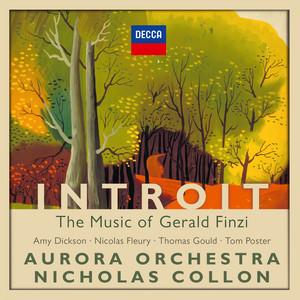 | Who is Sylvia?, Op.18, No.2 - Instrumental | Gerald Finzi, Nicolas Fleury, Aurora Orchestra, Nicholas Collon | E♭ Major | 1 | 5B | 138 BPM | |
 | Nocturne | Lili Boulanger, Juliette Hurel, Hélène Couvert | F Major | 0 | 7B | 62 BPM | |
 | The Moon | William Lloyd Webber, English Chamber Orchestra, Julian Lloyd Webber | B♭ Major | 1 | 6B | 119 BPM | |
 | Sonata In G Minor For Cello & Piano, Op. 19: 3. Andante | Sergei Rachmaninoff, Alisa Weilerstein, Inon Barnatan | F Major | 2 | 7B | 82 BPM | |
 | Copland: Appalachian Spring: VII. Doppio movimento (Variations on a Shaker Hymn - Simple Gifts) | Aaron Copland, Aurora Orchestra, Nicholas Collon | D♭ Major | 1 | 3B | 82 BPM |
- ISRC
- FR6V80042821
- Label
- L-M Records/RCA Records